As part of their centenary celebrations in 2026, Ducati has presented what they’re describing as the most extreme road-legal motorcycle ever developed – the Superleggera V4 Centenario. With a re-engineered V4 engine, abundant use of carbon fibre and some world firsts for a production motorcycle, the Superleggera V4 Centenario will be limited to 500 units, plus a further 100 in special Tricolore livery.
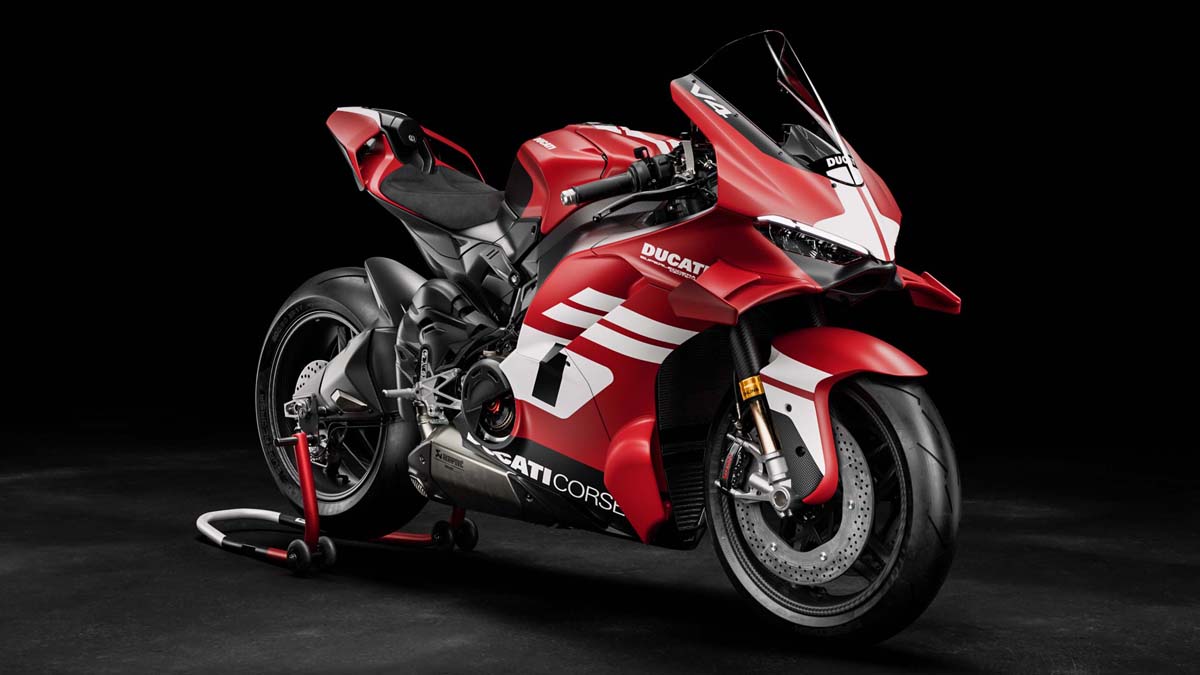
While the Superleggera (super lightweight) name has history with Ducati dating back to 2013 on the 1199 Superleggera, it was last used on the Panigale V4 Superleggera in 2020. That model was considered extreme, but the Superleggera V4 Centenario takes it up a notch. Lightweighting has been applied throughout, including in some areas that are firsts for a road-legal production bike.
Carbon All Over
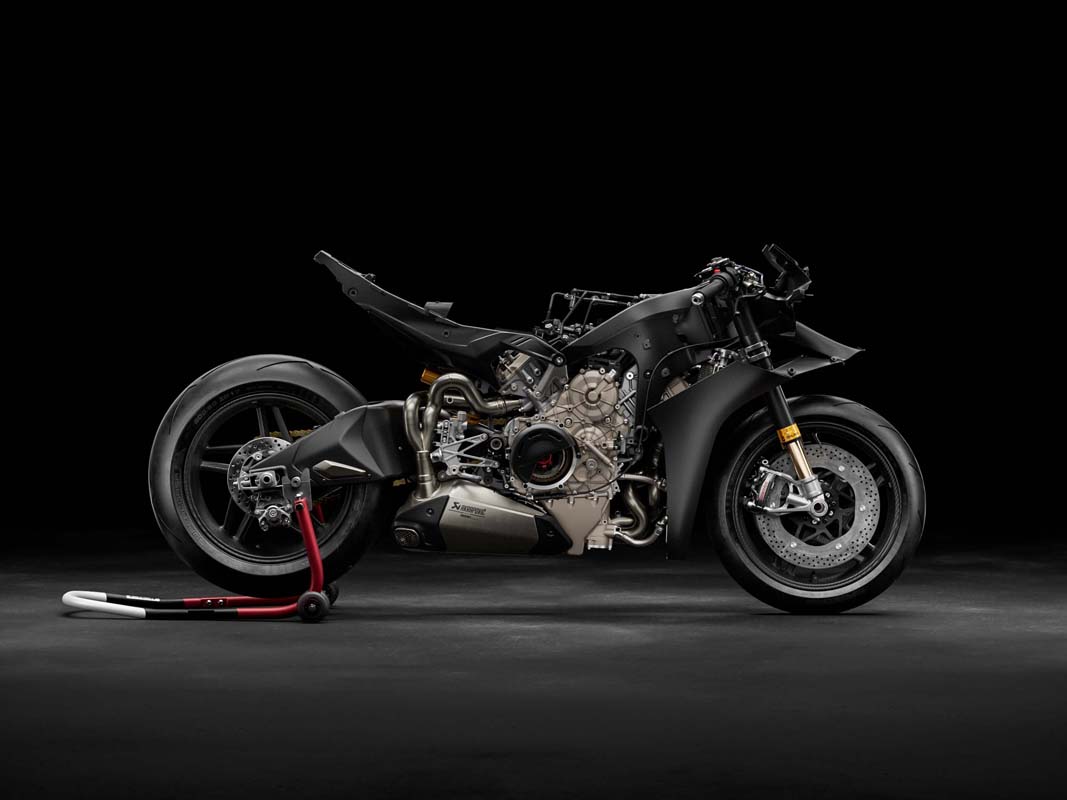
The lightweighting mantra that defines Ducati’s Superleggera models means that, in this instance, the weight is just 173kg. That’s 13.5kg less than the Panigale V4 R and 18kg less than the Panigale V4. With an included racing kit, that figure drops to 167kg.
Ducati are able to achieve this greatly reduced weight through extensive use of carbon fibre – for the frame, subframe, swingarm, bodywork, wheels and selected trim parts. The frame alone weighs 17 per cent less than the aluminium one in the Panigale V4, with the swingarm 21 per cent lighter. In each instance, lighter weight does not come at the expense of reduced torsional stiffness.
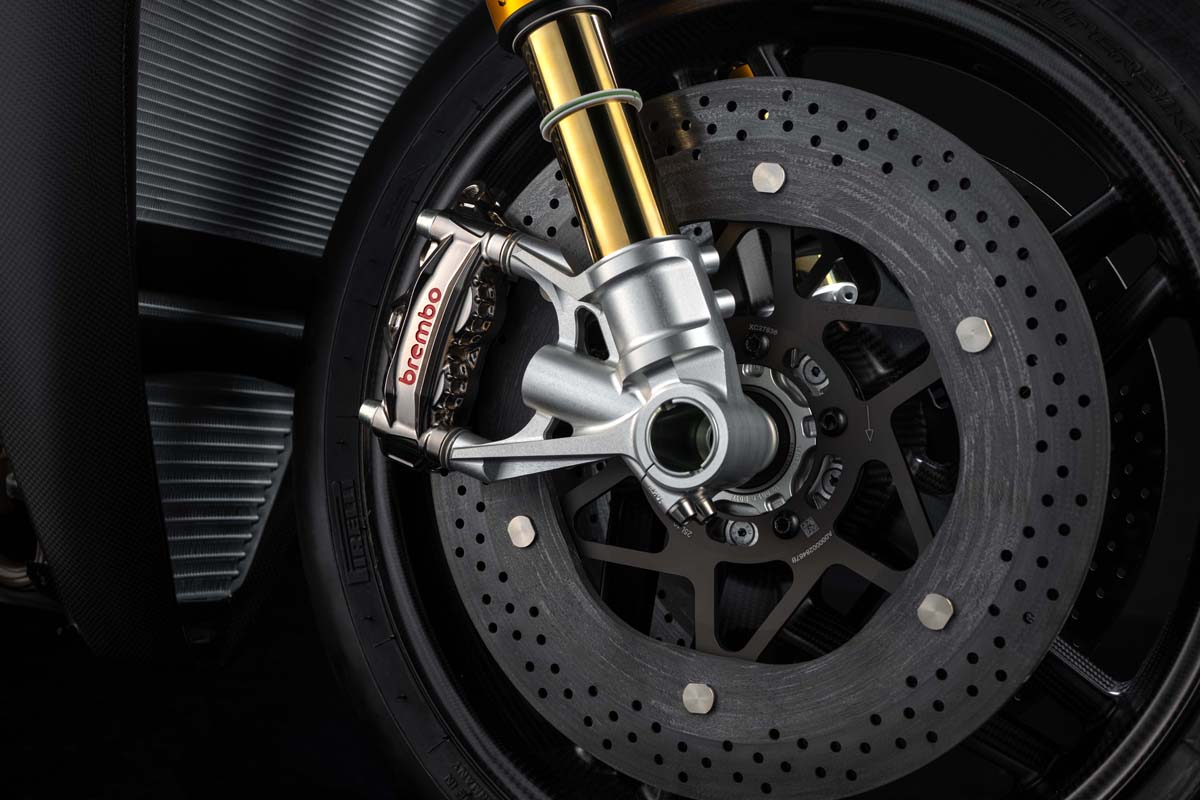
Where the Superleggera V4 Centenario breaks new ground is in the use of carbon ceramic brake discs and carbon fibre outer sleeves for the front suspension – both are claimed as firsts for a road-legal production motorcycle. A further benefit with the brakes is a 40 per cent reduction in inertia compared to steel discs, while the lighter forks are said to improve direction changes and front-end sensitivity.
Each carbon fibre component is inspected using three different testing methods: Transient Active Thermography, Phased Array Ultrasonics and Computed Axial Tomography. These processes, which are used in the aerospace industry, have been employed by Ducati on all Superleggera models since the 1299 version from 2016.
Premium Brakes, Premium Suspension
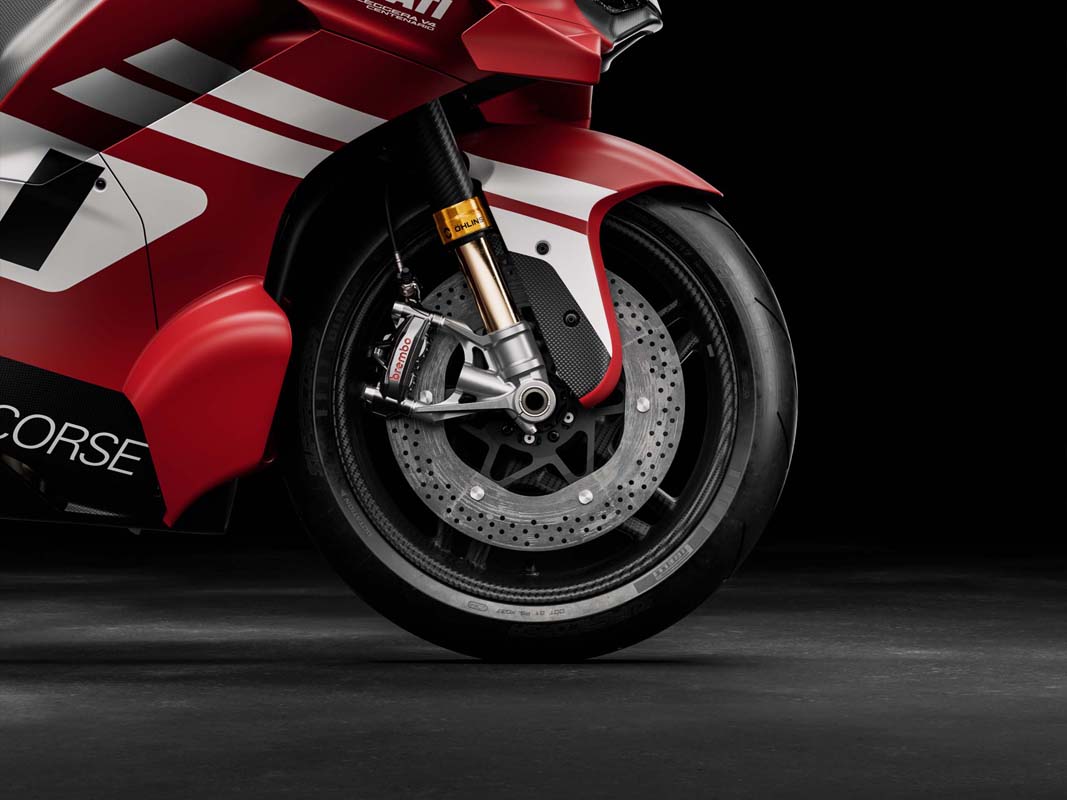
Those world-first carbon ceramic brake discs are made by Brembo and feature a compound that maintains efficiency at the highest temperatures, like during repeated hard braking on a track day. Brembo also supply the calipers - GP4-HY units that are machined from solid aluminium, with integrated cooling fins and combined 30mm/34mm pistons. The brake pads have also been developed to work with the carbon ceramic discs.
At the front end, the Superleggera V4 Centenario introduces Öhlins NPX 25/30 Carbon forks – these feature the aforementioned carbon fibre sleeves that are made using unidirectional layers of carbon fibre. Compared to steel units on the Panigale V4 R, these forks are 8 per cent lighter, rising to 10 per cent when compared to the Panigale V4. The forks are also pressurised, which according to Ducati, provides more consistent support by reducing cavitation when braking and cornering.
The Öhlins rear monoshock uses a steel spring and MotoGP-derived valves that are said to offer improved response to small bumps in the road surface. Linkages are made from titanium.
While both front and rear suspension units are high tech, there’s no electronic assistance, with mechanical adjustments front and rear; the latter being tool-free.
All-new Desmosedici
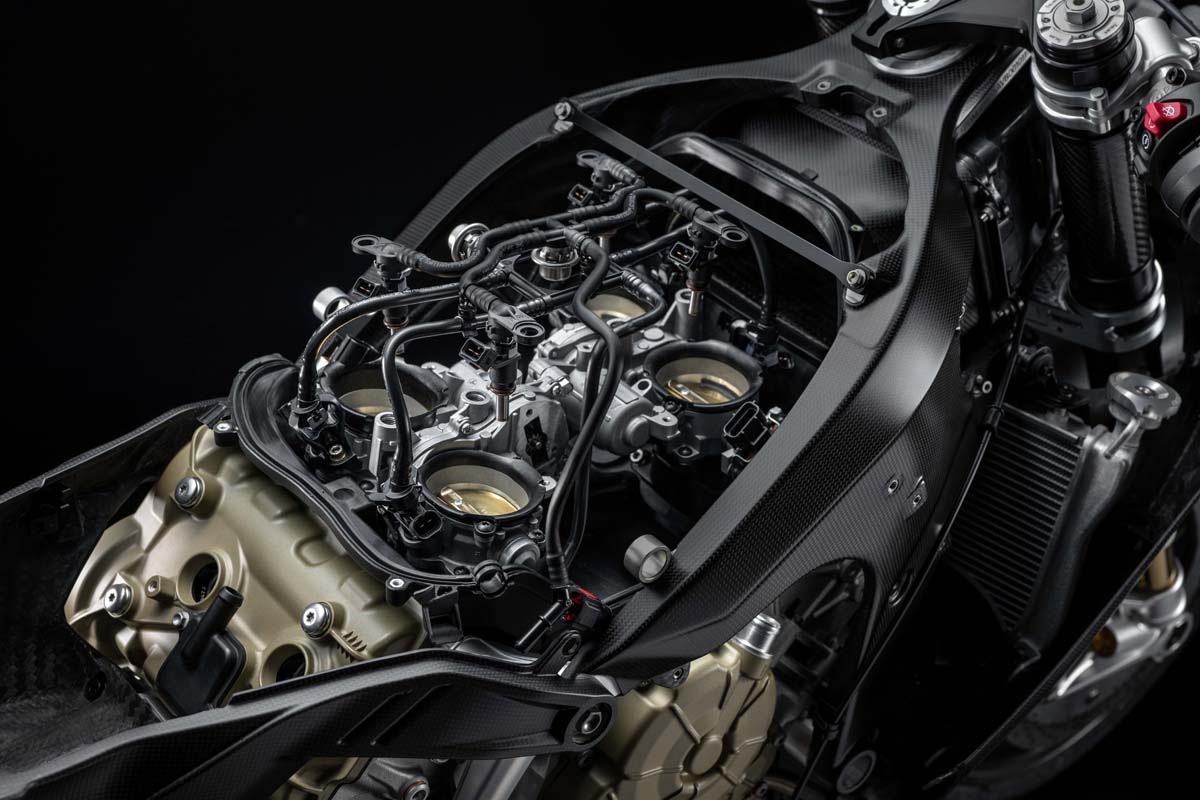
Along with its firsts in braking and suspension, the Superleggera V4 Centenario also introduces a new engine – the Desmosedici Stradale R 1100 – that was developed specifically for this project. As the name suggests, capacity is increased from the standard Desmosedici’s 998cc to 1,103cc. This has been achieved by lengthening the stroke from 48.41mm to 53.5mm. According to Ducati, this delivers more torque and thrust in the mid-range without impacting acceleration.
Compared to the 216hp (161kW) from the Panigale V4 and 218hp (162kW) from the Panigale V4 R with the 998cc engine, this 1,103cc unit allows a peak of 228hp (170kW). This increases to 247hp (184kW) when Ducati Corse Performance oil is used and the low-restriction Akrapovic exhaust from the racing kit is fitted. Ducati are claiming this figure is unprecedented for a production motorcycle and the highest power-to-weight ratio ever offered.
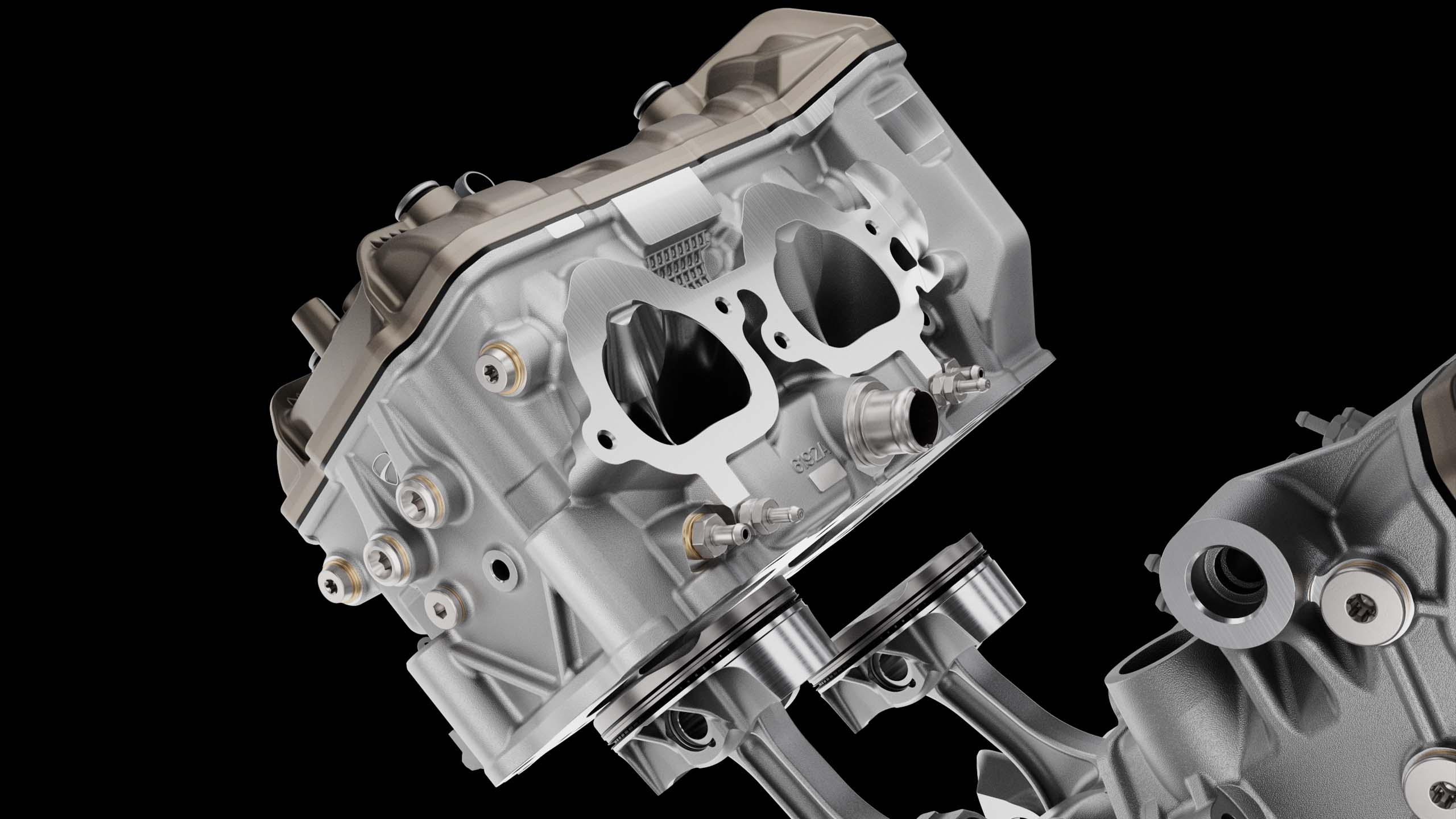
Despite its increased capacity, the Desmosedici Stradale R 1100 is 3.6kg lighter than the 998cc V4, thanks to elements like tungsten inserts in the crankshaft, resulting in more immediate throttle response, and titanium in the exhaust manifolds. The exhaustive effort to save weight even came down to the screws.
Throttle bodies are increased from 52mm to 56mm, and the exhaust manifolds to 41.7mm, with improvements made to the inlet trumpets and upper injectors, plus polished intake and exhaust ports.
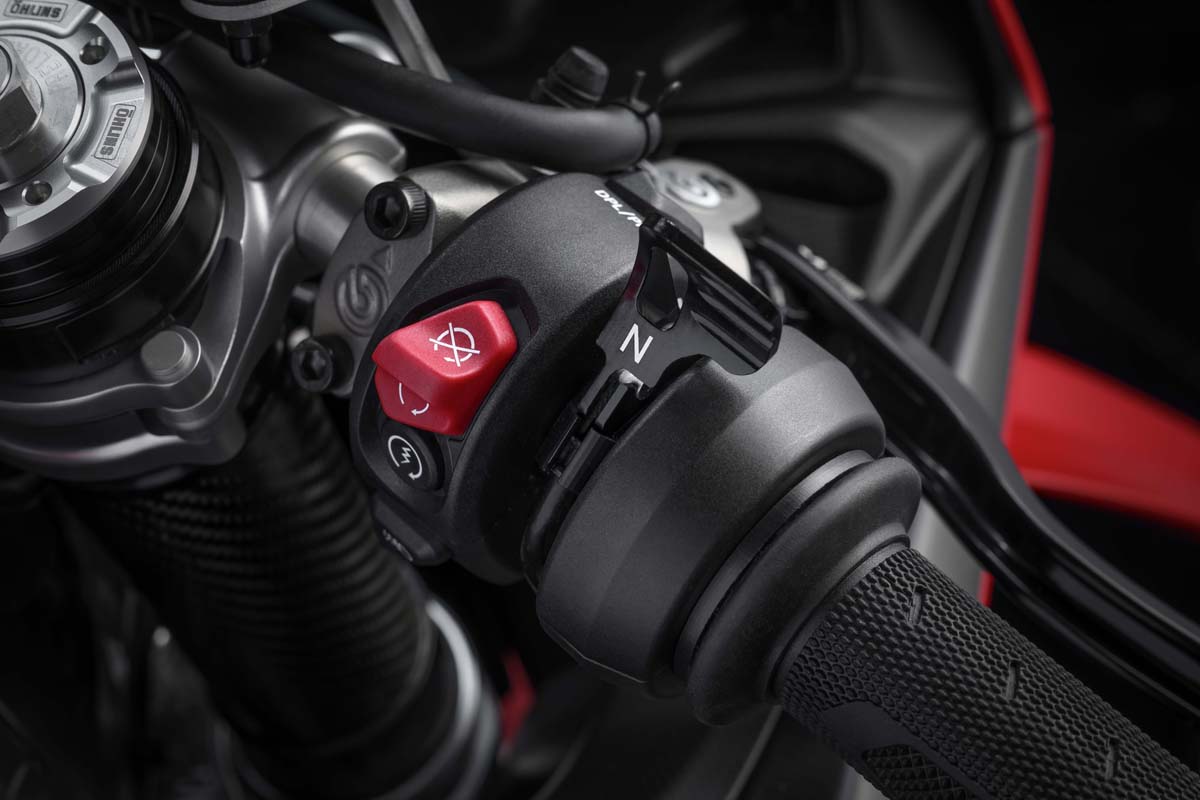
A race-spec gearbox places neutral at the bottom of the shift pattern, but the DNL (Ducati Neutral Lock) system prevents neutral from accidentally being engaged when downshifting under hard braking. Ducati adds that moving neutral from between first and second makes shifting between these gears faster and smoother.
The driveline is completed by a DiD ER7V chain of the same type used in WorldSBK, and a lightweight Ergal sprocket.
Aero Body, Centenary Red
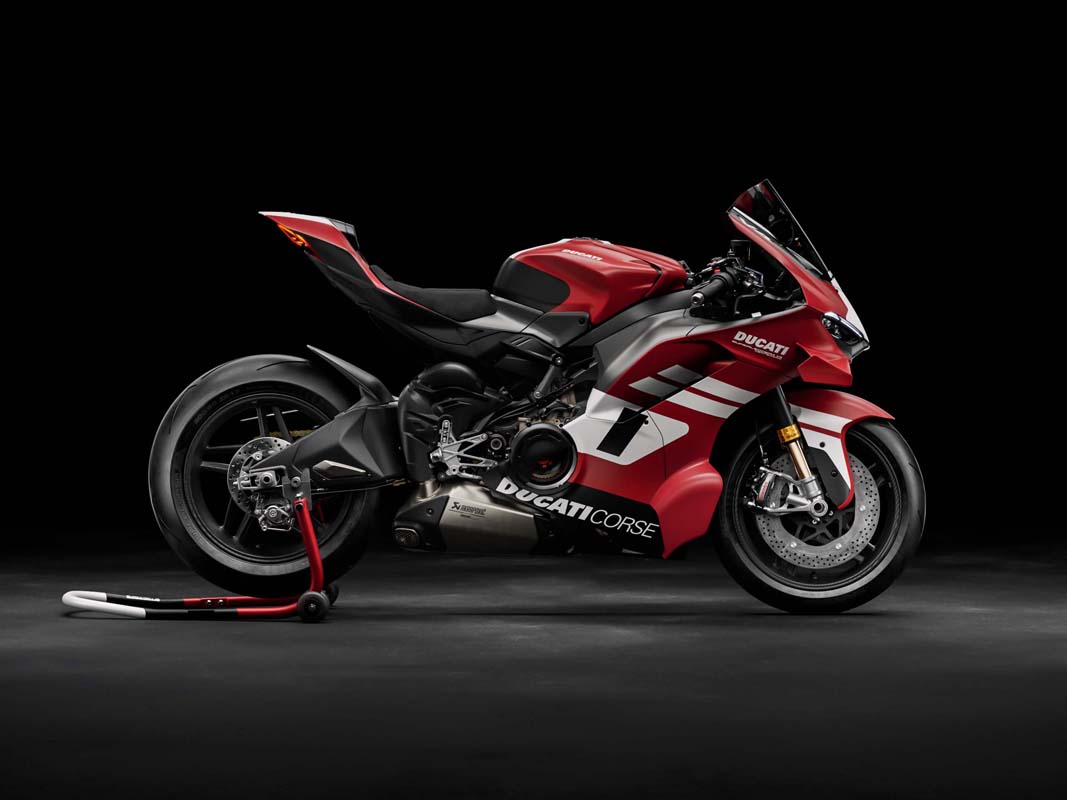
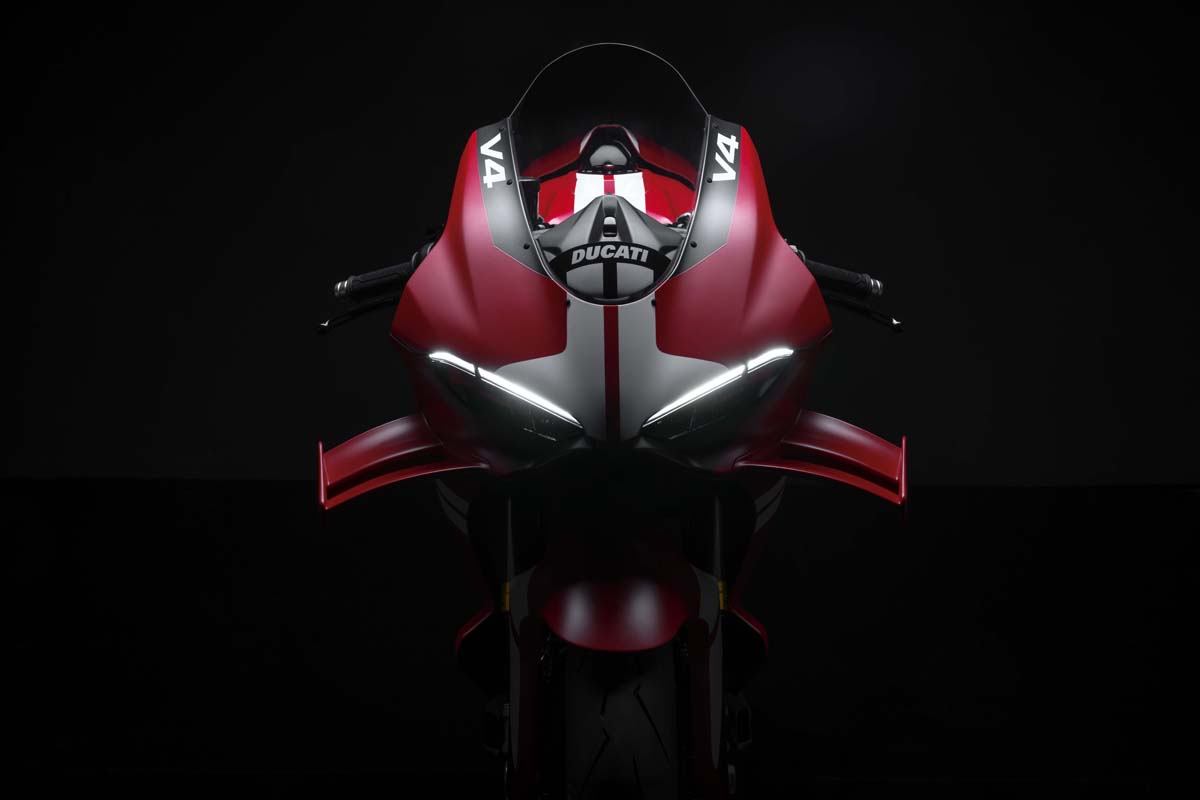
All the winglets and aerodynamic elements you’d expect from a high-end Superbike are on the Superleggera V4 Centenario, developed mostly from Ducati’s factory WorldSBK Panigale V4 R machines. In addition, corner sidepods that Ducati introduced to MotoGP in 2021 generate ground effect mid corner, optimising stability and grip at extreme lean angles.
The all carbon-fibre body is finished in ‘GP26 Rosso Centenario’ (Centenary Red) that is said to have been inspired by Ducati’s first proper motorcycle – the 1949 Ducati 60. Accenting this are dual white stripes on the flanks, tank, nose and tail, with a stylised #1 graphic on the lower fairing. In a reversal of normal practice, this finish inspired the treatment on Ducati’s factory MotoGP and WorldSBK entries this year.
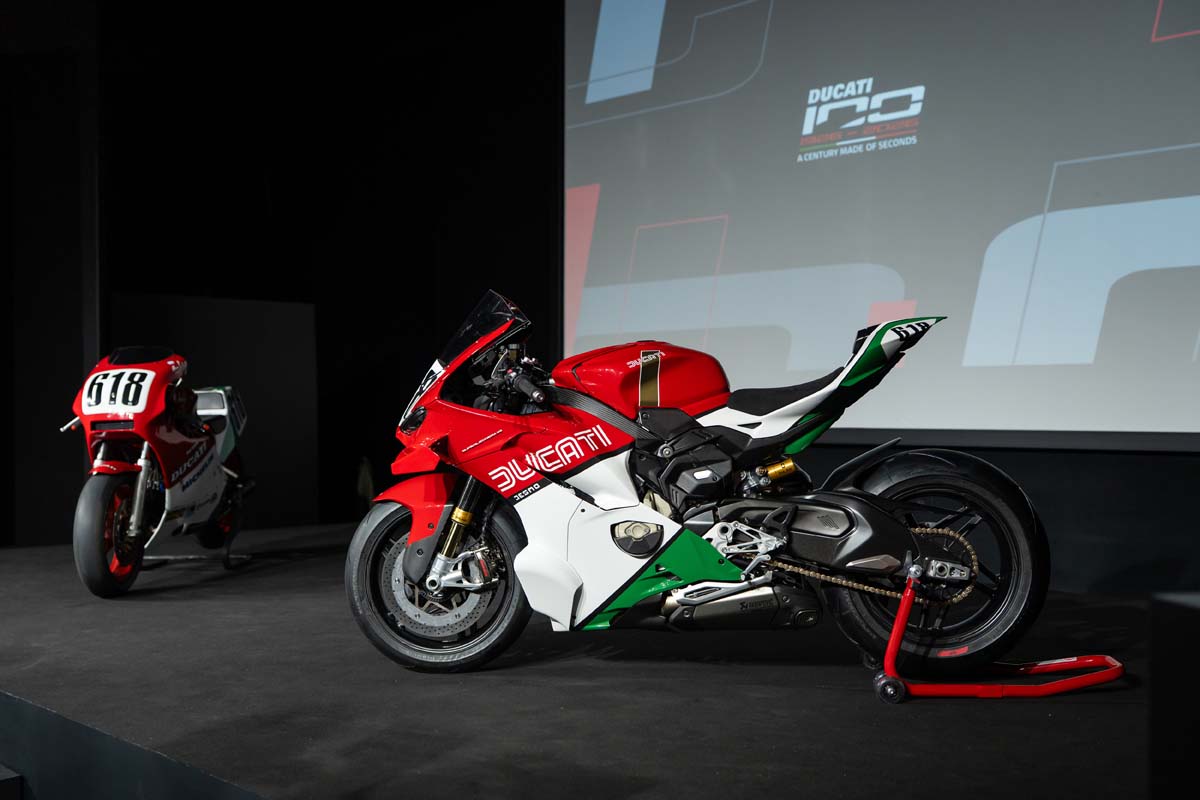
The 100-unit Tricolore edition goes the other way, with its red-white-green finish inspired by Ducati’s factory 750 endurance racers from the 1980s, specifically the unit Marco Lucchinelli used to win the 1986 Battle of the Twins in the US.
Some elements of the carbon fibre fairing are left exposed, but there’s enough carbon fibre everywhere else – from the fuel tank cover to the licence plate holder - to arguably make this unnecessary. Billet aluminium is used to finish other elements, like the radiator cap and footpeg plates.
The top fork yoke carries a laser-etched engraving of each bike’s individual build number in the 500-unit run, with the same number added to the titanium key and start-up screen for the TFT instrumentation.
Abundant Electronics
Rider-assistance tech in the Superleggera V4 Centenario mostly mirrors what can be found in the Panigale V4 R, but everything has been recalibrated. Ducati also claim new strategies have been applied to the DVO (Ducati Vehicle Observer) sensors that control the rider aids.
Electronic assistance tech includes Ducati Traction Control, Ducati Wheelie Control and Power Launch Control, all DVO-enhanced in this application, as well as Slide Control. Cornering ABS has been enhanced, too, adding Engine Brake Control DVO and a Dynamic Engine Brake function to the existing RaceBrake Control and Road eCBS systems.
DEB applies the rear brake under engine braking to maximise available grip, as well as in corner entry when the front brake is released.
All in the Box
Each Ducati Superleggera V4 Centenario will be shipped in a custom wooden case which includes the bike, racing kit, front and rear paddock stands, a garage mat, bike cover and certificate of authenticity.
The racing kit includes the aforementioned Akrapovic exhaust, plus a specific lower fairing, race seat, upgraded DAVC Race Pro software, open clutch cover, swingarm and alternator protectors, a racing fuel cap and brake lever guard, plus blanking plates for the headlight, indicators, sidestand and licence plate bracket.
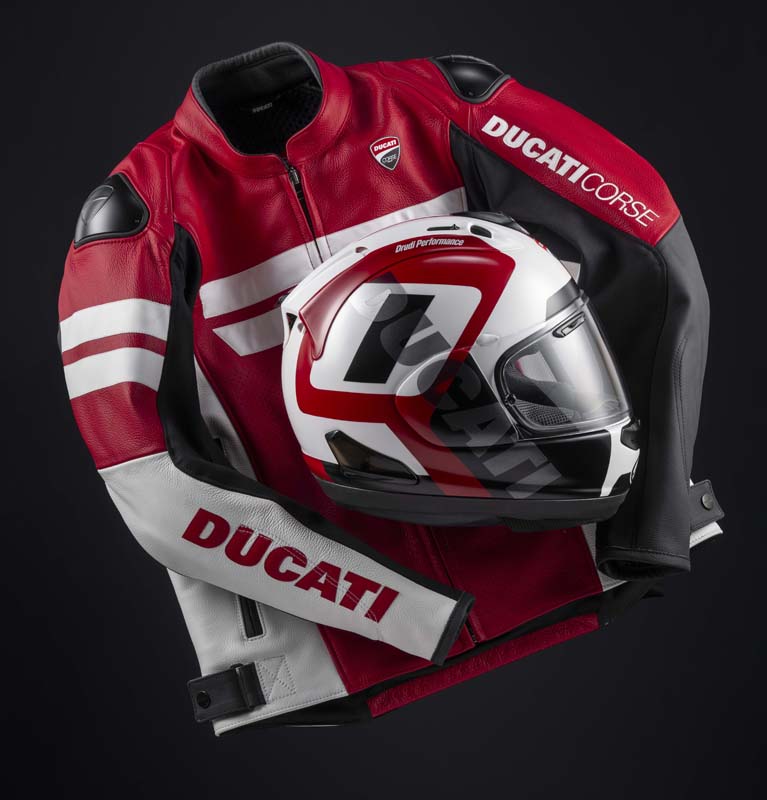
Superleggera V4 Centenario buyers will also be able to purchase a helmet, jacket and leather race suit in the same colours as the bike. Whether this offer also applies to the 100-unit Tricolore edition is unclear.
Pricing has not been confirmed, but some overseas reports suggest US$165,000 for the standard Superleggera V4 Centenario, rising to US$250,000 for the Tricolore variant. This translates to AU$211,000 and AU$320,750 (approx.) based on exchange rates at time of writing.
To find out more, go to: ducati.com/en/au