

Words: Phil Suriano
Photos: Courtesy of Urban Moto Imports
The ongoing evolution of Royal Enfield’s motorcycle range has seen a number of new models and offshoots of existing ones released of late. The most recent example of the latter is the Himalayan 450 ‘Mana Black’. With enduro inspired, adventure ready accessories fitted as standard, the Mana Black should be a popular addition to Royal Enfield’s growing family.
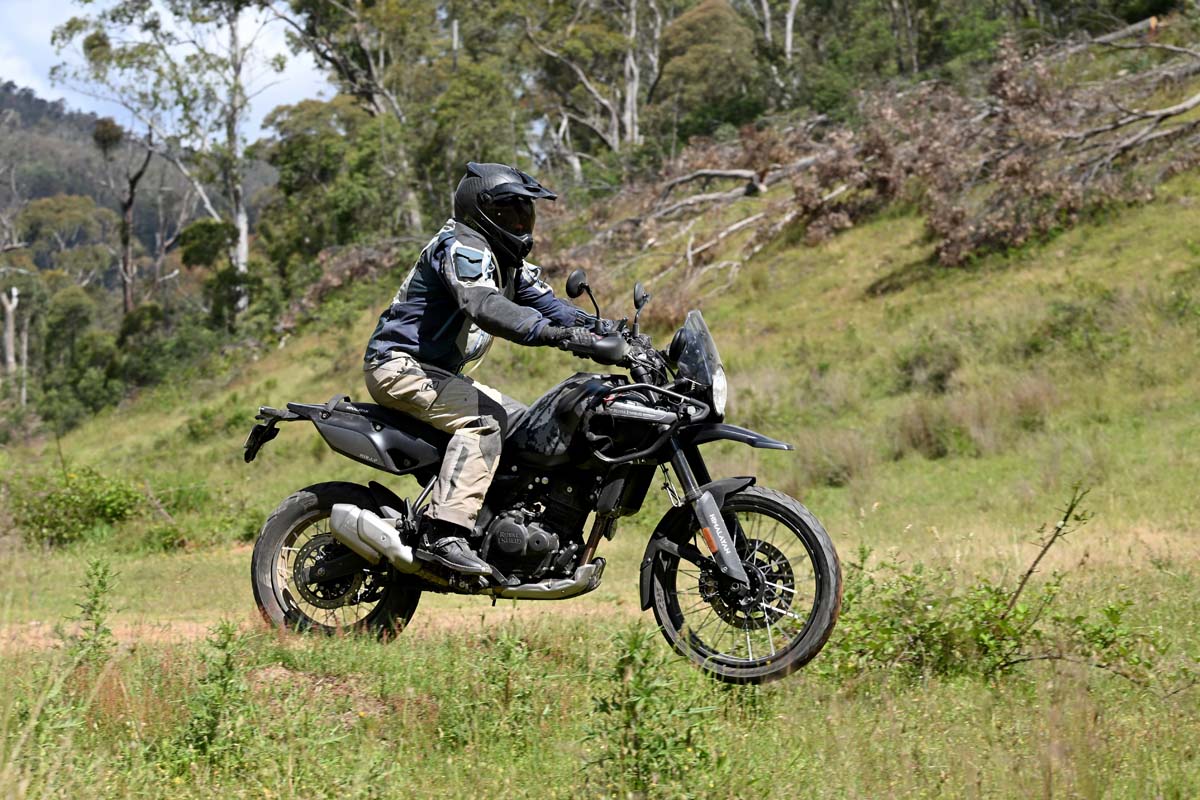
Taking its name from the Mana Pass connecting India and Tibet – one of the highest vehicle-accessible mountain roads in the world at 5,632m above sea level - the Mana Black is the first special edition of the Himalayan 450 to be released locally.
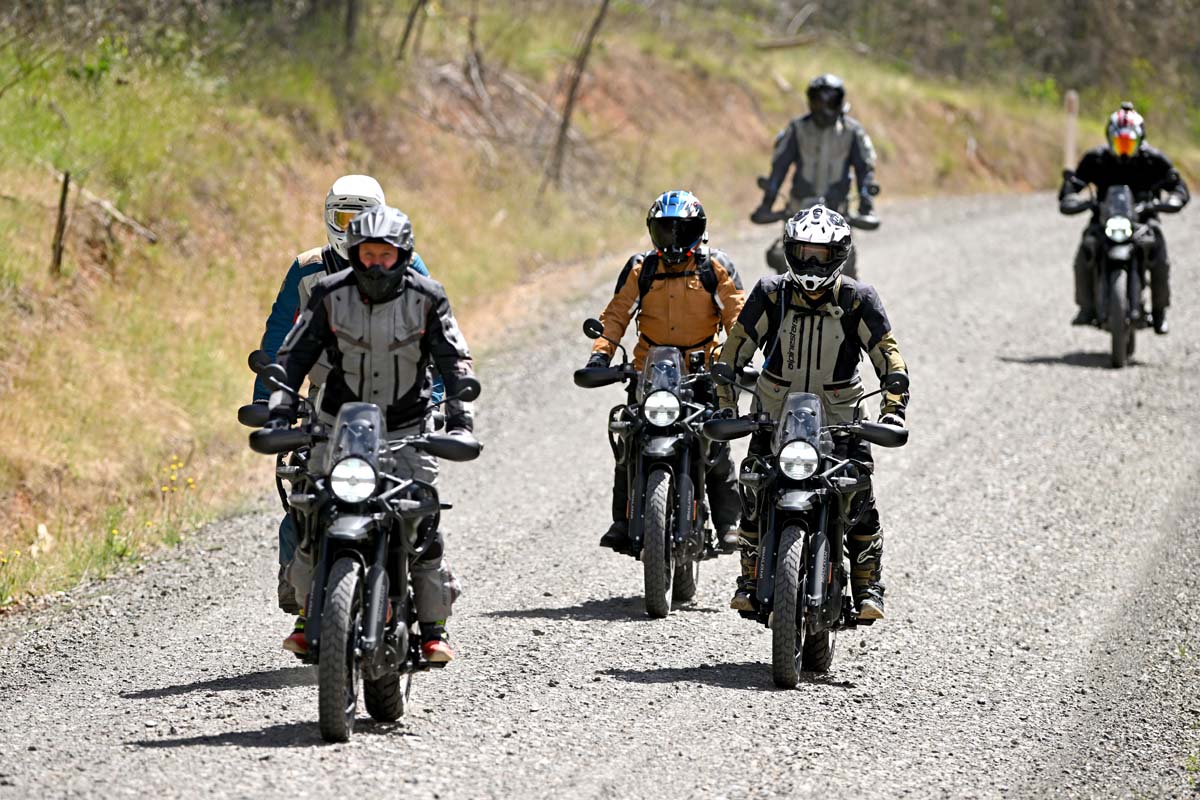
For the Australian launch of the Himalayan 450 Mana Black, Urban Moto Imports (Royal Enfield’s Australian distributors) took myself and other motorcycling media on a two-day ride in the Victorian High Country.
The last time I rode a Himalayan was at the launch for the 450-engined version of this LAMS-approved adventure bike a little over 18 months ago. That launch was also in the High Country, so I knew the territory and knew the bike, but was keen to see what the Mana Black brought to the table.
Rally Ready
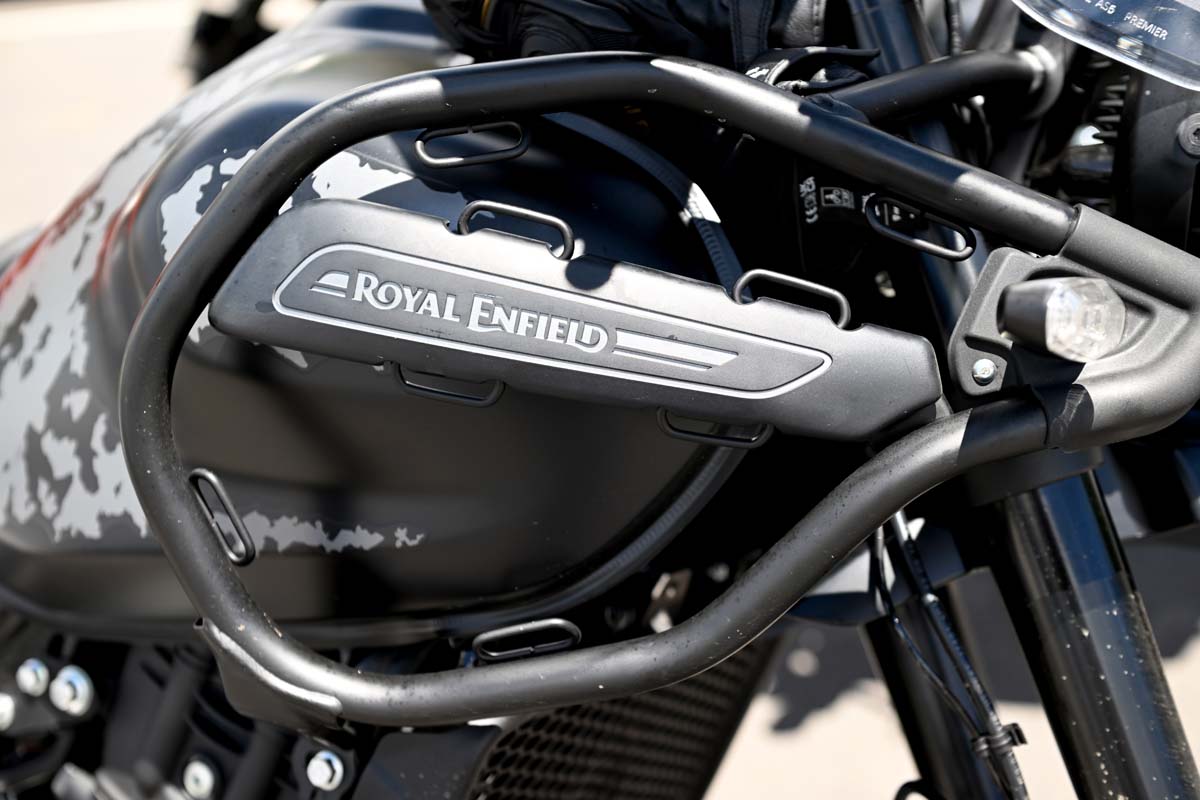
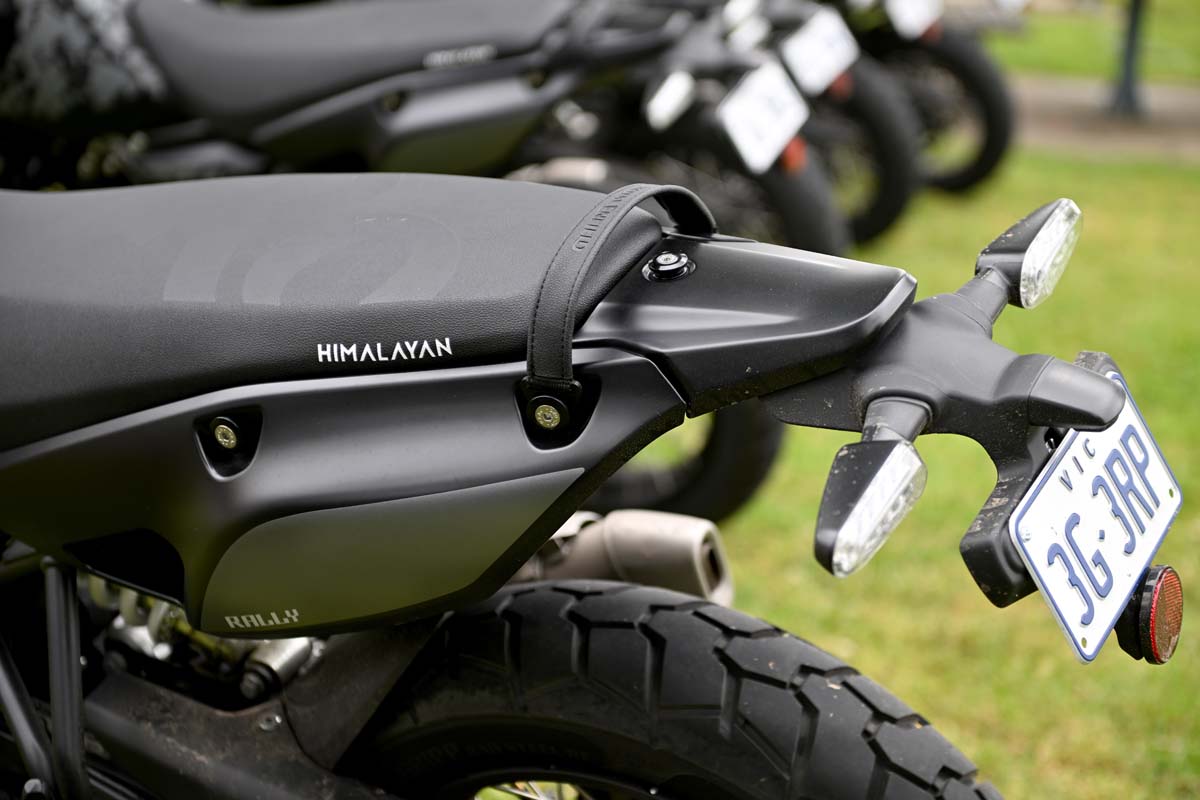
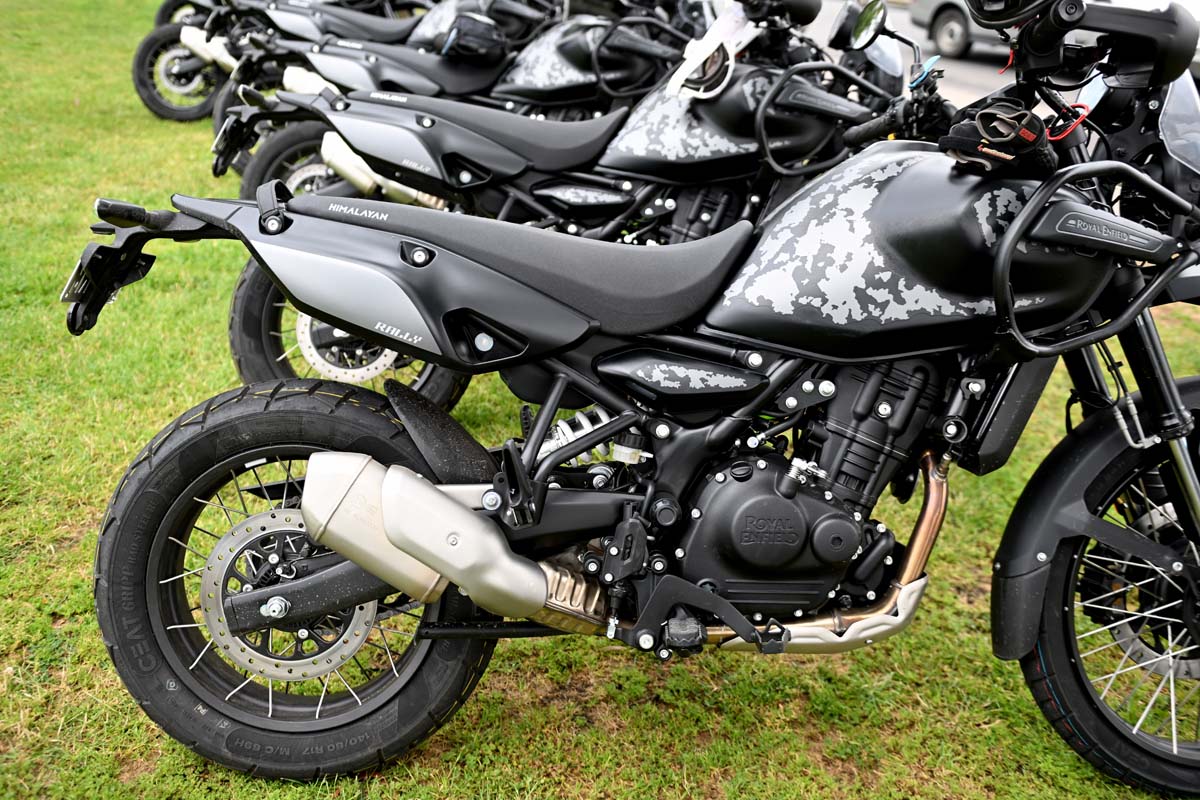
The key difference between the Mana Black and the standard Himalayan 450 comes down to its added extras. These take the form of ‘Black Rally’ hand guards, a one-piece 'Black Rally' seat with pillion grab strap, and a reconfigured rear mudguard with side covers.
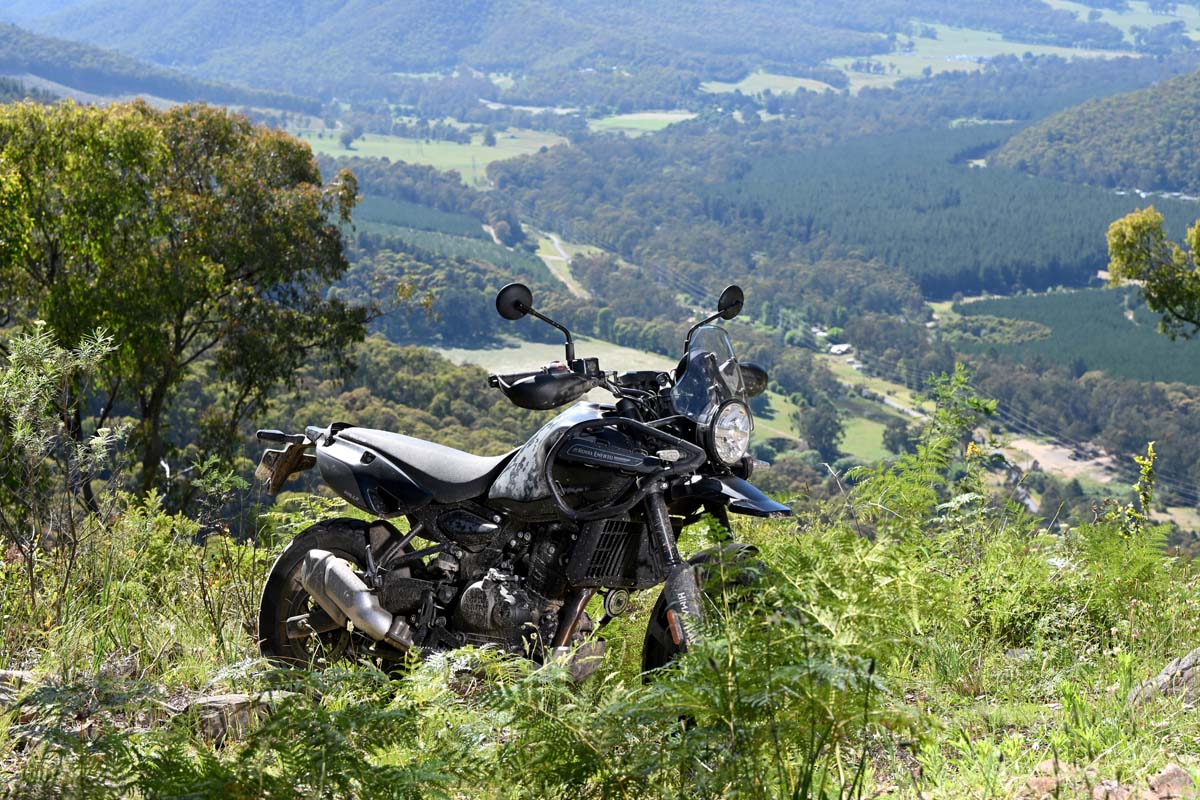
The blackout exterior treatment is the sole colour option, with its “camouflage” grey graphics similar to that of the Kamet White option for the standard Himalayan 450. The Mana Black also runs tubeless tyres as standard.
According to Royal Enfield, the Mana Black’s seat and related rear mudguard/side covers allow for more rider manoeuvrability, while a grippier seat covering helps keep you planted when needed. With the new seat's grab strap, plus the retention of pillion pegs, provision for two-up riding remains. Although the new rear-end sees the luggage rack removed, provision to mount panniers remains, while the fuel tank’s protective bars can carry small luggage, too.
As the Mana Black is defined by bolt-on extras, it would be possible to take the standard Himalayan 450 and add all this kit to make an ersatz version. Existing Himalayan 450 owners may be tempted to do just that, as the Mana Black’s ride away price of $10,490 is $1,300 more than the standard model. Whether there’s actually $1,300 of added value is debatable.
Familiar Heart, Familiar Bones
Under its Black Rally extras and monochrome colour scheme, the Mana Black is identical to the Himalayan 450. Compared to the old Himalayan 411 from 2017, the Himalayan 450 that launched almost two years ago was a completely new motorcycle. All of those features transfer to the Mana Black.
If you’re not up to speed on the Himalayan 450, a precis of its improvements over the 411 include a frame that’s stronger, lighter and narrower, a single-cylinder engine with increased capacity (452cc vs 411c), liquid cooling and ride-by-wire throttle, a high-mount air intake, six-speed gearbox (instead of five-speed), improved brakes (with switchable ABS), new suspension, TFT instrumentation, app-based navigation, LED lighting, a USB-C port and selectable riding modes. The new Himalayan is also 4kg lighter than the old version, despite the bigger engine and being larger in most dimensions.
All that being said, there was nothing particularly wrong with the Himalayan 411, but the expectations of international markets, particularly in the US, UK and Europe, meant Royal Enfield had to step up in terms of componentry, tech, finish and quality. They certainly did that with the Himalayan 450, and I remember being very impressed with it on the Australian launch ride back in 2024.
Black on Black
For the Australian media launch of the Himalayan 450 Mana Black, a gaggle of journos assembled at the HQ of Urban Moto Imports in suburban Melbourne for a ride to the beautiful town of Bright in Victoria’s High Country.
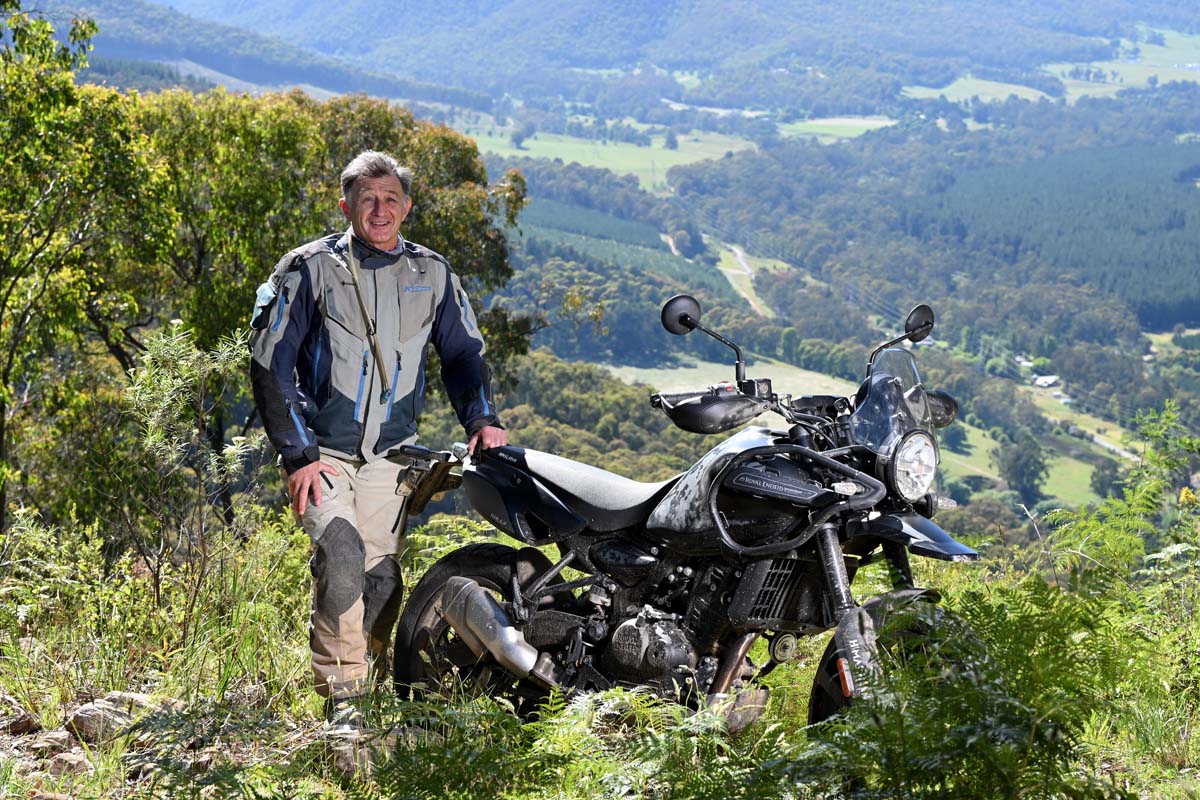
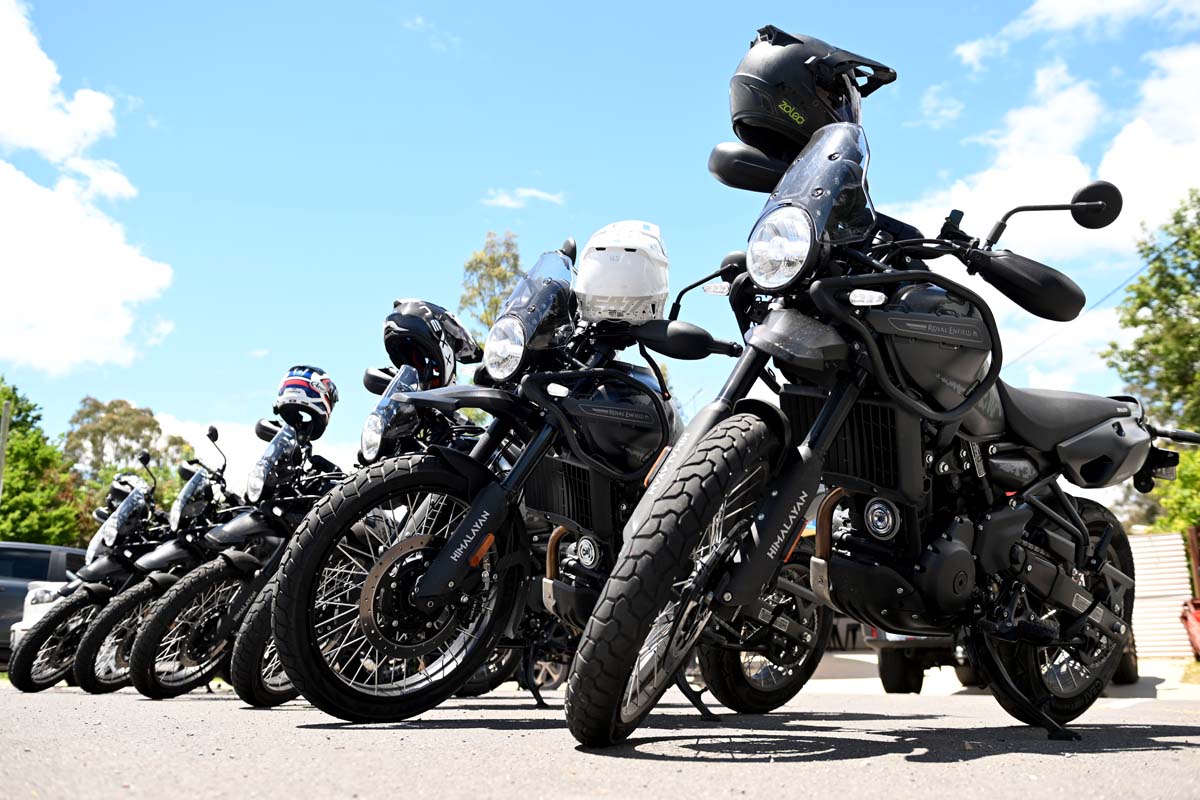
On first inspection, the lineup of Mana Black bikes looked “ready for action” with their Black Rally extras. The all-black treatment for the frame, engine and plastics had real visual presence, with just enough contrast provided by the graphics, spokes and exhaust system, including the distinctive shortie silencer.
If there’s one negative with blackout bikes like this is that they look grubby after even moderate off-road work. What we did left them filthy, so if you’re a pedant for cleanliness, bear that in mind!
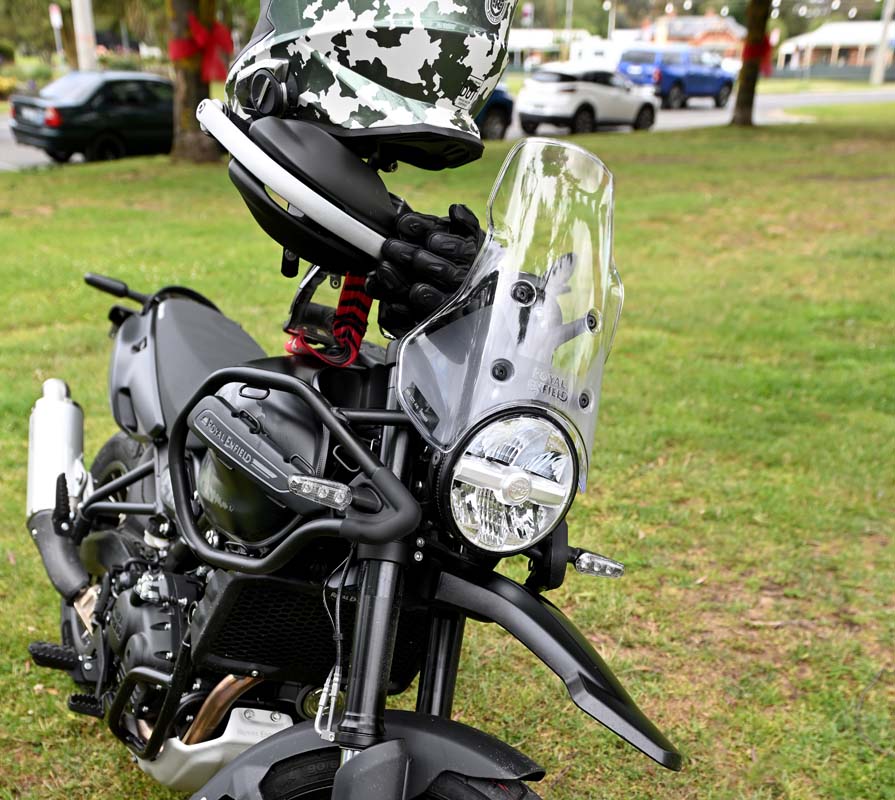
The short screen and ‘beaked’ front mudguard are what you expect from an adventure motorcycle, although a taller ‘screen is optional for longer commuting and was fitted to some of the launch bikes.
Of the other features, I confess I wasn’t a fan of the big LED indicators from the 2024 Himalayan launch, and they still look a bit too large for me. However, it’s better to be seen when turning than not - I’ll take visibility over aesthetics any day.
Build quality couldn’t be faulted, and there were some nice detail touches, like the subtle ‘Royal’ branding on the Black Rally seat. That seat increases height to 860mm over the standard Himalayan’s 825mm. There’s no low-seat option to suit the Mana Black's unique rear section, so shorter riders should be aware of that. Cross section is narrow, though, which helps. The Black Rally extras have no impact on the Himalayan 450’s 181kg dry weight, which rises to 195kg wet. Fuel capacity is also unchanged, at 17 litres.
High Road to Bright
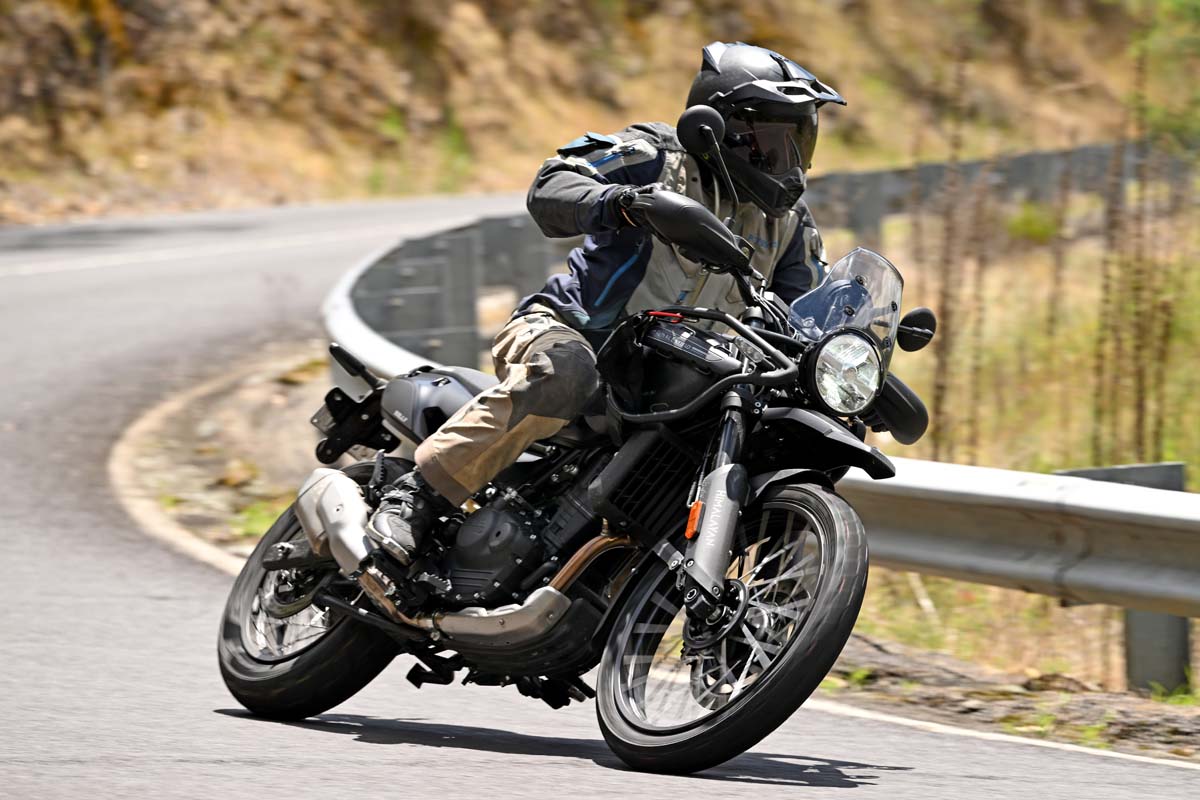
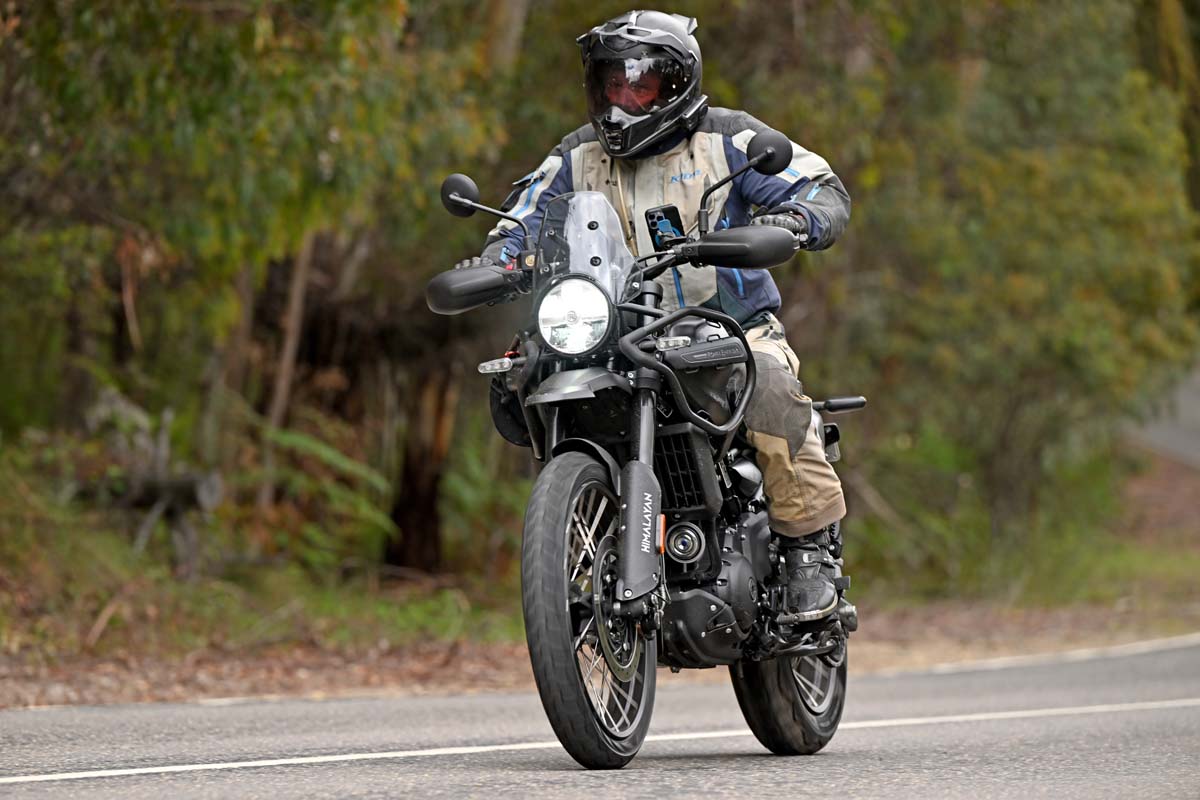
The run from Melbourne to Bright gave us a good opportunity to assess the Mana Black’s on-road manners before we reached the dirt. On tarmac, performance and handling was impressive. In stop-start city riding, action from the slipper clutch was smooth, while the 450 engine accelerated nicely. Of the ‘Performance’ and ‘Eco’ riding modes, the former delivers noticeably sharper throttle response. Highway speeds were easily achieved in either mode, while the engine felt relaxed when cruising in fifth or sixth gear. In terms of economy from Performance mode, expect to get around 270kms from the 17-litre fuel tank in uninterrupted highway riding, with perhaps an additional 50km possible in Eco mode.
Out on the highway, the taller screen was effective at minimising wind buffeting at speed, but the standard screen still worked well. Those highway miles did show up the limitations of the Black Rally seat, though. It suited my 5’10” (178cm) height, but it’s firmer and flatter than the standard seat. As such, I wouldn’t want to be spending longer in the saddle than the three hours it took us to reach Bright. I’d expect a pillion to be griping about comfort after half that time.
High Country Adventure
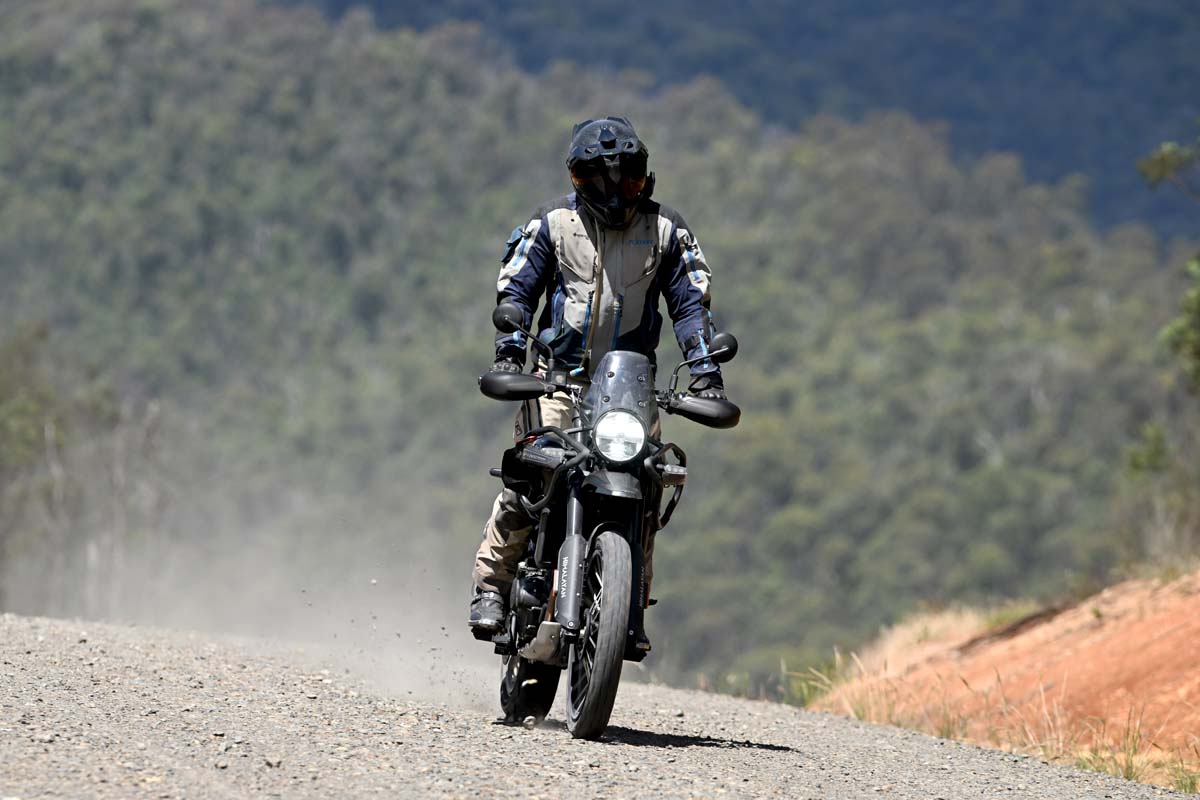
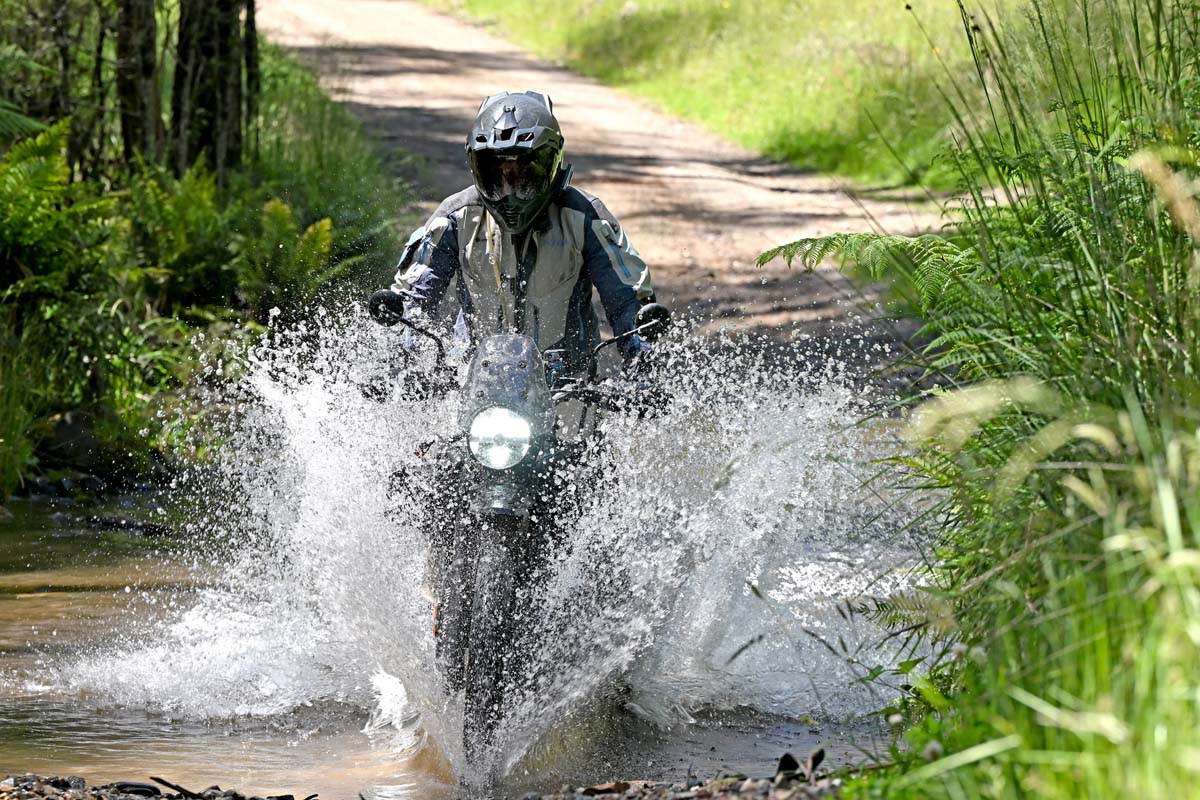
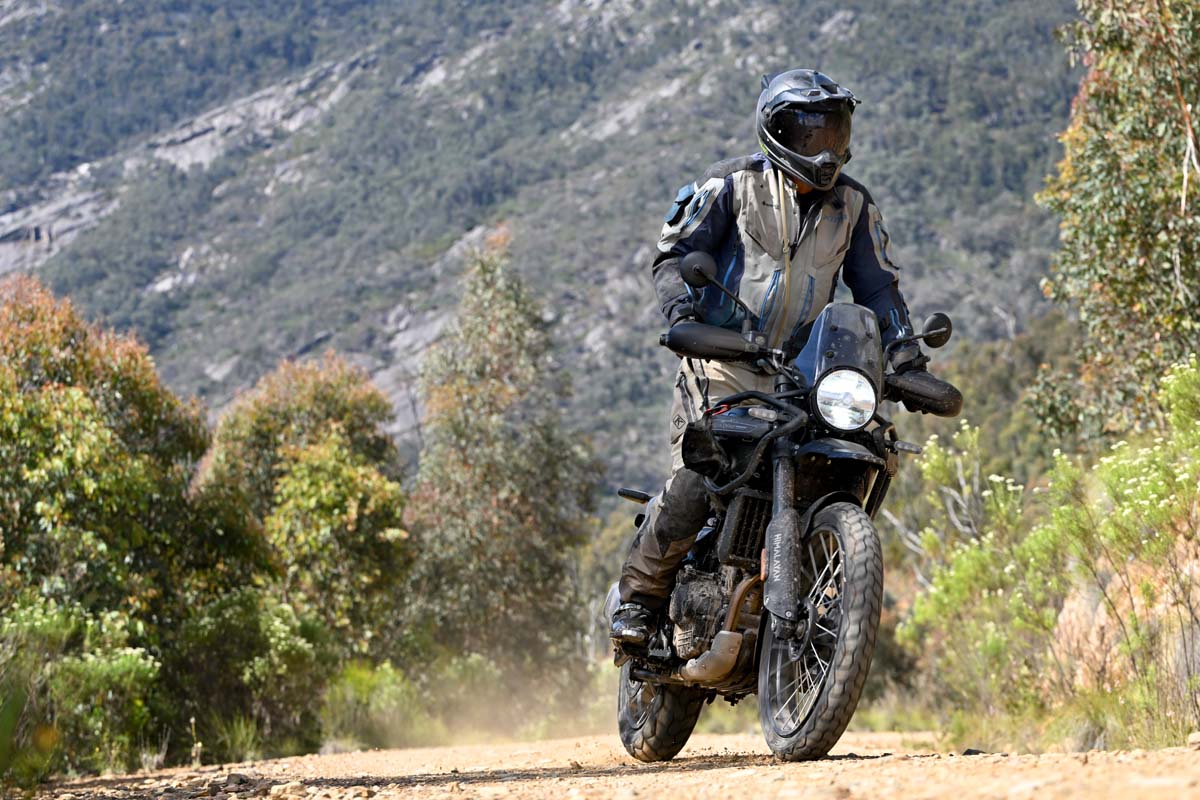
Upon reaching Bright, bitumen gave way to gravel roads and challenging off-road terrain, including narrow fire trails and some very rough, rocky sections - classic High Country stuff. Throw in some steep inclines/declines to test the torque and braking, and we had a good test of the Mana Black’s off-road capabilities. Given the media launch was in December, there wasn’t much mud about, but we did get some rain and found a few creek crossings.
The press bikes were all fitted with road-biased CEAT tyres, which handled the rough stuff with only a drop in pressure (to 20psi) needed - that was a pleasant surprise. As mentioned, these tyres are tubeless, which is more convenient for road riding, but if you’re doing all your riding on dirt, consider switching these out for tubed tyres with a more aggressive tread pattern, which are available to suit the Himalayan 450.
Given I’ve done a lot of my adventure riding on larger capacity bikes, like the BMW R1250 GSA, the Royal Enfield made me feel like I was on a mountain bike. Despite its 195kg wet weight, the Mana Black felt light and manoeuvrable, yet strong – when you landed off a whoop or hit a hard rut, the bike didn’t feel like it was about to crumple underneath you. It was always well balanced, too.
The wheel package – 21-inch front and 17-inch rear – is well suited to dirt work without impacting on-road stability, and as mentioned, the tyres are truly dual-purpose. Travel from the Showa suspension set – 200mm front and rear – absorbed a lot of what the worst trails threw at us, while still being supple on the road. Front suspension is fixed, but there’s adjustable pre-load on the link-type monoshock rear, so you can alter that to allow for gear, carrying a pillion, or just to suit your own preference.
Off-Road Ready
Riding off-road, performance from the Sherpa 450 engine was just as good as in the city, and pretty much as I remember it from the 2024 launch. The 29.4kW of peak power never left me feeling like I was lacking, while the 40Nm maximum torque provided ample grunt when needed.
In terms of gearing for the six-speed transmission, some of my compatriots felt spacing between the first and second gear ratios was too wide for lower speed off-road situations. It wasn’t a deal breaker for those critics, and something that could be remedied with a simple sprocket change.
As so much of the off-road section of this launch saw us up on the pegs, seat comfort wasn’t an issue, and I should note that the pegs have removable rubber inserts for road use. Bar reach was comfortable whether sitting or standing.
A couple of bikes suffered holed radiators in the fast gravel sections, which demonstrated the value of a radiator guard that’s available as a Royal Enfield factory option, as is a sturdier ‘Rally’ sump guard.
Braking from the ByBre calipers (on single discs front and rear) was impressive, particularly on the rear wheel, while the ability to disengage ABS for the loose stuff was welcome. Newcomers will appreciate the peace of mind that comes with ABS, but being able to powerslide though wide gravel bends without the ABS giving you a slap was so much fun. It should be noted that you need to bring the bike to a complete stop to disengage the ABS, but it can be re-engaged on the fly. Also, when the ABS is “off,” intervention is removed entirely from the rear wheel, but only reduced, not removed, from the front wheel.
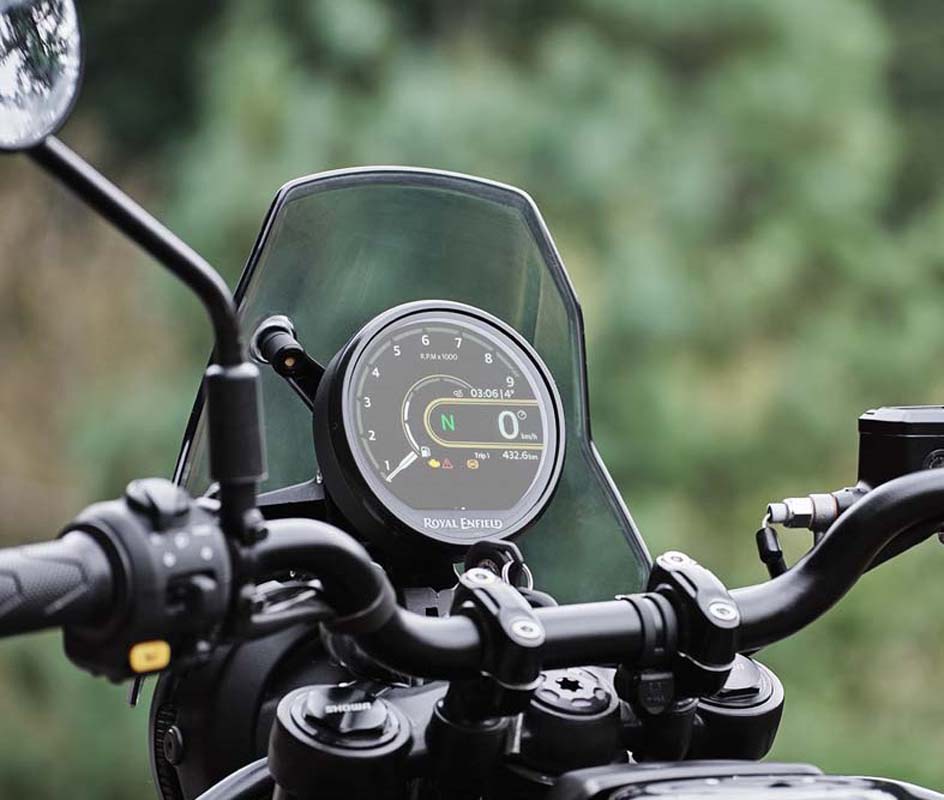
Royal Enfield’s TFT instrumentation can be a little tricky to familiarise yourself with, so some practise is recommended for navigating menus and the like to save you fiddling with switchgear on the fly. Given the nature of this ride, the Tripper navigation wasn’t really employed, but I’ve had no issue with it in the past.
All lighting is LED, with a USB-C charge port standard.
Little, but Strong
A final point to note with the Himalayan 450 Mana Black concerns durability. Given motorcycling journalists are notorious for pounding bikes that aren’t their own (all in the interest of research!), you expect some breakage. This didn’t happen on the Australian launch for the Himalayan 450 back in 2024, nor the launch for the Mana Black last December. Holed radiators aside, these bikes survived the treatment we gave them – including one off-trail excursion through a fence!
You do expect things to break, snap, work loose or fall off on rides like this, but the Himalayan stayed together. That being said, if really rough trails are going to be on your riding menu, the factory engine guards, radiator guard, headlight guard and handlebar pad are recommended.
One for All?
There’s no doubt that adventure bikes have been the hottest segment of the motorcycle market for years, and it seems just about every manufacturer now has a player in this space. Not many manage to blend true on-road usability with off-road practicality, though.
The Himalayan 450 Mana Black achieves this. It’s a bike that can easily switch from urban sprawl to open bush without any problem, with the Black Rally extras making it just that bit more capable for dirt use. The bike looks great, while being LAMS approved adds to the appeal. And like all of the bikes in Royal Enfield’s range, the Mana Black is affordable, too.
If you’re looking to combine comfortable, economical commuting with weekend squirts in the dirt without having to switch bikes or spend big, the Himalayan 450 Mana Black is absolutely worth an inspection. It makes adventure riding fun, accessible and affordable.
SPECIFICATIONS – 2026 Royal Enfield Himalayan 450 Mana Black
ENGINE
TYPE: DOHC 4-valve 4-stroke single
CAPACITY: 452cc
BORE x STROKE: 84mm x 81.5mm
COMPRESSION RATIO:11.5:1
ENGINE START: Electric
IGNITION: Digital
INDUCTION: EFI
COOLING: Liquid
MAX POWER: 29.44kW at 8,000rpm
MAX TORQUE: 40Nm at 5,500rpm
TRANSMISSION
CLUTCH: Wet, multi-plate, w/slip assist
GEARBOX: 6-speed
FINAL DRIVE: Chain
CHASSIS
FRAME: Steel twin spar tubular
FRONT SUSPENSION: 43mm USD telescopic fork, non-adjustable, 200mm travel
REAR SUSPENSION: Linkage monoshock w/preload adjustment, 200mm travel
FRONT WHEEL: 21-inch wire spoke
REAR WHEEL: 17-inch wire spoke
FRONT TYRE: 90/90-21 tubeless
REAR TYRE: 140/80 R-17 tubeless
FRONT BRAKE: 320mm disc w/two-piston caliper and dual-channel ABS
REAR BRAKE: 270mm disc w/single-piston caliper and dual-channel ABS
DIMENSIONS
LxWxH: 2285mm x 900mm x 1316mm (excl. mirrors)
WHEELBASE: 1510mm
RAKE: 26.5 degrees
TRAIL: 127mm
GROUND CLEARANCE: 230mm
SEAT HEIGHT: 860mm
WEIGHT: 195kg (wet)
FUEL CAPACITY: 17lt
COLOURS
Mana Black
LAMS APPROVED: Yes
PRICE: From $10,490 ride away
WARRANTY: 36 months, Unlimited Km with 36 months Roadside Assist


