

Words: Mike Ryan
Photos: Triumph Motorcycles Australia
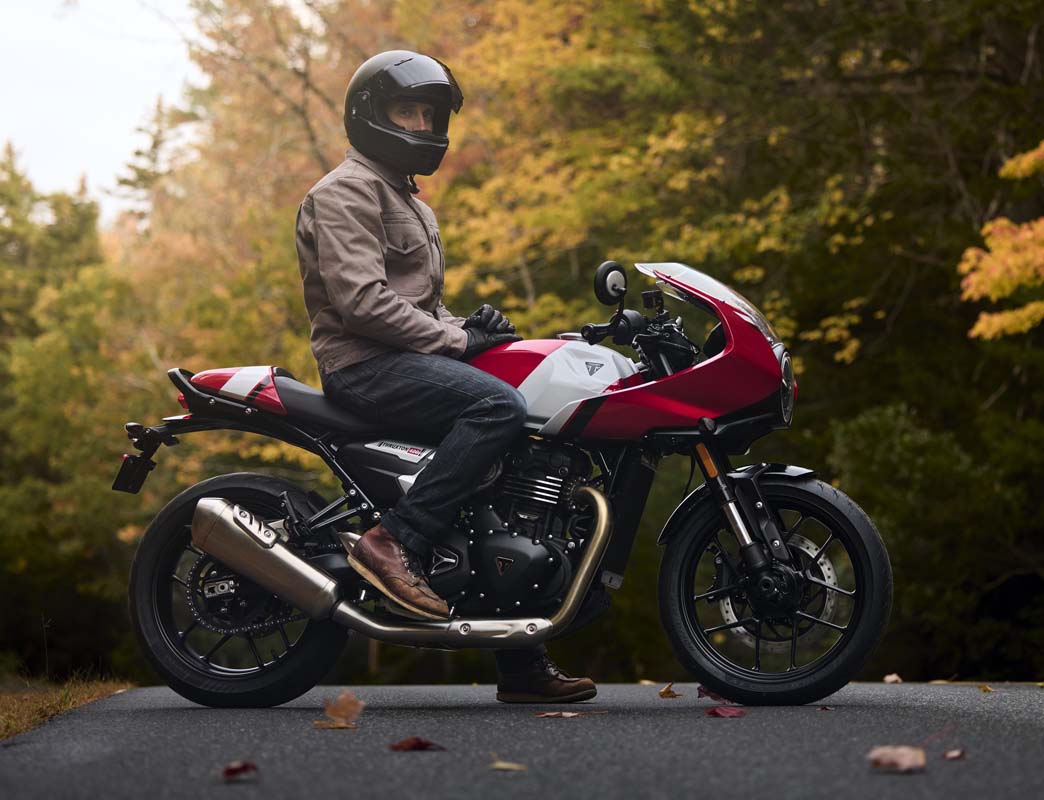
Since Triumph introduced their all-new 400 models at the end of 2023, there’s been speculation as to how and when they would expand the platform. What started with the Speed 400 naked and off-road inspired Scrambler 400 X was joined by the more rugged Scrambler 400 XC last year.
Now, there are two new members of the 400 family – the Tracker 400 and Thruxton 400.
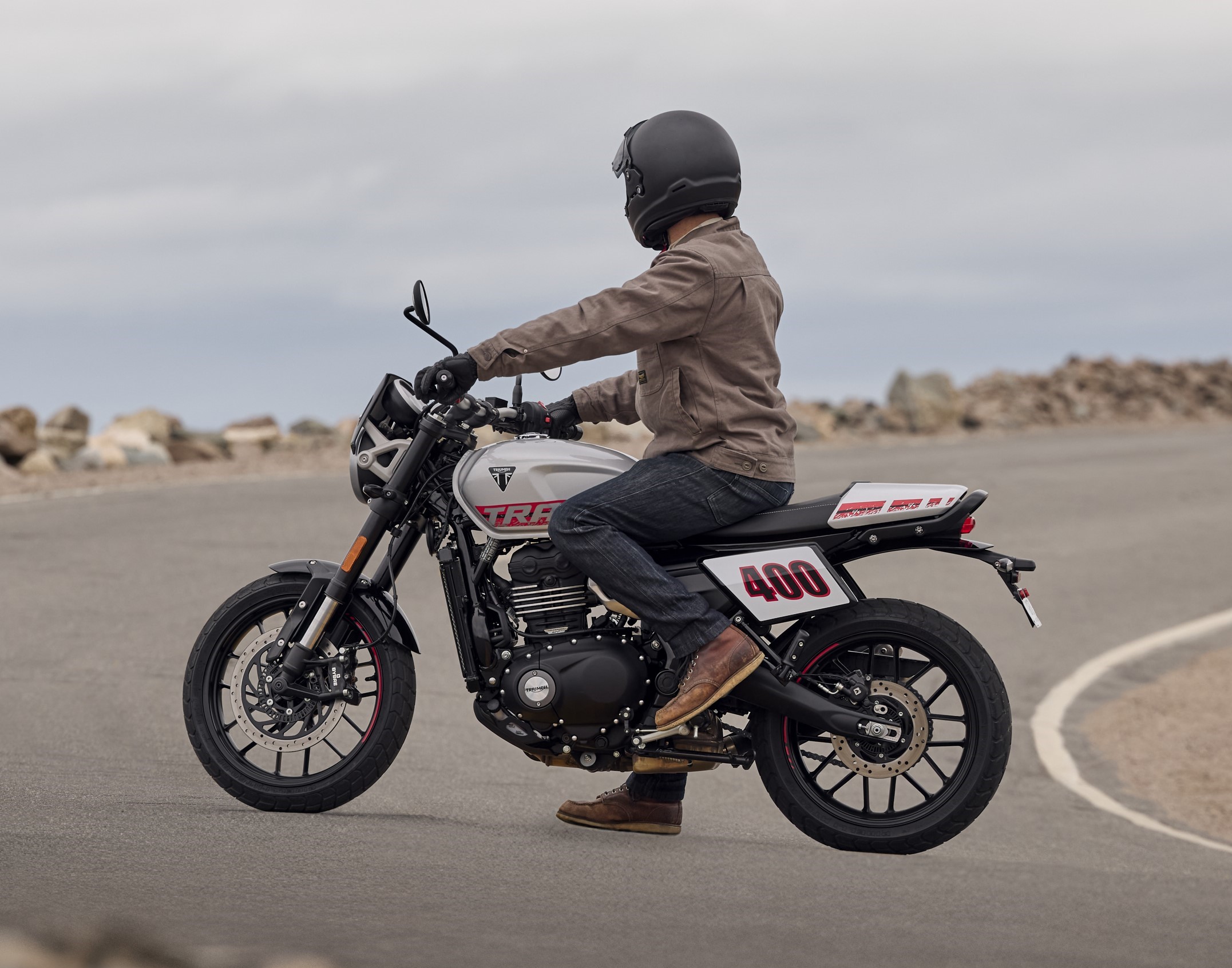
Announced in December, the Tracker 400 and Thruxton 400 are both LAMS-approved singles, like their siblings, but bring individual styling, specific chassis tuning and more engine power.
Of the two new models, the flat track-inspired Tracker 400 breaks new ground, as Triumph has never taken this design route with any of their Modern Classic models. The Thruxton 400 brings obvious café racer cues and revives a very famous name that was last seen (in 1200cc form) in 2024.
As with the 400 models that have been already released, these new singles are created in partnership with India’s Bajaj, with Triumph responsible for styling and Bajaj the manufacturing.
Both are aimed primarily at Royal Enfield’s market share in India, with the Thruxton 400 debuting there back in August, before an official launch at EICMA in November, followed by a global release.
Superior Single
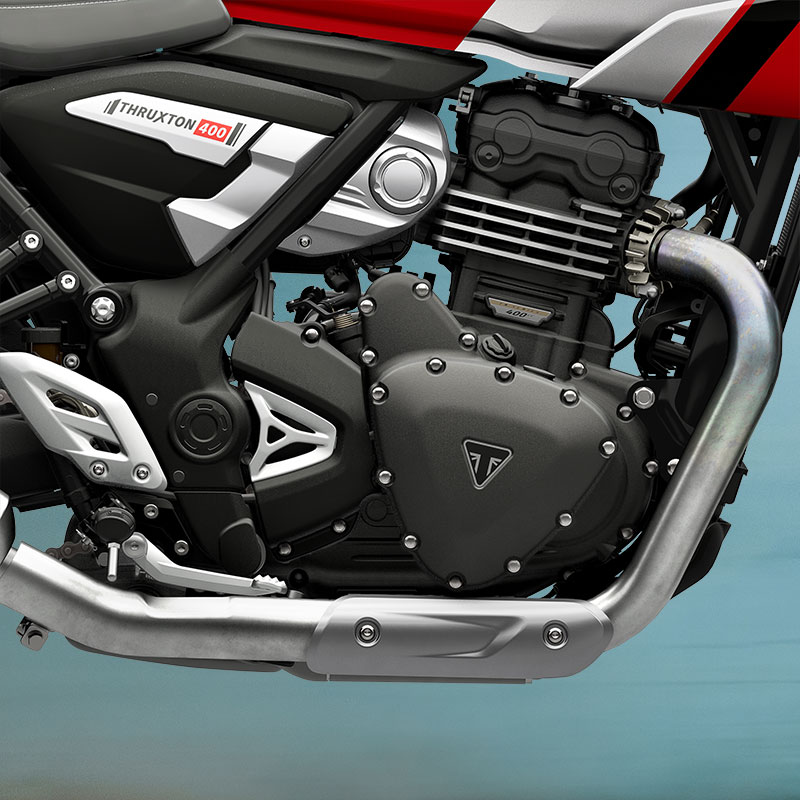
The common powerplant for the Tracker 400 and Thruxton 400 is a 398cc ‘TR Series’ liquid-cooled single that’s unchanged in capacity, bore, stroke and compression ratio to what’s in the Speed 400 and Scrambler 400 X/XC. However, the new arrivals offer more power and a higher rev ceiling – 30.89kW at 9,000rpm, compared to 29.4kW at 8,000rpm for the existing models. Triumph says this 5 per cent hike in power was achieved by revising the camshaft profile, along with adjusted tuning and new engine parts.
Torque is unchanged at 37.5Nm, but the peak is reached at 7,500rpm, instead of 6,500rpm, with 80 per cent of that torque available from 3,000rpm.
This improved engine performance is common to both the new models, as is a six-speed gearbox with slipper clutch (Triumph calls it ‘Torque Assist’) and chain final drive.
Cycle Parts – Slight Separation
While the engine and gearbox are the same, the two new 400s do differ slightly in their frame geometry and suspension. A steel tubular frame, steel subframe and aluminium swingarm are common to both, as is a suspension package consisting of a 43mm USD Big Piston fork and rear monoshock with remote reservoir. The forks are non-adjustable, but the rear allows preload adjustment to handle luggage or a pillion.
To suit the sportier characteristics of the Thruxton 400, rake is 24.5 degrees, while the Tracker 400 has a fractionally steeper 24.4 degrees. The difference may seem negligible, but the change in trail - 101.5mm versus 107.6mm – is significant. Obviously, these changes give each model a different wheelbase, too.
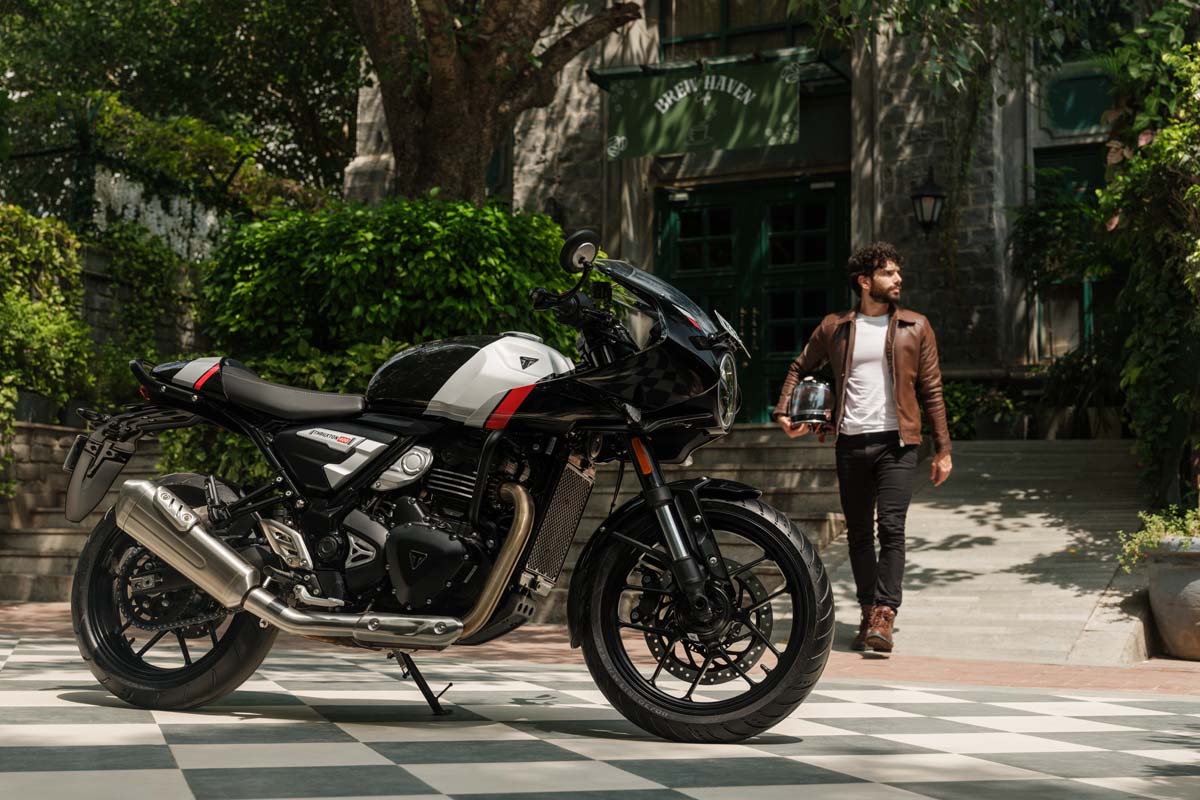
For the wheels, both run 17-inch alloys front and rear, but where the Tracker 400 runs a complex 14-spoke design (presumably to mimic wire spoke wheels), the Thruxton 400 has a more open 10-spoke design. The standard tyre for the Tracker 400 is the Pirelli MT60 RS (110/70 R17 front, 150/60 R17 rear) with an aggressive tread pattern, while the Thruxton 400 is fitted with sporty and grippy Pirelli Diablo Rosso IV hoops.
Braking is virtually the same as the Speed 400, with a four-piston ByBre (Brembo subsidiary) radial caliper on the single 300mm front disc, and a single-piston caliper on the 230mm rear disc. The mandatory dual-channel ABS is fitted, but unlike the Scrambler 400 X/XC, this is not switchable for either of the new models.
Tracker Style
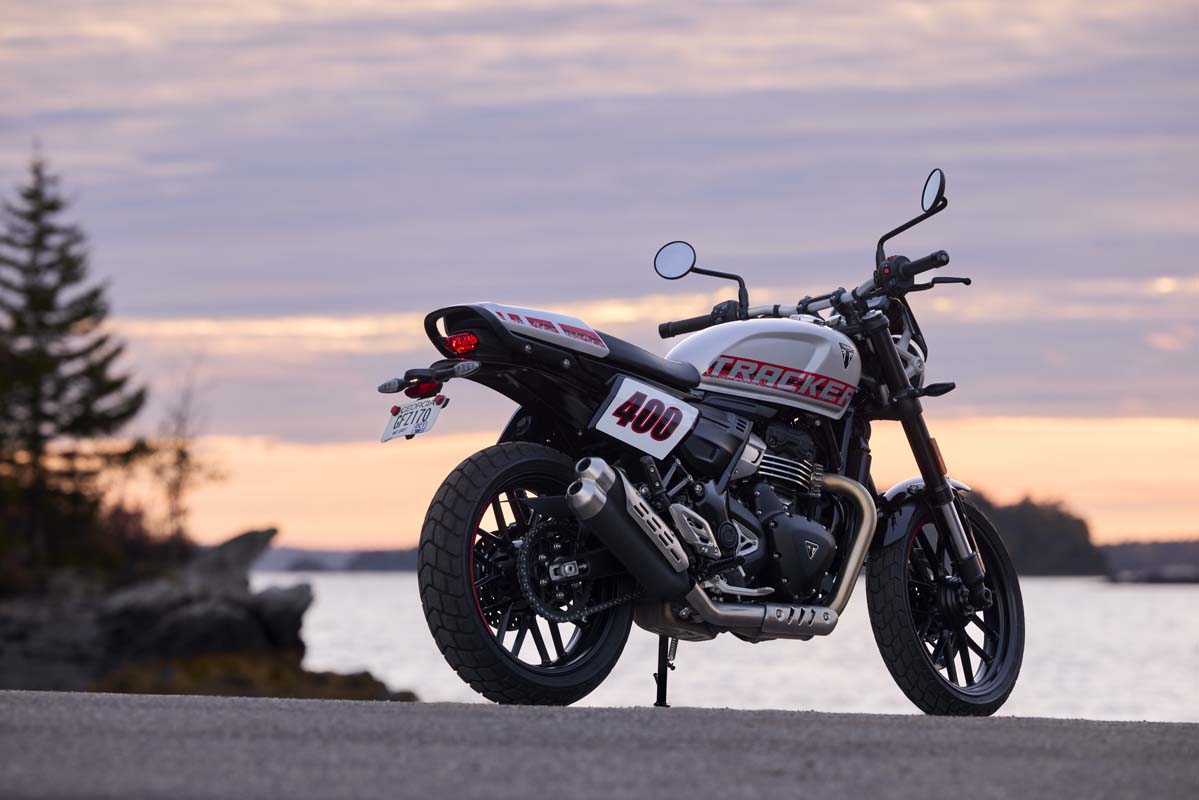
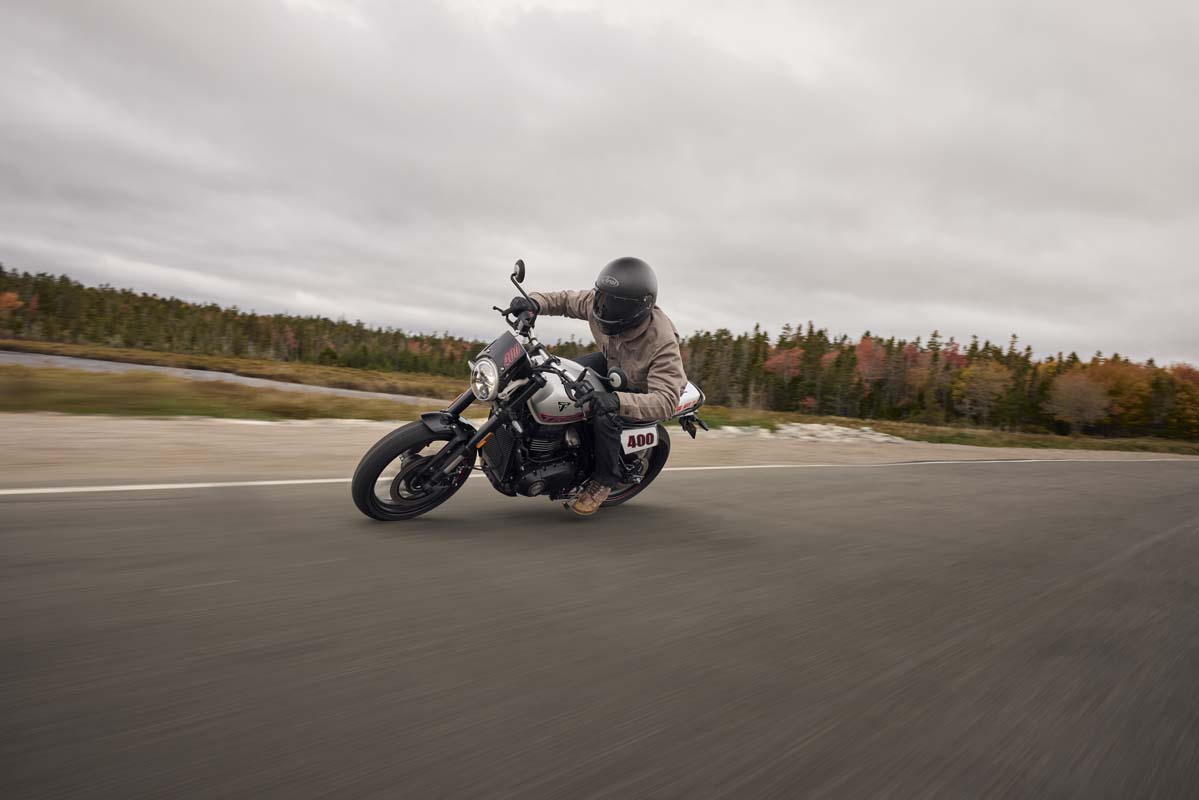
Given the fact that Triumph has released bikes with café racer, scrambler and bobber styling touches in the past, it’s a little surprising to learn that the Tracker 400 represents their first model from the Hinckley era with flat track cues.
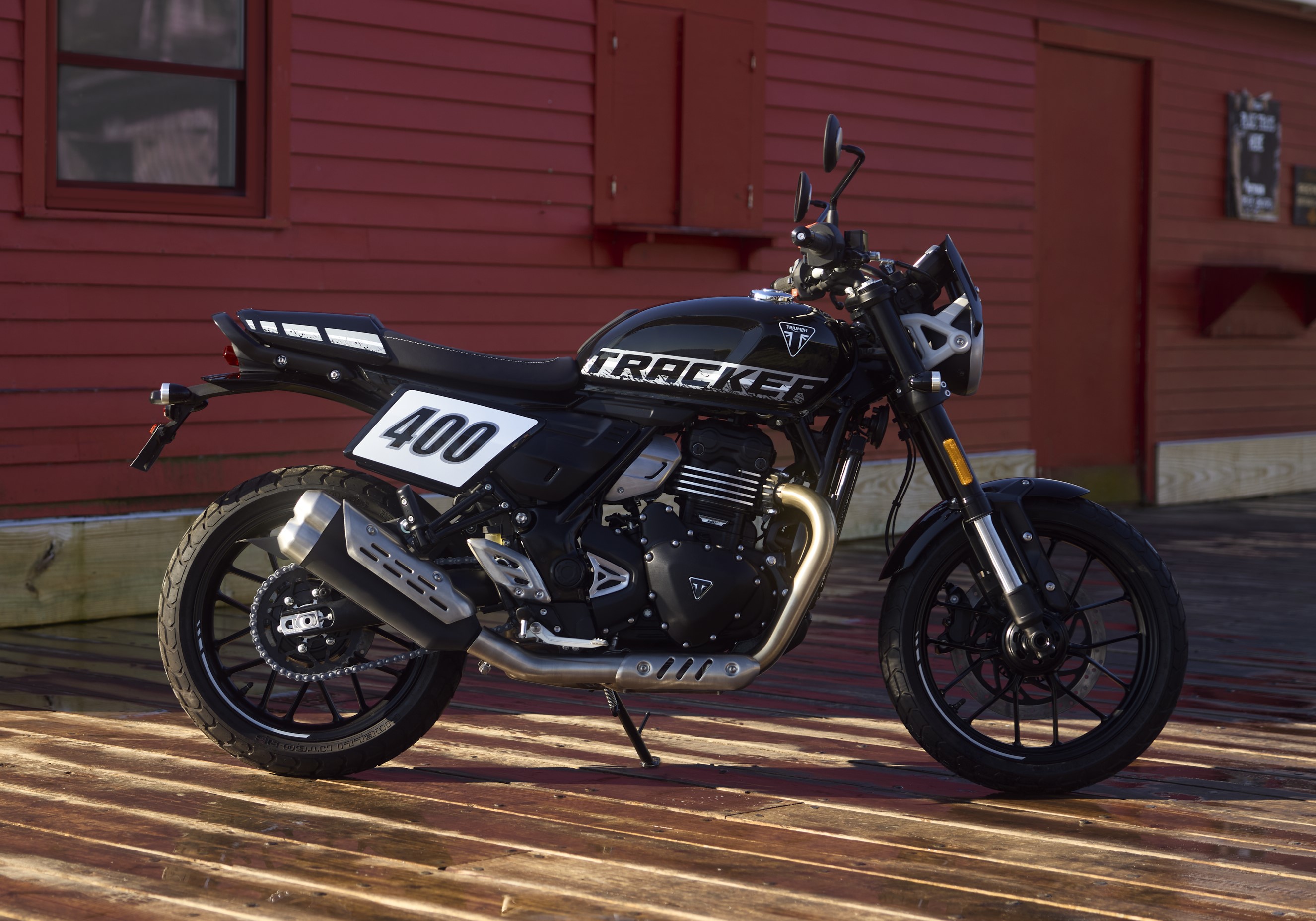
Those cues manifest themselves in the form of a flat seat and slim tail unit, bobbed rear mudguard, flatter and lower handlebars, rearset pegs, a bold side number panel, and a flyscreen above the retro round headlight.
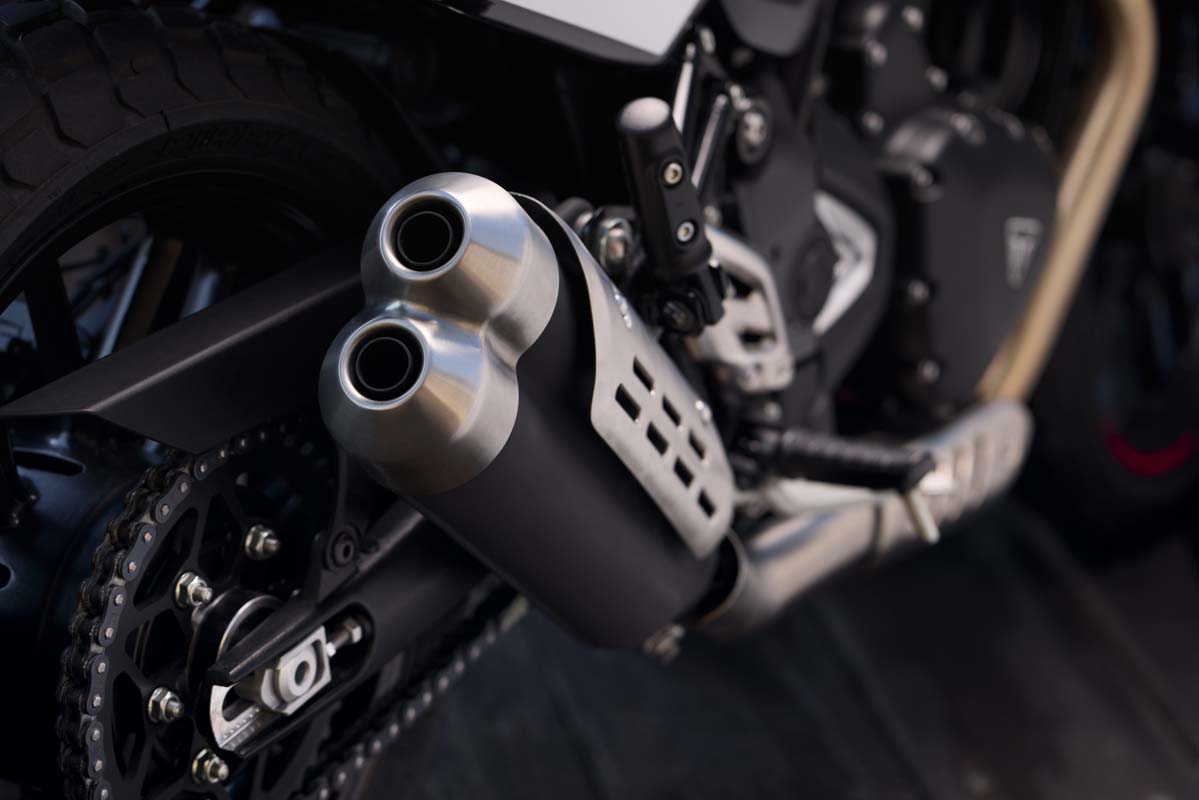
Heatshields and a two-tube silencer add an aggressive touch to the exhaust system, but the engine styling is subdued, with machined cooling vanes and some bright metal bolt heads the only break from an all-black treatment.
If those features didn't make the styling inspiration obvious enough, there’s a bold as brass ‘TRACKER’ decal on the fuel tank, with the pattern behind this reproduced on the seat cowl.
Colour options for the Tracker 400 are Racing Yellow, Phantom Black and Aluminium Silver Gloss. In each instance, rim stickers and decals complement the main colour, with the ‘400’ side plate identification repeated on the flyscreen, too.
Thruxton Style
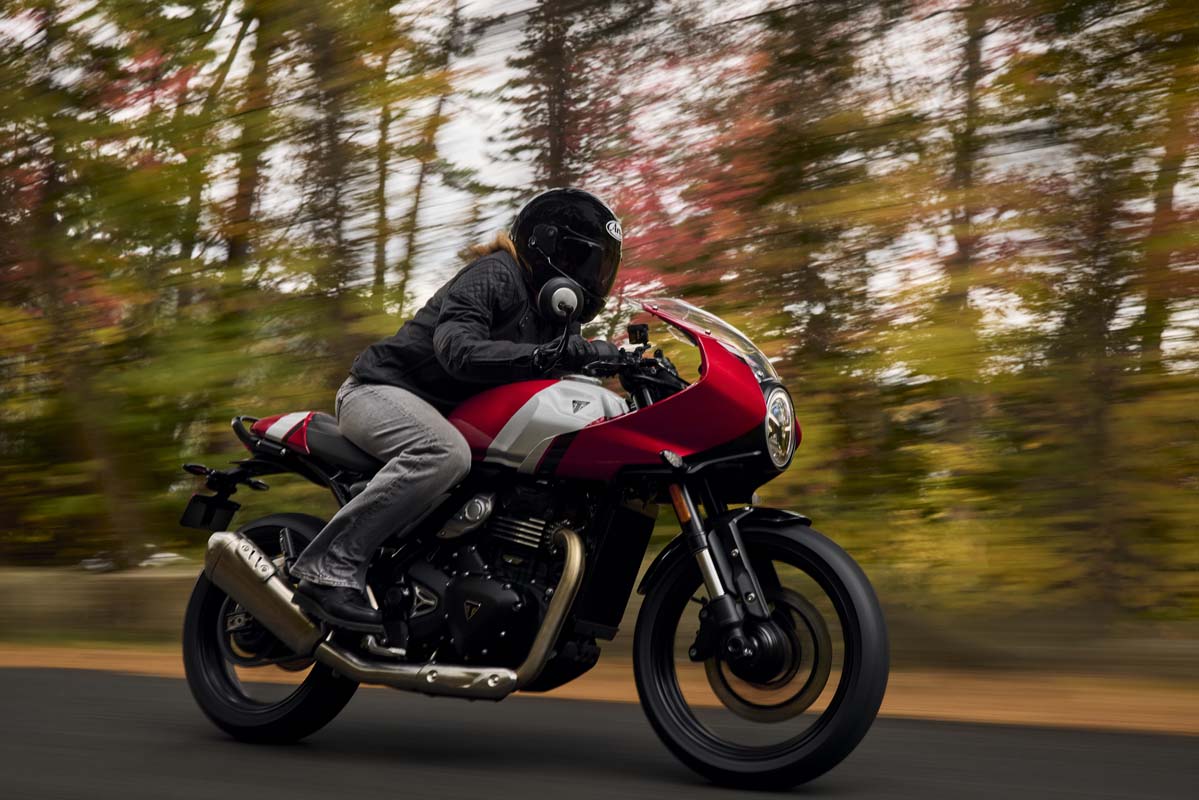
As the café racer styling theme is so beloved, Triumph was under pressure to get it “right” on the Thruxton 400. While some feel it leans close to being too modern, the consensus seems to be that Triumph have nailed the Thruxton 400’s design. It’s certainly been getting a lot more attention than the Tracker 400 since launch.
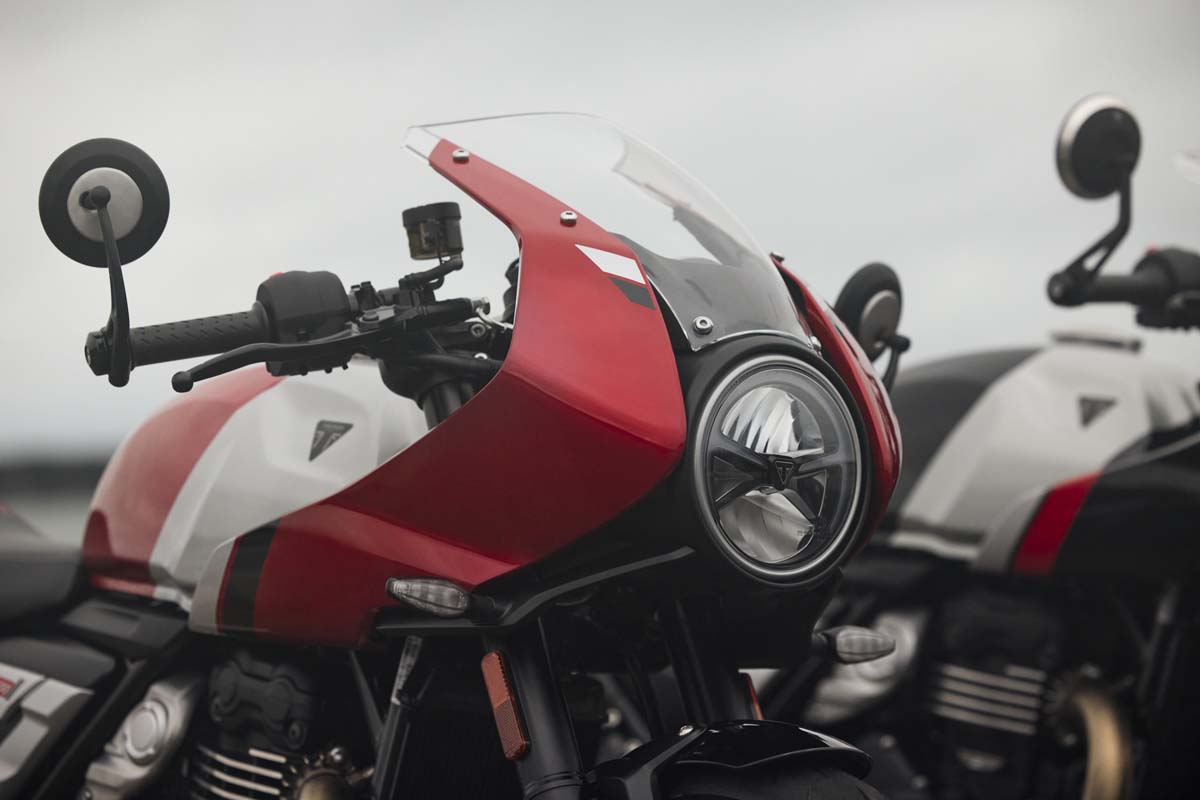
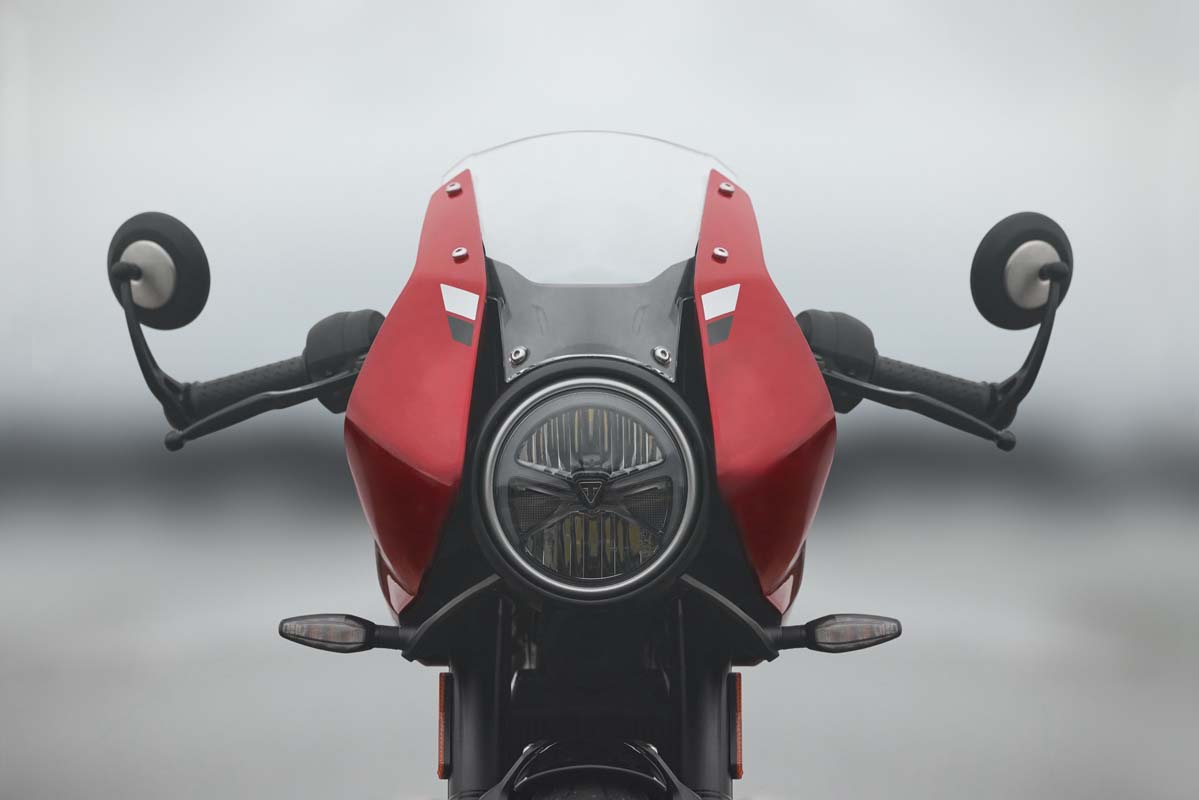
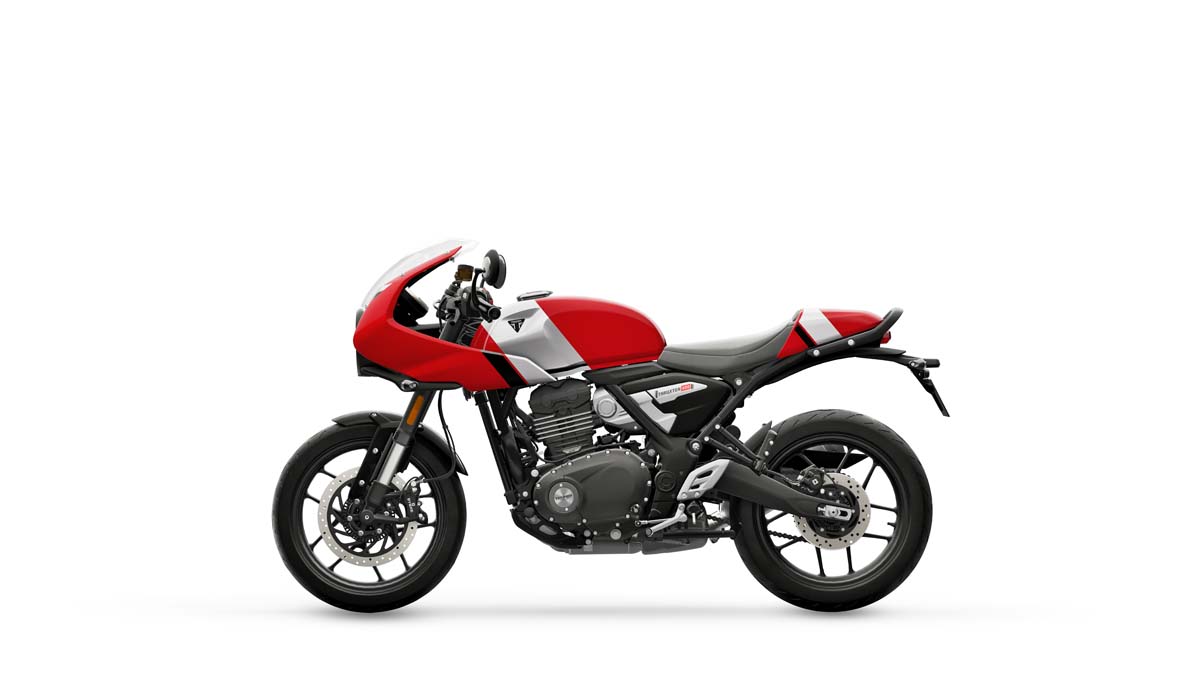
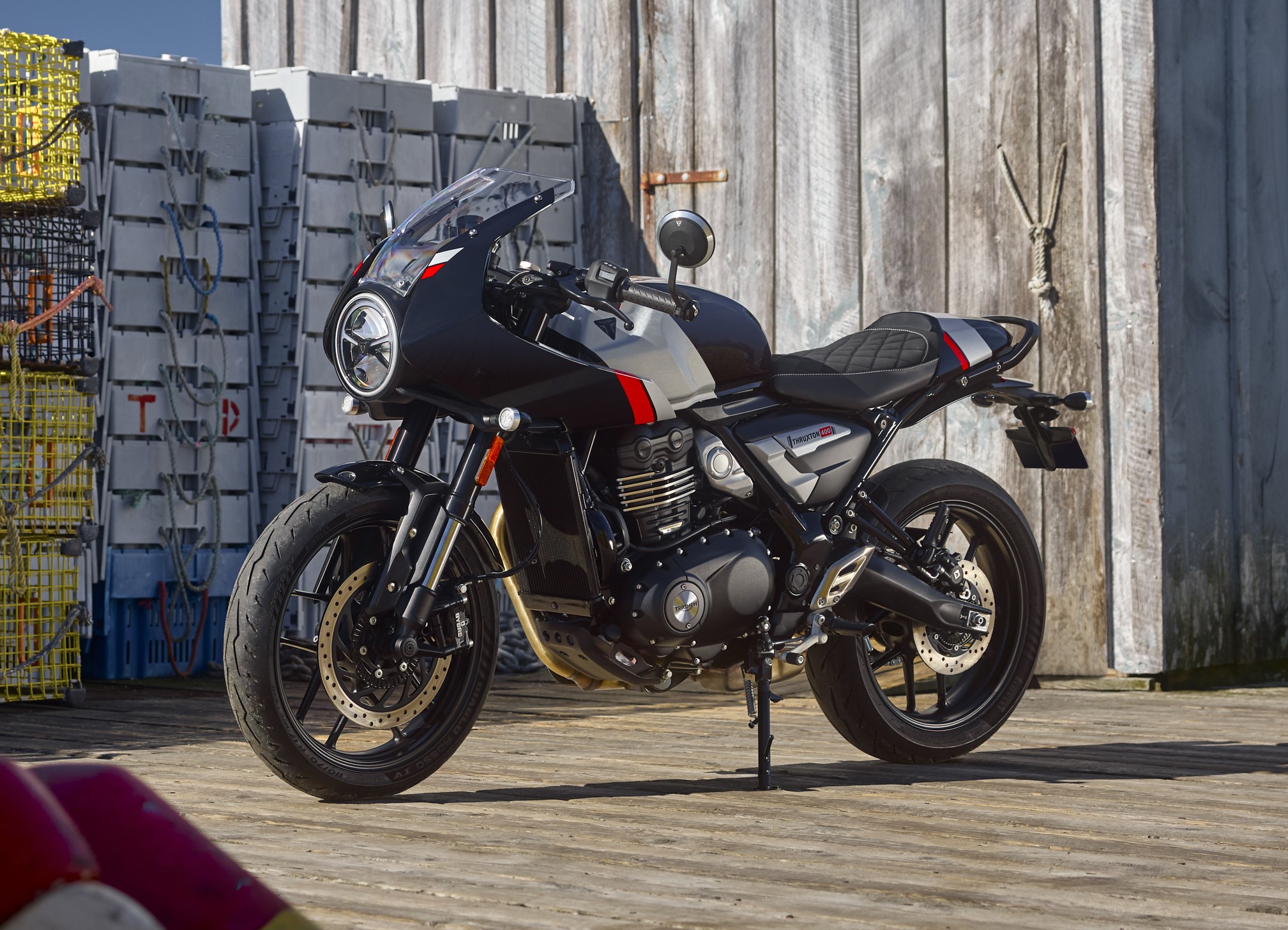
If you think the half-fairing on the Thruxton 400 looks familiar, it’s probably because you’ve seen something very similar on the Speed Triple 1200 RR that debuted back in 2021. The 400 version is a little less aggressive, but the lineage between the two is obvious.
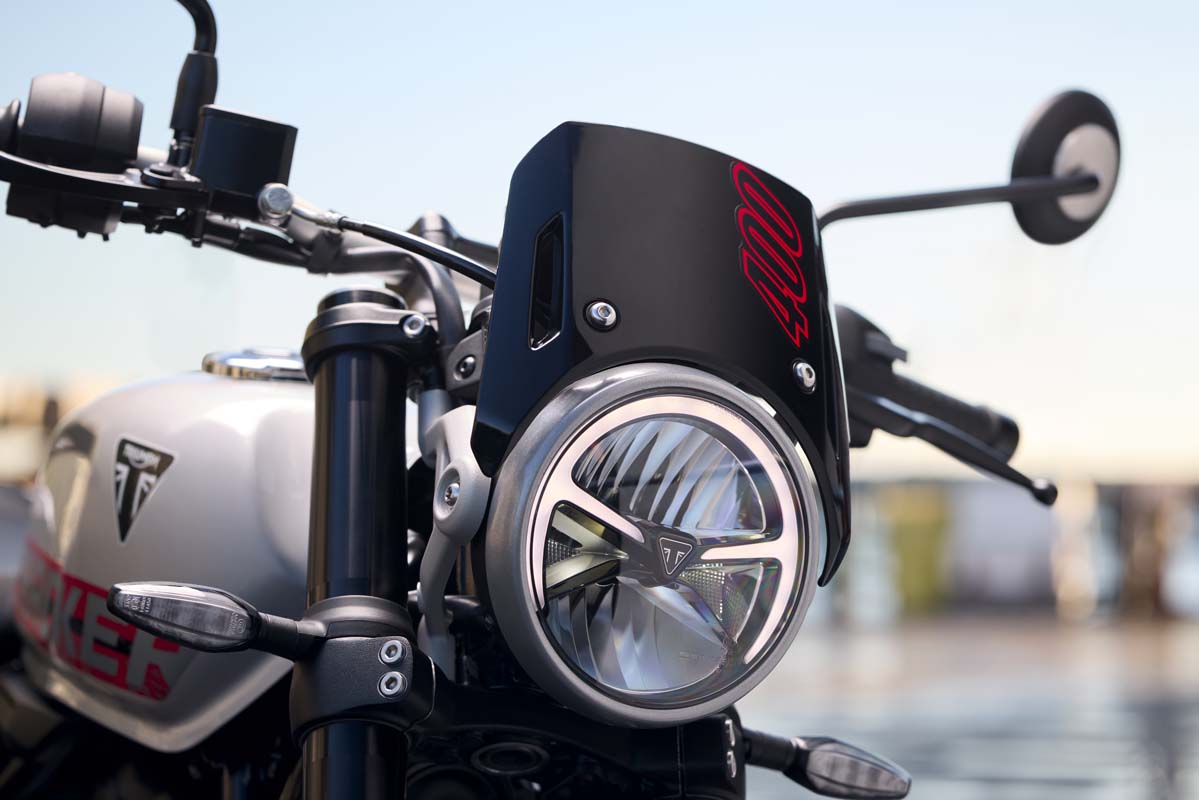
Aside from the fairing, a reshaped fuel tank with deep knee cut-outs and indents to suit clip-on handlebars is also unique to this variant. Other features include bar-end mirrors, rearset pegs, and a unique seat cowl. The pillion grab rail and bobbed rear mudguard is unchanged from the Tracker 400, but there’s a different seat treatment, as well as a different silencer and heatshield for the exhaust system.
Side covers bearing the model name are fussy-looking and perhaps the only styling fail with the Thruxton 400. The fairing, tank and tail are so beautifully clean, but the side covers and airbox are at odds with that.
Thruxton 400 colour options include Carnival Red (a familiar Triumph colour), Metallic Racing Yellow and Pearl Metallic White with Storm Grey.
Altered Ergos, Travel and Weight
As rake/trail and handlebar set-up differs between the Tracker 400 and Thruxton 400, each has their own specific rider ergonomics, which differ from the Speed 400’s very trad upright position.
Compared to the Speed 400, the Tracker 400 handlebars are 23mm wider and 134mm lower, while the footpegs are 27mm higher and 87mm further back. The result is a forward rider position, but it’s not radically different to a conventional naked.
On the Thruxton 400, its clip-ons are 40mm narrower and 246mm lower than the Speed 400, while the pegs are 27mm higher and 86mm further back. The result is a more aggressive crouch that’s in line with the café racer ethos, but this may not be the most comfortable option for some riders.
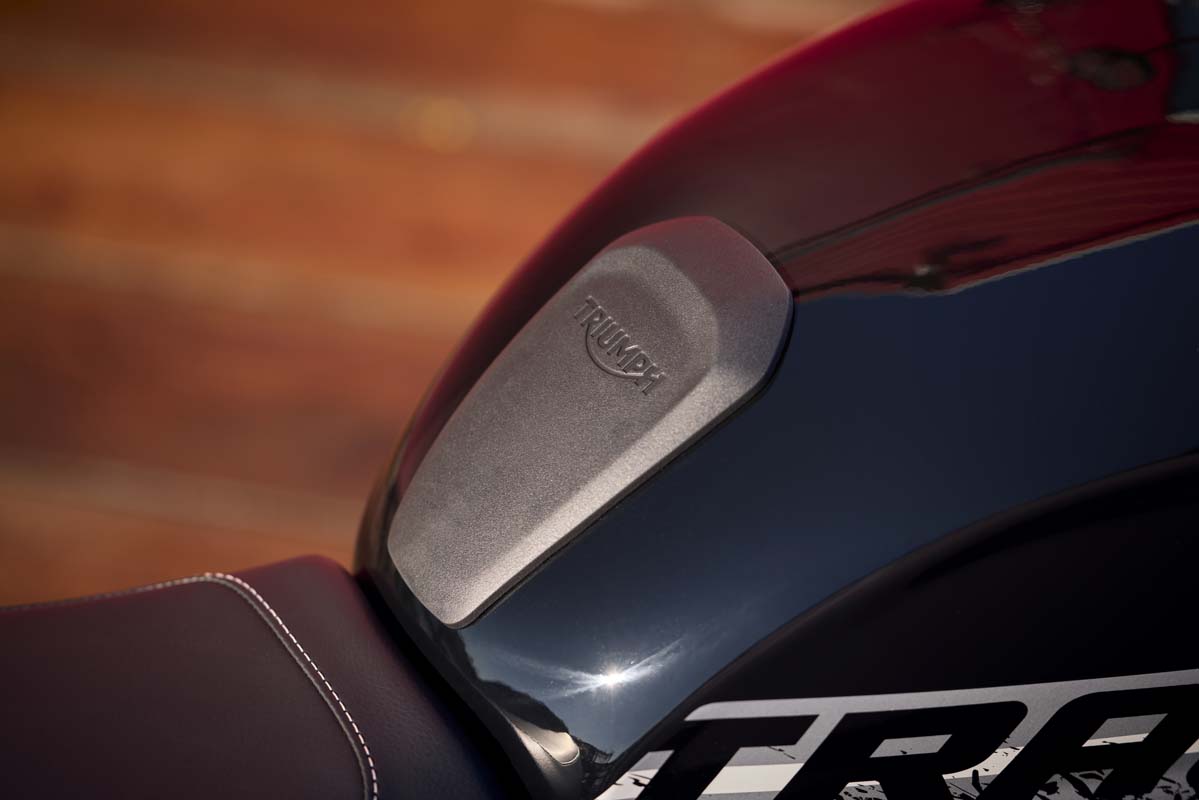
Seat height is 805mm for the Tracker 400 and a more accessible 795mm for the Thruxton 400. For comparison, the Speed 400 is lower again at 790mm.
The sporty directive that’s driven the Thruxton 400 design and performance means it has less front suspension travel than the Tracker 400 – 135mm vs 140mm – but rear travel of 130mm is common to both.
The fairing also makes the Thruxton a little heavier, at 176kg wet compared to 173kg for the Tracker 400. The Speed 400 weighs 170kg. A 13-litre fuel tank is common across the Triumph 400 range.
Limited Tech
As entry-level models for the LAMS rider, both the Tracker 400 and Thruxton 400 keep the tech to a minimum. Aside from the mandatory ABS, switchable traction control is the only rider-assistance feature. Adding riding modes and the like would be nice, but it would also add to the price, which being a Triumph, is already steep compared to some rivals.
A USB-C socket is included, with the all-LED lighting package incorporating a signature DRL in the headlight.
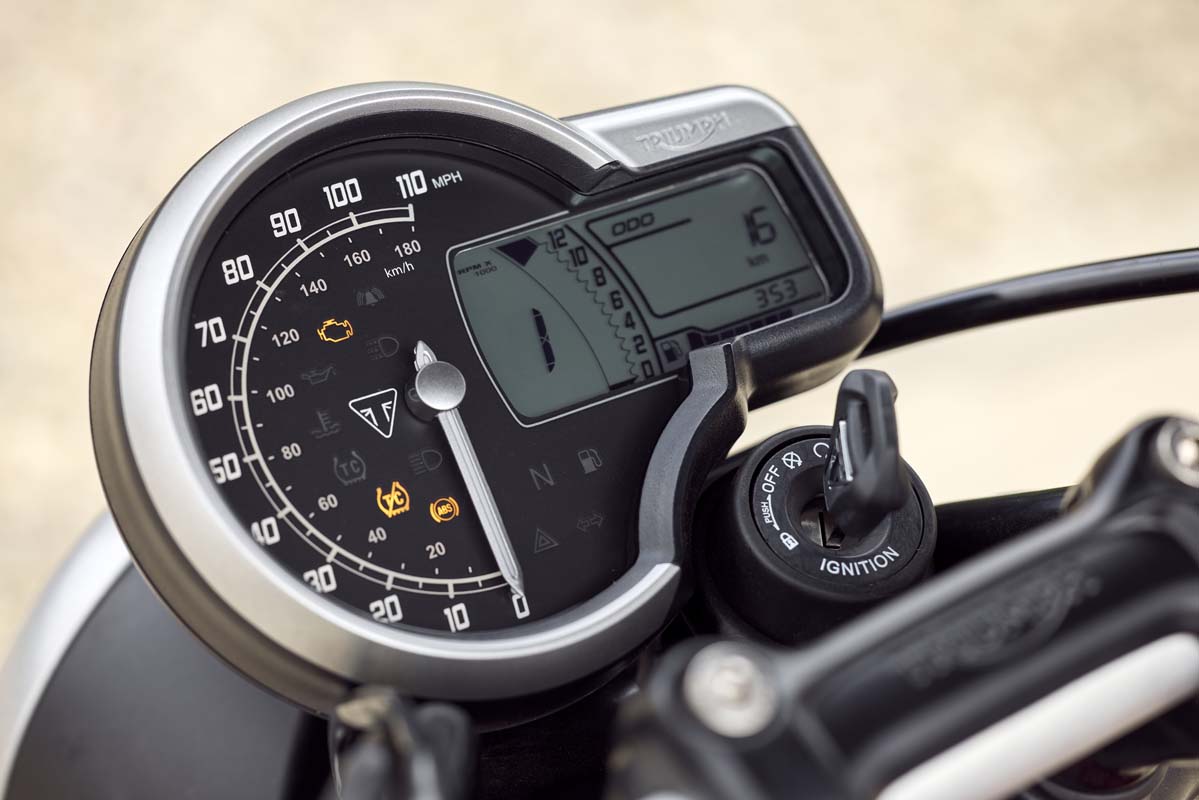
Instrumentation that’s common to both models combines an analogue speedometer with an inset mono LCD screen that displays gear position, fuel level, consumption and range, an odometer, clock, service indicator and two tripmeters. Warning lights are incorporated into the analogue portion.
Arriving Soon
Announced in late December, the new arrivals in the Triumph 400 family begin with the Thruxton 400, which is due for local release in February. The Tracker 400 will follow in March.
Introductory pricing is $10,390 ride away for the Thruxton 400 and $9,990 ride away for the Tracker 400. This pricing slots in between the base Speed 400 (from $9,200), Scrambler 400 X (from $10,250) and Scrambler 400 XC at the top of the range (from $11,490).
While they are more expensive than rivals that include Royal Enfield's 350cc small singles, Honda's GB350 retro naked, and some LAMS models from CFMoto, amongst others, the Tracker and Thruxton remain significantly more affordable than LAMS versions of Triumph’s Tiger Sport 660 and Trident 660.
From local launch, a range of accessories will be available, covering protective and cosmetic parts.
For more details, see your Triumph dealer.
2026 Triumph Tracker 400 and Thruxton 400 – basic specs
(Thruxton 400 differences in brackets)
ENGINE
TYPE: DOHC 4-stroke single
CAPACITY: 398cc
BORE X STROKE: 89.0 x 64.0mm
COMPRESSION RATIO: 12:1
COOLING: Liquid
MAX POWER: 30.89kW @ 9,000rpm
MAX TORQUE: 37.50Nm @ 7,500rpm
TRANSMISSION
CLUTCH: Wet, multi-disc with slip & assist
GEARBOX: 6-speed
FINAL DRIVE: Chain
CHASSIS
FRAME: Steel tubular w/bolt-on subframe, aluminium swingarm
FRONT SUSPENSION: 43mm USD telescopic fork, 140mm travel (135mm travel)
REAR SUSPENSION: Monoshock w/adjustable preload, 130mm travel
FRONT WHEEL: 17-inch alloy
REAR WHEEL: 17-inch alloy
FRONT TYRE: 110/70 R17
REAR TYRE: 150/60 R17
FRONT BRAKE: Single 300mm disc with four-piston radial caliper and ABS
REAR BRAKE: Single 230mm disc with two-piston floating caliper and ABS
DIMENSIONS
LxWxH w/o mirrors: 2,033 x 857 x 1,050mm (2,042 x 775 x 1,110mm)
WHEELBASE: 1,371mm (1,376mm)
SEAT HEIGHT: 805mm (795mm)
RAKE/TRAIL: 24.4°/107.6mm (24.5°/101.5mm)
KERB WEIGHT: 173kg (176kg)
FUEL CAPACITY: 13.0lt
COLOURS
Racing Yellow, Phantom Black, Aluminium Silver Gloss (Carnival Red, Pearl Metallic White w/Storm Grey, Metallic Racing Yellow)
LAMS APPROVED: Yes
PRICE: $9,990 ride away – available March, 2026 ($10,390 ride away – available February, 2026)


