Sales of new motorcycles in Australia fell again in 2025, according to data released by the Federal Chamber of Automotive Industries (FCAI) in January. Despite 2025 being the fourth consecutive year of falling sales, one positive to be taken from the FCAI data is that the 2024-2025 decline was less than from 2023 to 2024. Off-road bikes increased fractionally compared to 2024, while scooter sales improved noticeably.
Overall, 92,967 new motorcycles, scooters and OHVs were sold in Australia in 2025. But it should be noted, as with previous years, that 2025’s total refers to bikes sold by FCAI members only (more on that below).
Last year’s total represents a fall of 1.34 per cent from 2024’s total of 94,224. The year-on-year decline is less than from 2023 to 2024, when sales fell by 1.83 per cent, and also less than 2022 to 2023, when the decrease was 3.08 per cent.
In raw numbers, last year’s sales decline means that 1,257 fewer new motorcycles were sold by FCAI member brands compared to 2024.
Over the past decade, the high-water mark for local sales was 2021, when COVID-related lockdowns and travel restrictions saw Aussies put their money into motorcycles. A total of 123,530 new bikes were sold that year. In 2022, when COVID restrictions were (mostly) removed, new motorcycle sales fell dramatically to 99,030.
Causes for the continued decline in sales post-COVID can be attributed to ongoing cost of living pressures and their impact on discretionary spending, along with uncertainty over interest rate rises that are likely to be factors again in 2026.
“While total volumes softened slightly, it is encouraging to see resilience in parts of the market, particularly off-road motorcycles and scooters,” said FCAI Chief Executive, Tony Weber.
“Road motorcycles and scooters are an efficient and cost-effective means of transportation, especially in high-density metropolitan areas.
“With around 10 per cent of Australians holding a motorcycle licence, there are opportunities to see an increase in motorcycle sales for on and off-road riding.”
Segment Analysis
Of the four main motorcycle market segments defined by the FCAI – road, off-road, scooter and OHV – off-road and scooter sales increased, while road and OHV (including ATV, UTV and SSV) decreased.
The off-road market has always been the healthiest of all segments in Australia, bouncing back stronger and faster than other segments after COVID, too. In 2025, off-road bike sales increased by just 12 units, with total sales of 41,190 for the year compared to 41,178 in 2024. That equates to a 0.02 per cent gain.
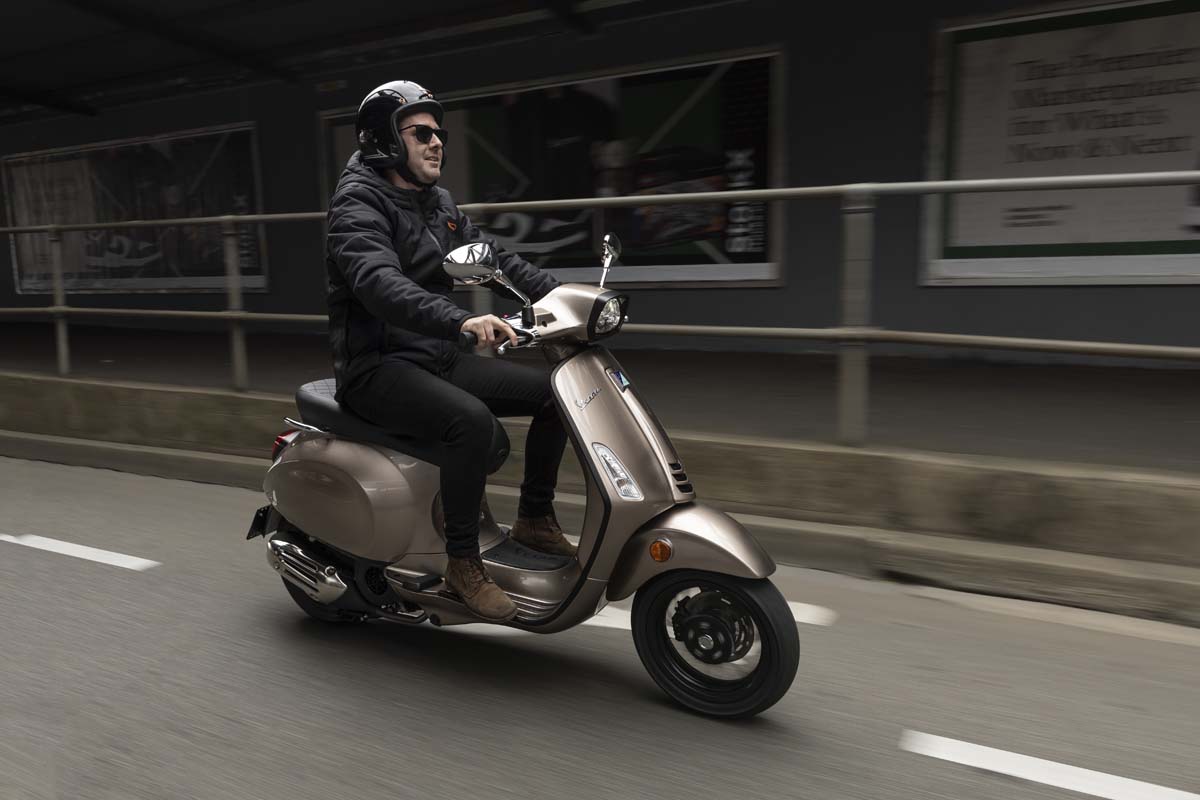
For the scooter segment, a marked drop of 22.5 per cent in 2024 was countered by a 3.8 per cent rise in sales for 2025. In actual numbers, that translates to 4,933 sales in 2025, compared to 4,752 in 2024. But, as is always the case with the scooter market in Australia, the smaller volumes in this segment make any percentage increases/decreases look more dramatic than they actually are.
Unlike most other segments, there wasn’t a major boost in scooter sales under COVID, with the peak being in 2023, when 6,135 sales were recorded by FCAI member brands.
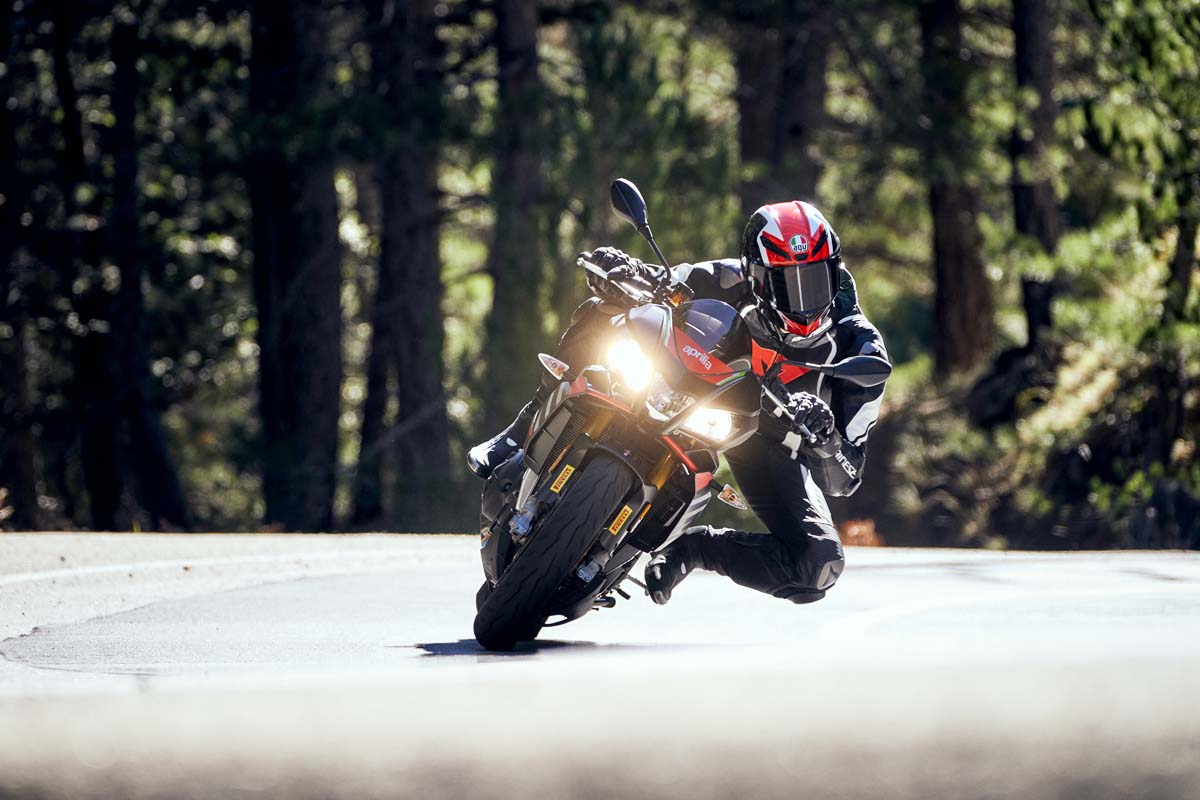
Road bike sales fell by 3.6 per cent in 2025, which was the largest drop across all four segments for the year. Total sales of 33,018 for 2025 compares to 34,266 in 2024.
The decline over the past year is greater than in 2024, when sales fell by 2.4 per cent. In 2023, road bike sales fell by 3.0 per cent (35,112 sold) compared to 2022.
The reasons for road bikes bearing the brunt of the new motorcycle sales decline can be partly attributed to the fact that very few all-new bikes came onto the local market last year. Most of the popular MY25 road bikes, even those from non-FCAI members, were makeovers of existing models. In some instances, new paint options and badging were the only differences from the year before.
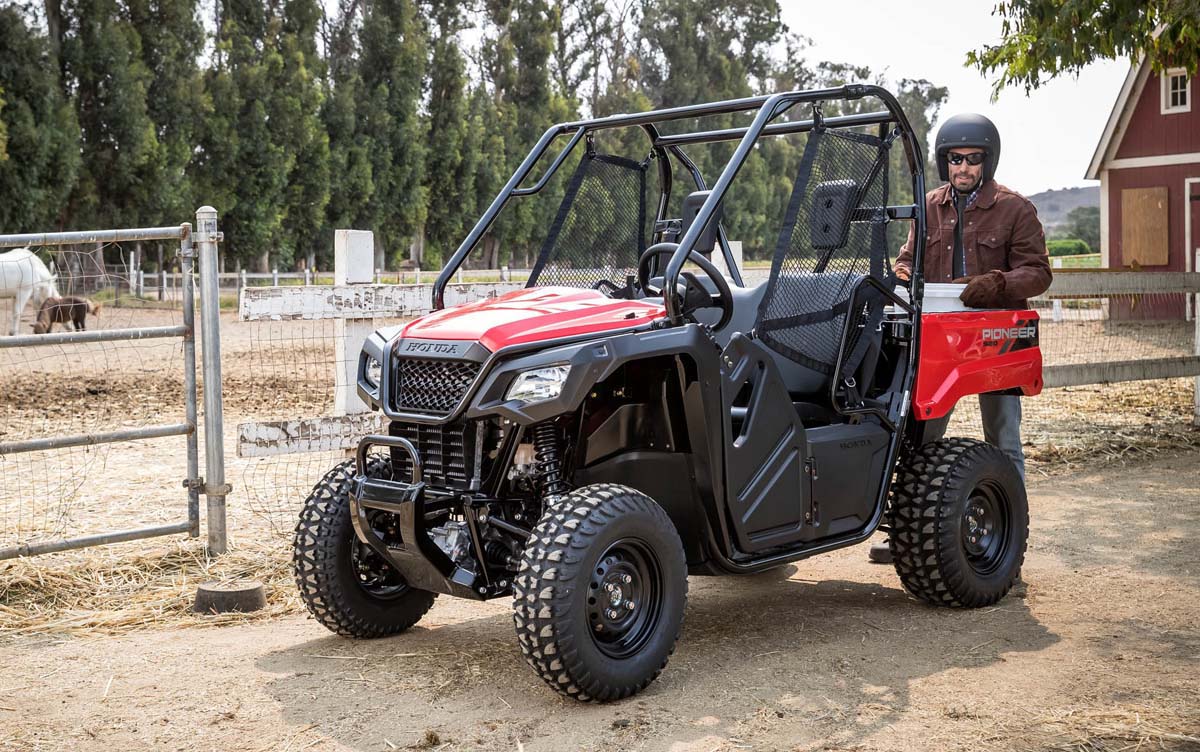
The OHV segment in 2025 was more stable than in previous years, with the sales drop of 1.4 per cent mirroring that of the overall market. It also slows a slide of 3.8 per cent in 2024, 7.8 per cent in 2023 and 44.1 per cent in 2022.
New OHV sales totalled 13,826 in Australia last year, compared to 14,028 in 2024, 14,585 in 2023 and 15,825 in 2022. The peak for this segment was 2021, when 24,856 units were sold ahead of ‘OPDs’ (Operator Protection Devices) becoming mandatory for all utility ATVs sold in Australia. Since then, most brands have transitioned to importing SSVs (rather than fit the controversial OPDs), which tend to have greater profit margins for the importers than the ATVs they’ve largely replaced.
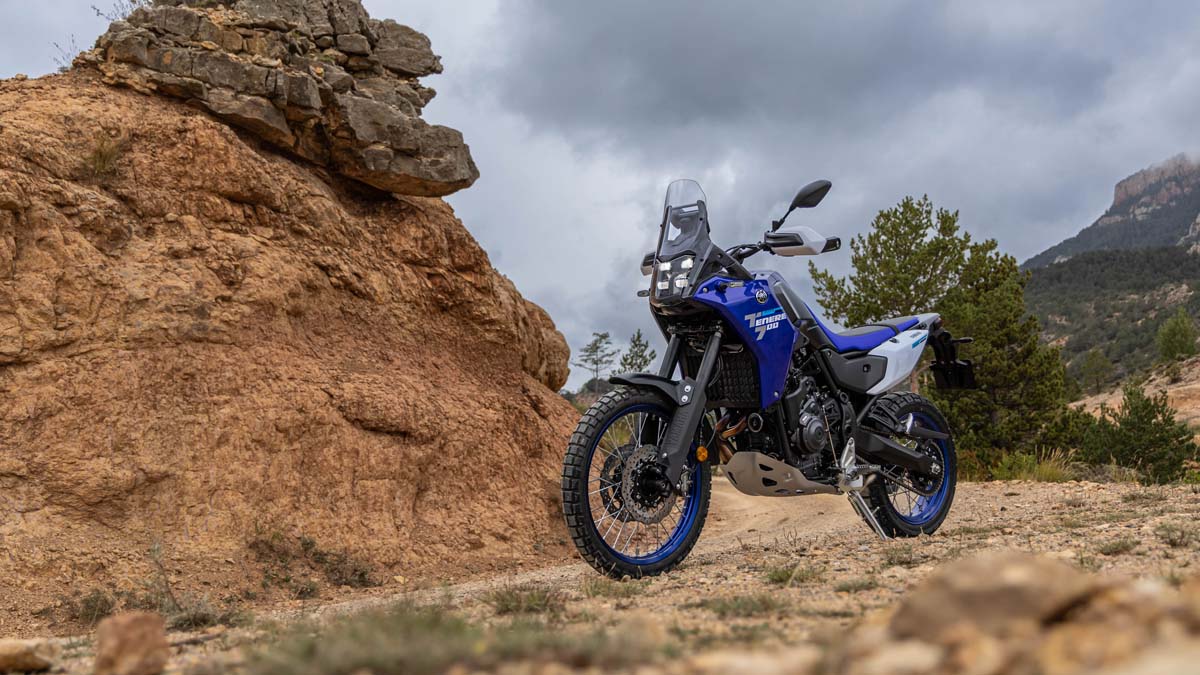
In terms of market share, off-road still accounts for the majority of new bike sales in Australia with 44.30 per cent, followed by road (35.51 per cent), OHV (14.87 per cent) and scooter (5.30 per cent).
This mirrors the segment breakup from 2024, with year-to-year differences being less than 1 per cent in most segments, reflecting the fractional change in the overall market.
Happy Days for Honda, Yamaha, BMW
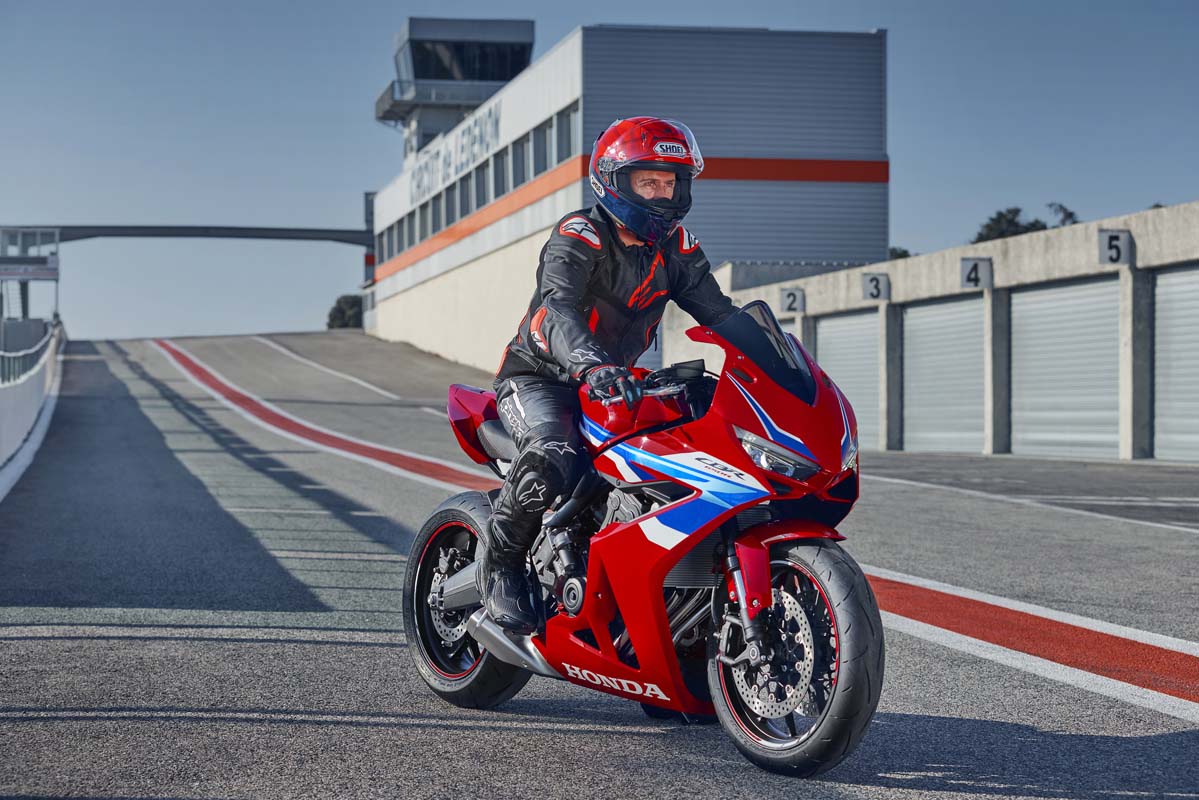
As a breakdown of sales by motorcycle brand and individual model hasn’t been released by the FCAI since 2019, we’ve had to rely on information from the brands themselves to know what models sold well. For 2025, Honda and Yamaha sent out releases detailing their highlights from the past year, in which Honda claimed to be the nation’s best-selling two-wheel brand, while Yamaha was Australia’s most successful brand overall. Both claimed top-selling bikes across several sub-segments, too.
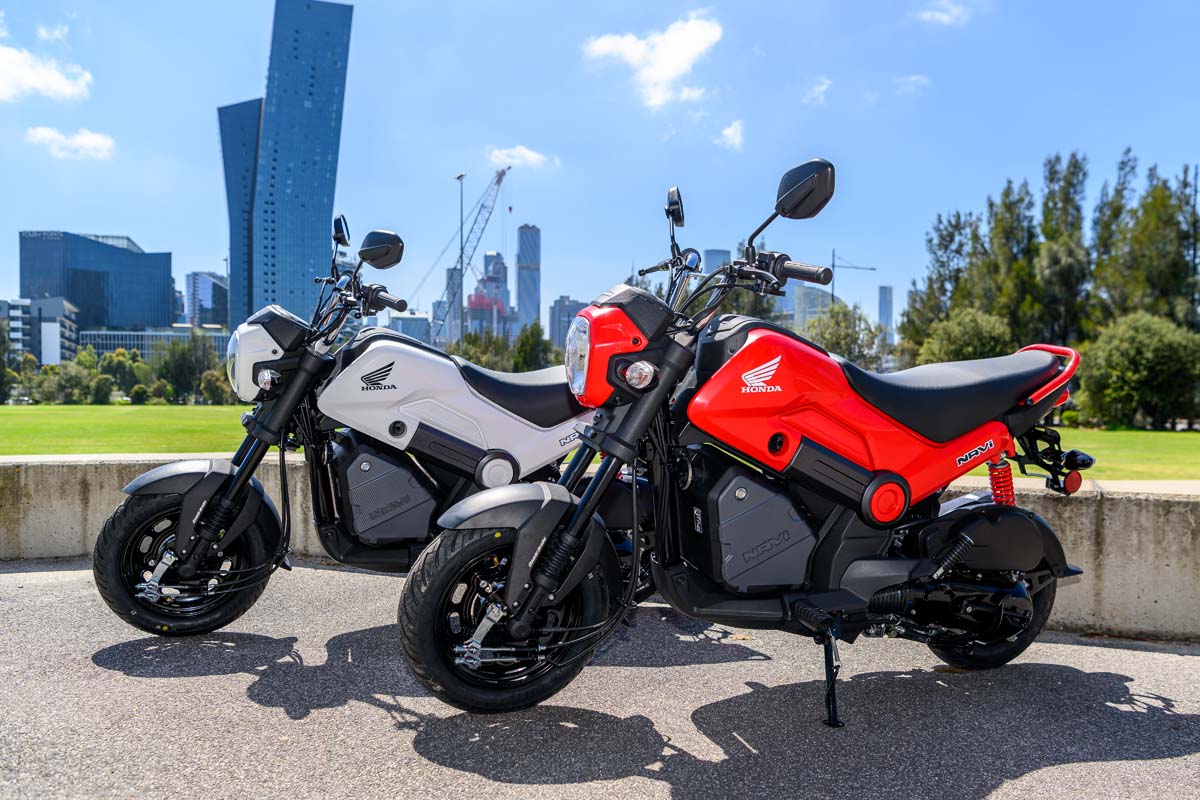
Honda says their sales in the two-wheel category (which excludes the OHV segment) totalled 21,901 units in 2025. That means Honda accounted for 27.67 per cent of all new motorcycles - across road, off-road and scooter segments – sold in Australia last year (excluding non-FCAI brands). In an overall market that decreased, Honda sales increased by 10 per cent, with their market share improving by 2.7 per cent.
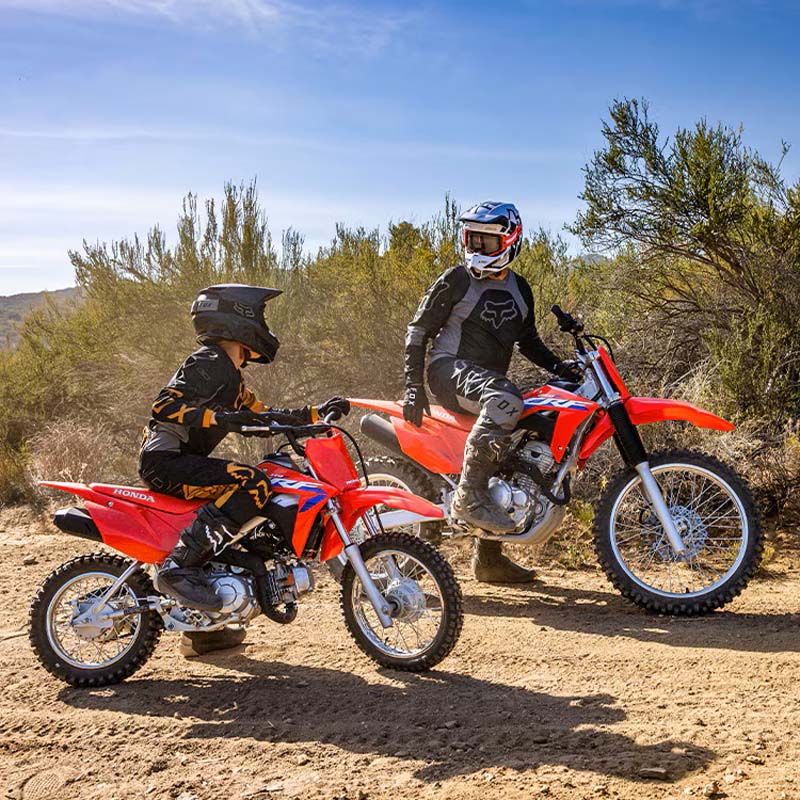
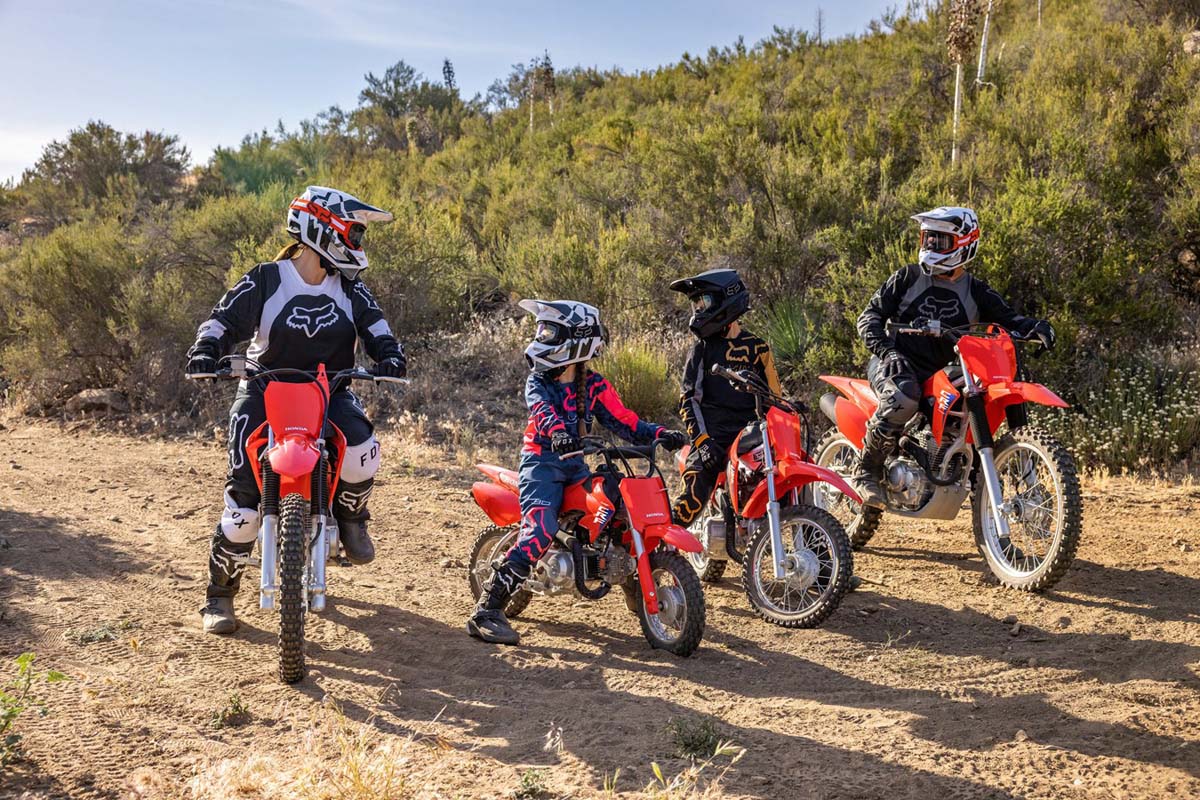
Honda claimed five of the top ten selling motorcycles, including the #1 seller overall – the CRF110F – of which they say 5,310 units were sold in 2025. Second best seller overall was the sibling CRF50F, with 3,004 sales in the past year. These two models also went 1-2 in the fun bike sub-segment.
Along with the top-selling scooter (Navi 110), Honda claimed the #1 sales spot in the sub-segments of agricultural (XR190CT), trail (CRF250F) and naked (CRF125B).
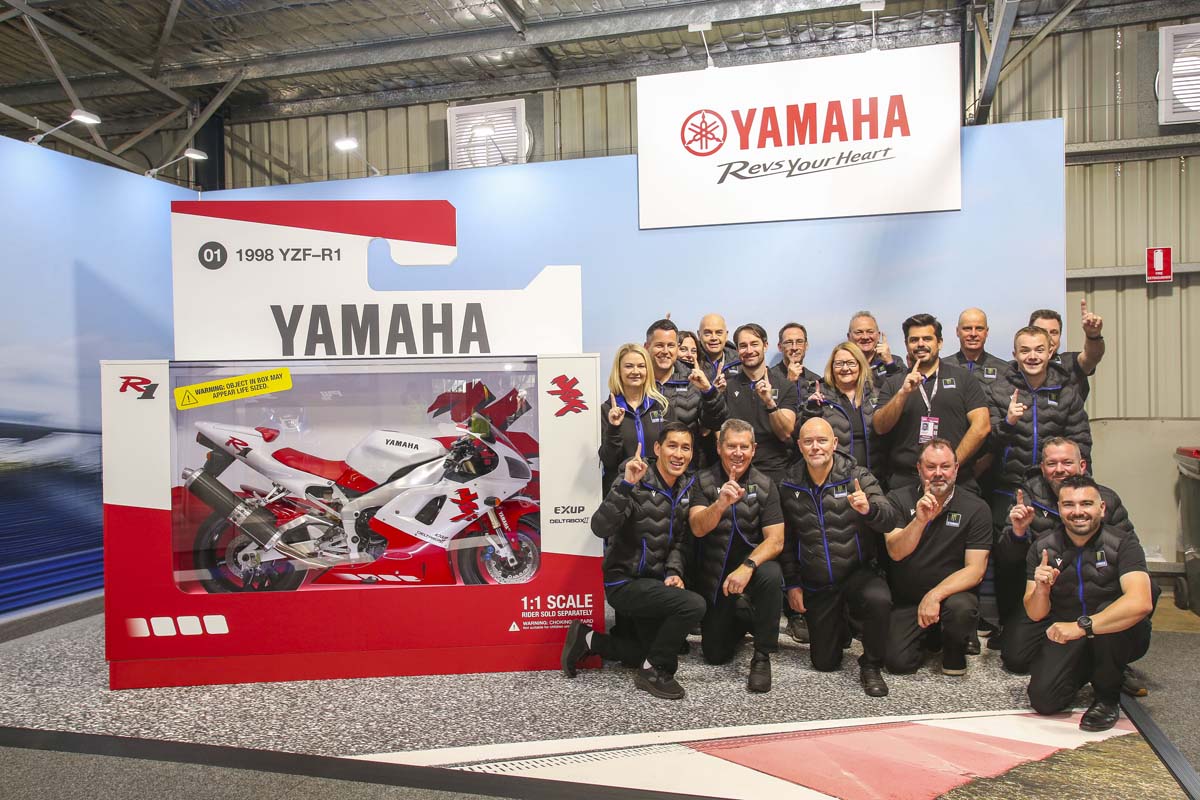
After achieving the position of top-selling brand in Australia in 2024 (without the ‘two-wheel’ caveat), Yamaha did it again in 2025, with 25,500 new units sold, accounting for 27.6 per cent of the total market for FCAI brands. This marks only the fourth time in 23 years of FCAI reporting that Yamaha has been the #1 selling brand in Australia. Like Honda, Yamaha’s sales went against the general market decline, increasing by 9 per cent over 2024’s total.
Yamaha say they were the #1 road bike brand in 2025, despite sales falling by 7.4 per cent. Their OHV sales were up by 19.2 per cent and off-road sales by 14.4 per cent, with scooter sales increasing by 8.1 per cent.
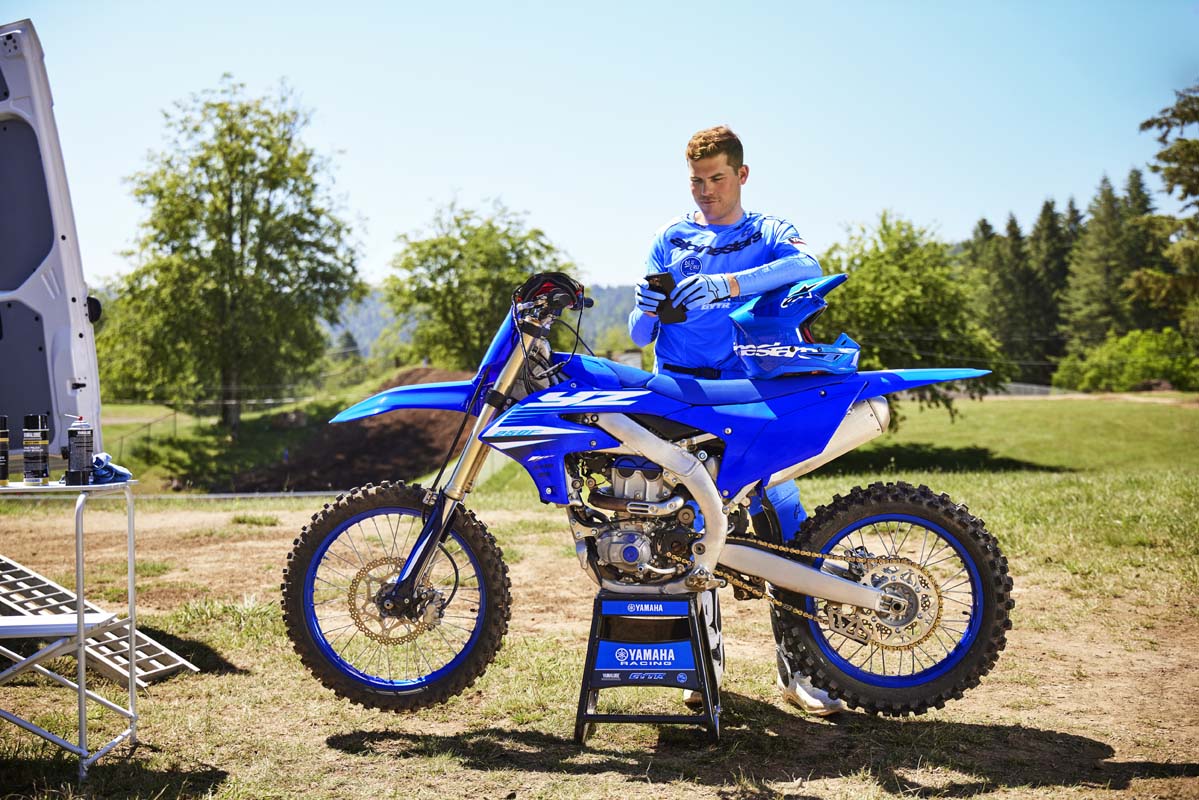
Individual models that contributed to Yamaha’s success in 2025 include the YZ250F and YZ450F, which were #1 and #2 respectively in MX sales, with the YZ85 and YZ250 two-strokes taking the #3 and #4 slots in this sub-segment. The WR450F was the country’s top-selling Enduro bike, the Ténéré 700 was the #1 Adventure Touring model, with the MT-07LA the #1 Naked bike.
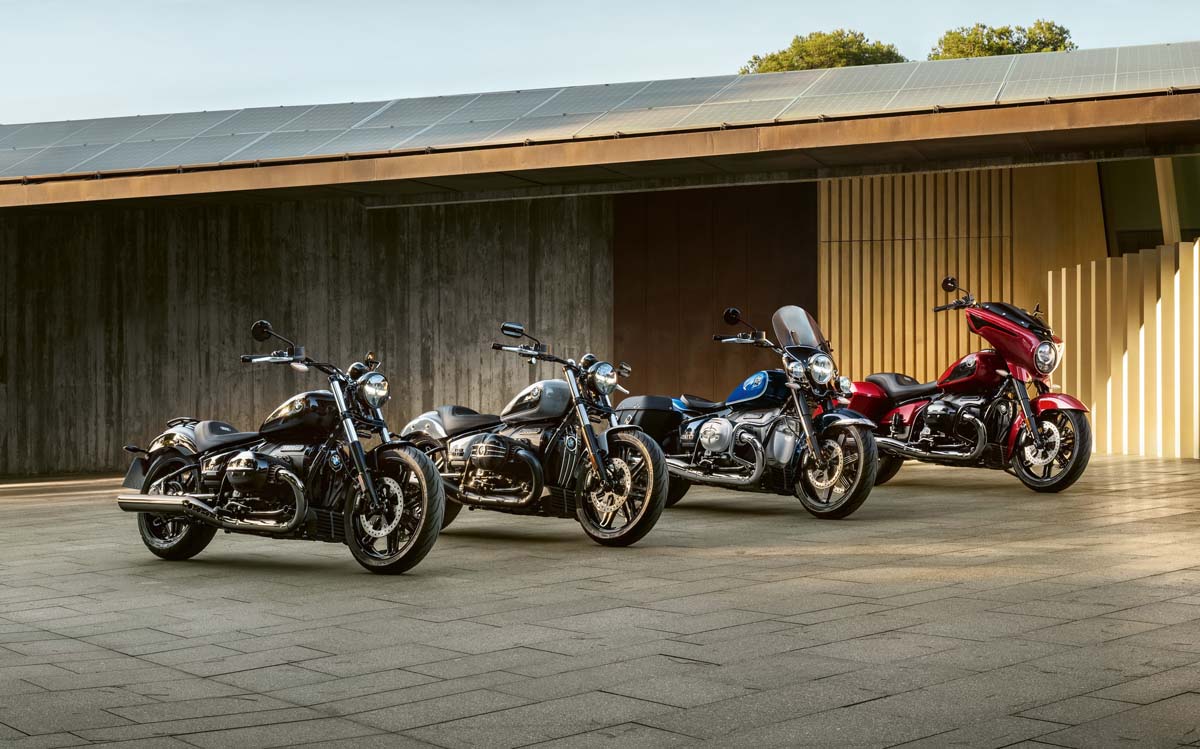
Finally, BMW Motorrad claimed that 2025 was their best year ever in Australia. While no specific figures were provided for our region, BMW say they delivered 202,563 units worldwide last year – the fourth consecutive year they’ve achieved 200,000+ deliveries.
Missing Numbers
As in past years, it should be noted that the Australian motorcycle sales figures for 2025 only cover FCAI members. This includes distributors for the four Japanese brands, as well as Triumph, Indian, BMW Motorrad, Harley-Davidson, KTM, Ducati, Aprilia, Moto Guzzi, Vespa and a few others.
Missing from last year’s 92,967 sales total are bikes from Urban Moto Imports (UMI), Mojo Motorcycles and other importers that are not FCAI members.
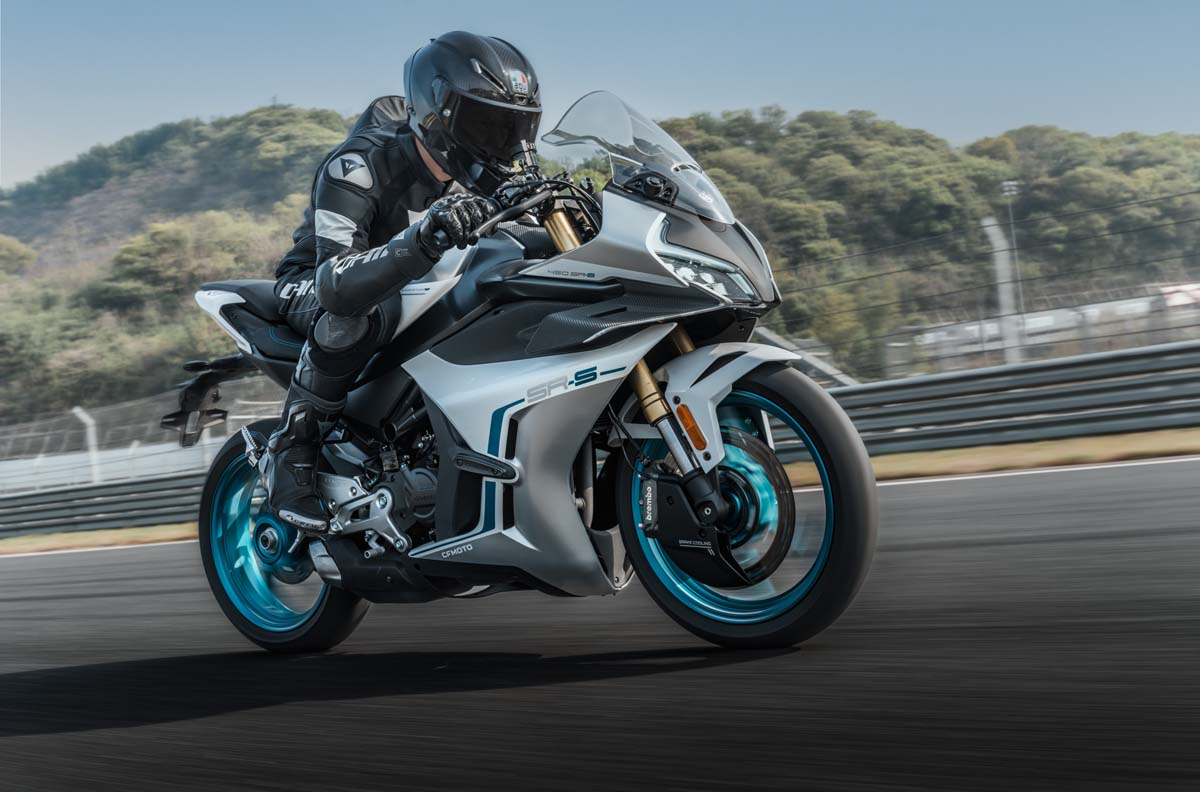
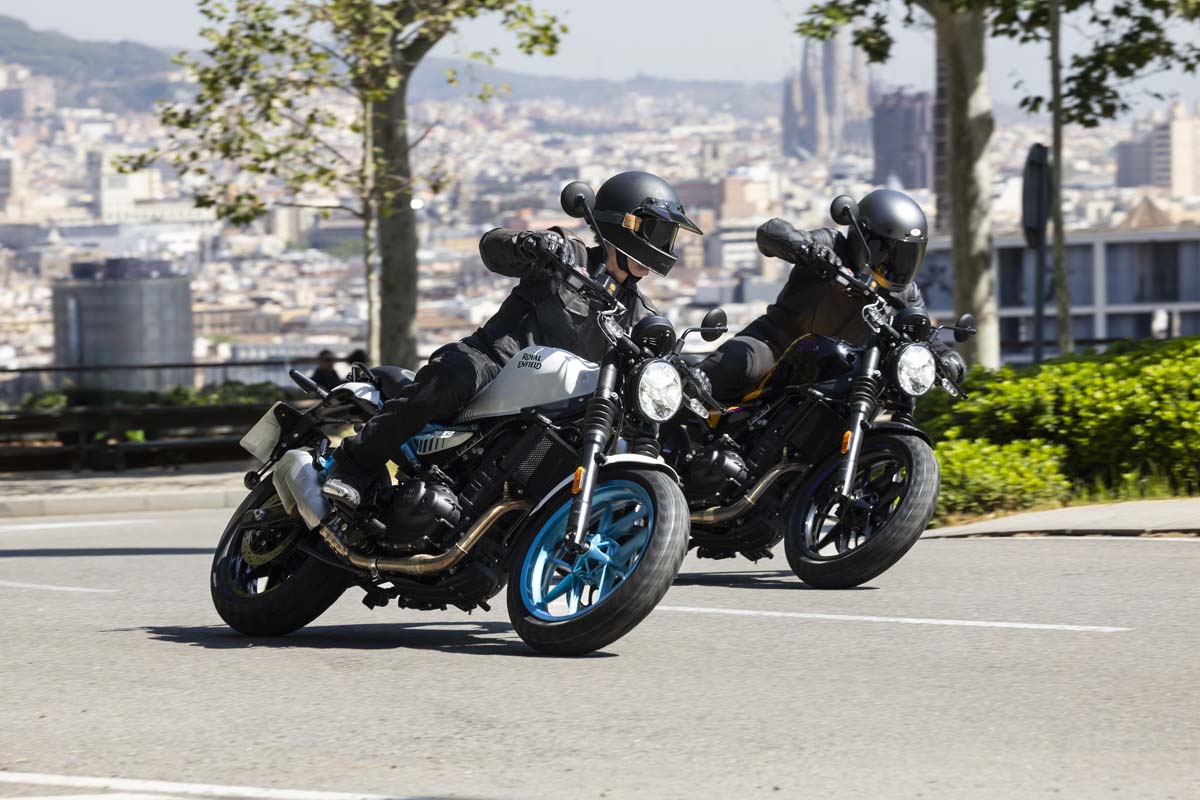
UMI brands include Royal Enfield, Benelli, Segway Powersports, Rieju, Super Soco, Peugeot Motocycles and Torrot. Mojo Motorcycles distribute the CFMoto, Sherco, Kymco, LandBoss and Lambretta brands; the latter recently added to their portfolio.
Royal Enfield and CFMoto are known to be strong performers in Australia, as evidenced by their extensive dealer networks. So, even without known figures, these two brands could account for around 10,000 sales combined, with the others perhaps adding a few thousand more.
Include the non-FCAI brands and 2025’s actual sales total is probably closer to 110,000.
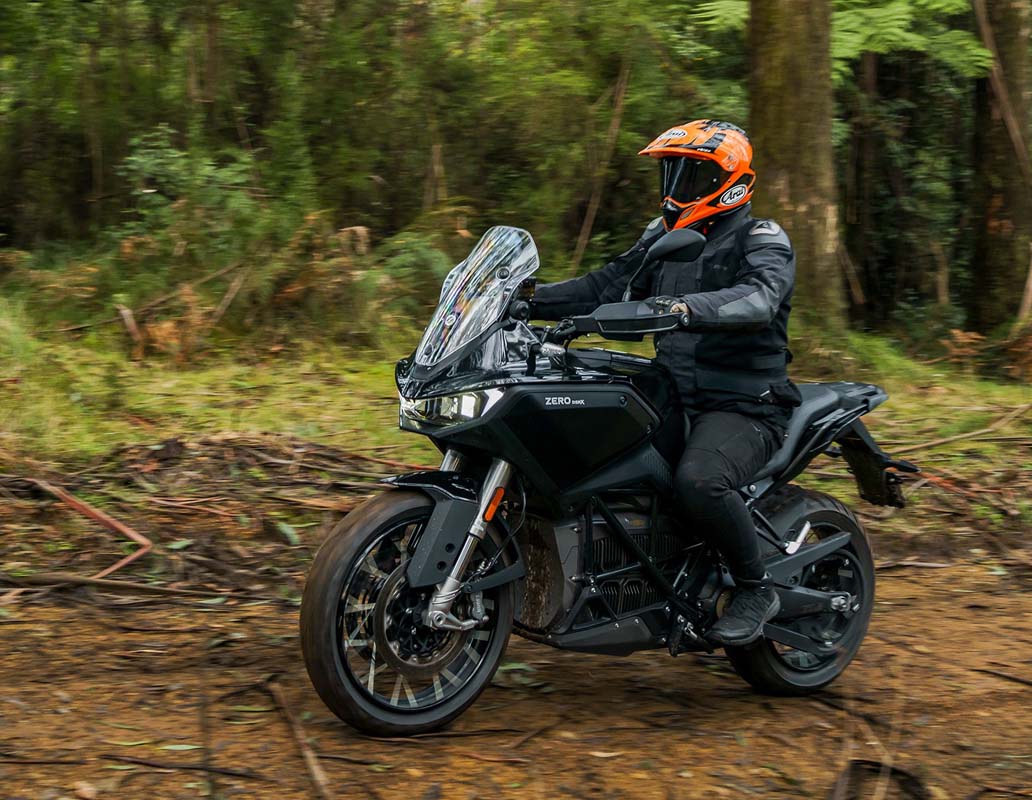
Also missing from the FCAI data is any information on electric motorcycle sales for the past year. The FCAI did report that 419 new EV bikes were sold in Australia in 2024, but no such information was provided for 2025.
The collapse of the Peter Stevens Motorcycles retail network last year impacted Zero Motorcycles (which were being sold through Peter Stevens dealerships), leading to a fire sale auction of 400+ unsold models, although the brand has since re-launched locally under new distributors.
Even if electric motorcycle sales improved in 2025 compared to 2024, they remain a niche in the local market, which goes some way to explaining why Savic Motorcycles, the locally developed and built EV bike, is looking to overseas markets for growth.
2025 Australian New Motorcycle Sales Overview
Segment 2025 sales 2024 sales Percentage +/- Market Share
Road 33,018 34,266 -3.65 per cent 35.51 per cent
Off-Road 41,190 41,178 +0.02 per cent 44.30 per cent
OHV 13,826 14,028 -1.44 per cent 14.87 per cent
Scooter 4,933 4,752 +3.80 per cent 5.30 per cent
TOTAL 92,967 94,224 -1.34 per cent