Words: Mike Ryan
Photos: Harley-Davidson
Almost fifty years ago, Harley-Davidson attempted to break out of their cruiser heartland with the ‘XLCR 1000’ café racer. This year, the unveiling of the ‘RMCR’ concept could forecast a return to this market segment. If early impressions are anything to go by, a LOT of people want to see this concept become a production reality.
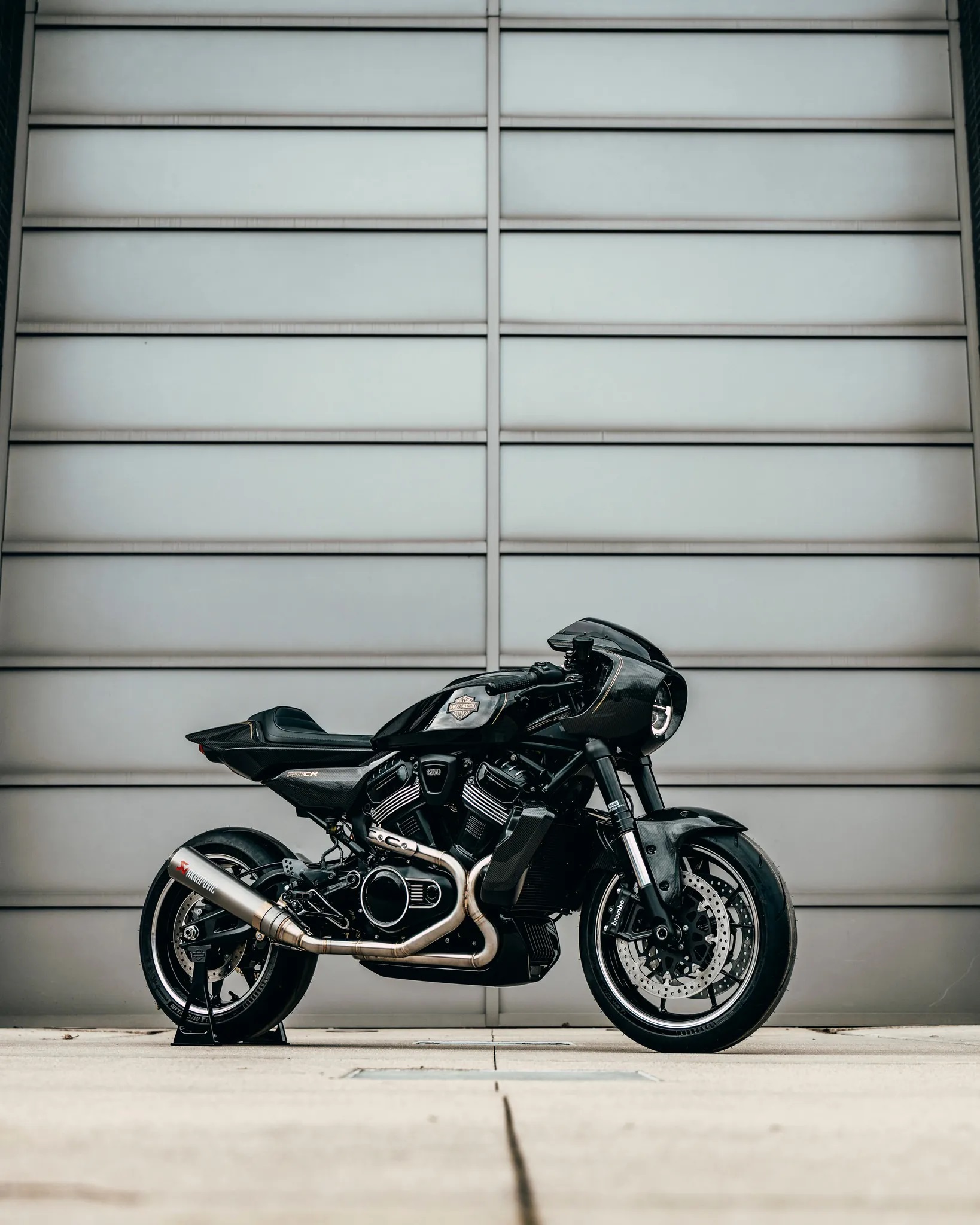
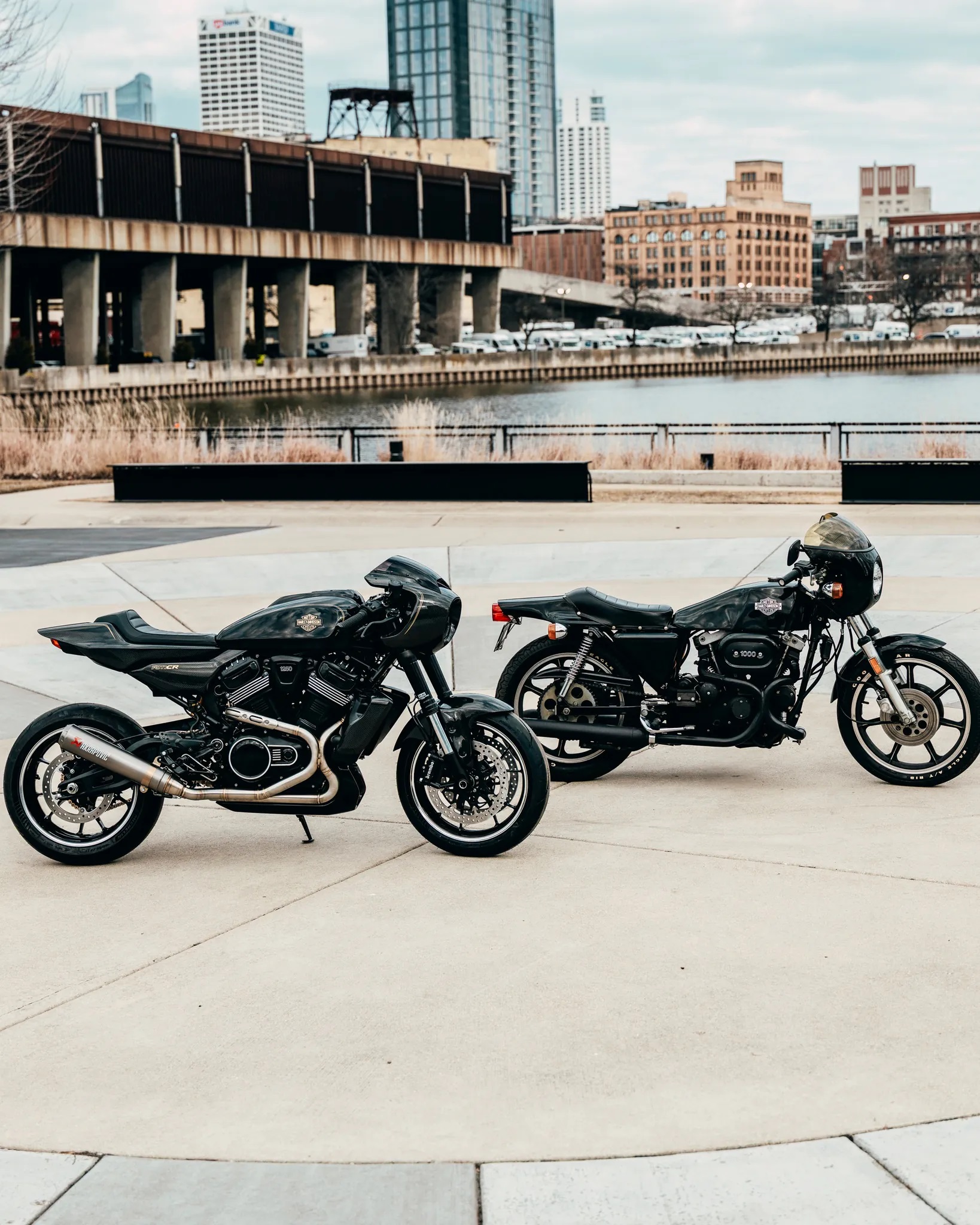
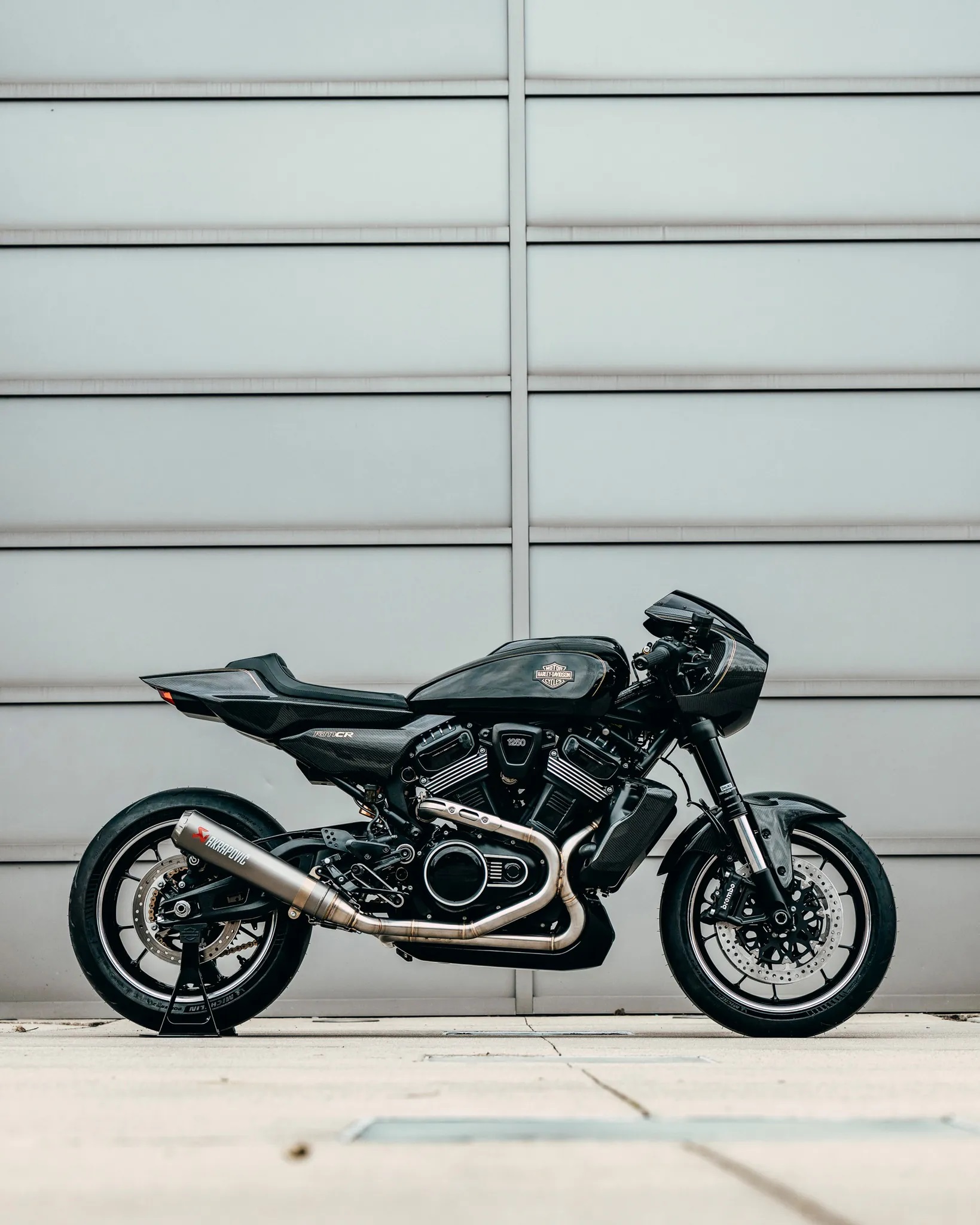
RMCR stands for ‘Revolution Max Café Racer,’ which explains this concept’s powerplant and its styling. The Revolution Max engine is of the same type already seen in the production Sportster, Nightster and Pan America, but with some subtle trim and detail changes. In terms of the concept’s styling, cues inspired by the historic XLCR cafe racer abound, not least of which are the bikini fairing, unique seat and tail treatment, plus the all-black paint. However, the RMCR brings these elements into the new millennium with a sharper, more aggressive overall package.
Café Racer, Milwaukee style
Unveiled in 1977, the Sportster-based XLCR was something of a passion project for Willie G. Davidson, Harley’s Chief Styling Officer at the time. It introduced a number of firsts for ‘big’ Harley-Davidsons, like a Keihin carburettor, cast alloy wheels and twin front disc brakes. The XLCR’s frame differed from regular Sportsters, with the swingarm inspired by Harley’s XR750 flat trackers. It was the styling that really set the XLCR apart, though.
The fuel tank, bikini fairing, single seat pod and fibreglass tail section were all unique to the XLCR, with just about everything painted black. This included the distinctive siamesed exhaust, but bright metal finishes on the rims, indicator shells and rocker covers offered some contrast. Model identification was limited to ‘CR1000’ on the primary cover and ‘1000’ on the air cleaner cover.
The powerplant was the same 997cc, 45-degree v-twin as other Sportsters, matched to a four-speed transmission with slightly lower gearing, but that unique exhaust and some tweaks to the timing resulted in performance figures of 50.7kW (68hp) at 6200rpm and 81Nm (60lb/ft) at 3500rpm. At the time, that made the XLCR the most powerful production bike Harley had ever built.
For all its innovation, and the work put into its development, the XLCR wasn’t embraced by Harley’s traditional market. Non-Harley riders who were fans of fast road bikes steered clear, too, so it was discontinued after only two years on the market, with total sales of around 3,100 units.
Ironically, the XLCR is now a collector’s item, with desirability for genuine examples increasing over the past decade.
A Modern Café Racer
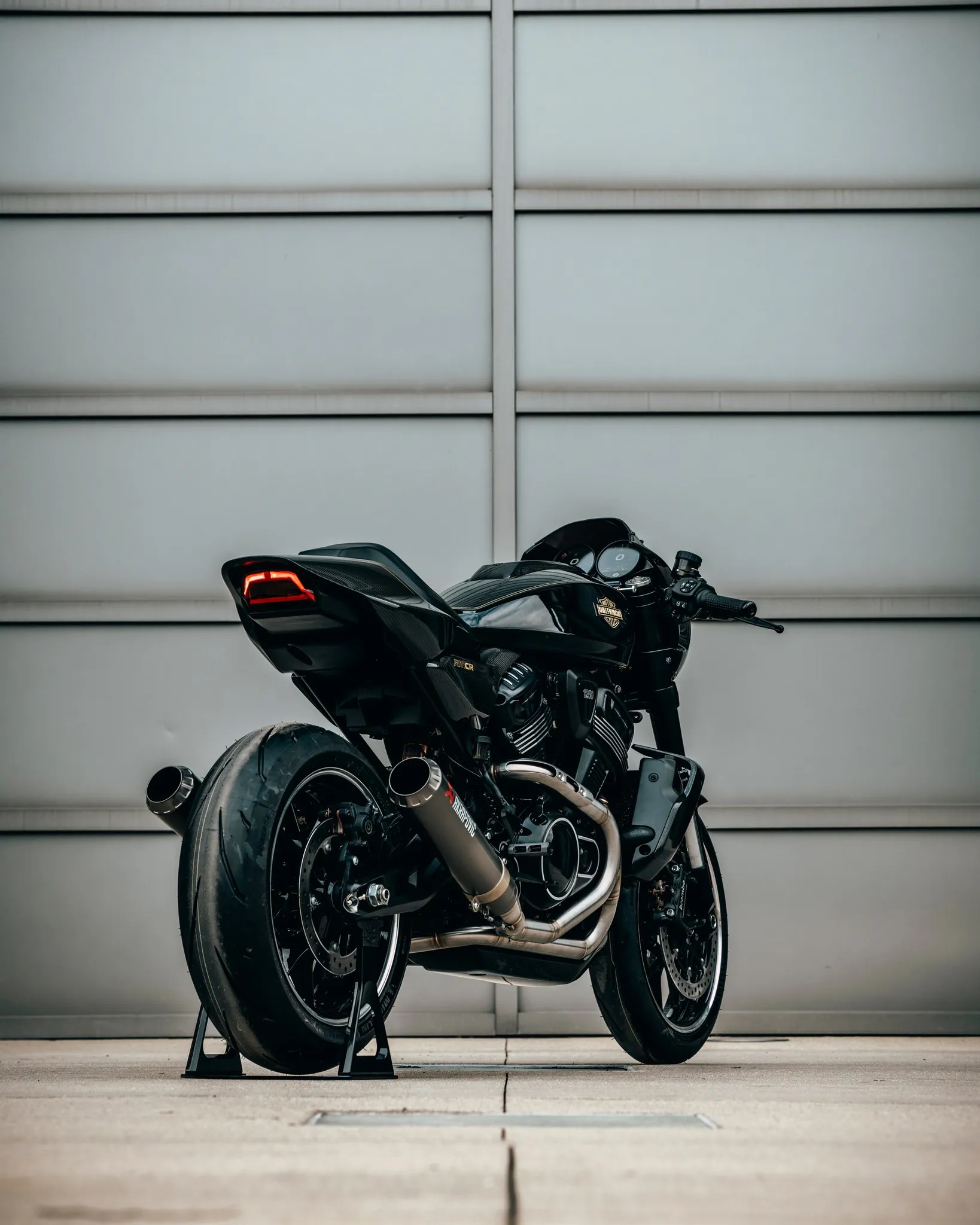
Seen alongside the XLCR, the RMCR shows a clear homage to the original. And while it’s certainly modern, the RMCR is also a bit top heavy visually, accentuated by acres of space between the compact seat/tail unit and the rear wheel. If Harley can find a way to reduce that gap on a production version, the aesthetics would be improved. Same goes for the radiator shrouds and belly pan. If they were combined into one, slim-profile unit, that’d be another improvement.
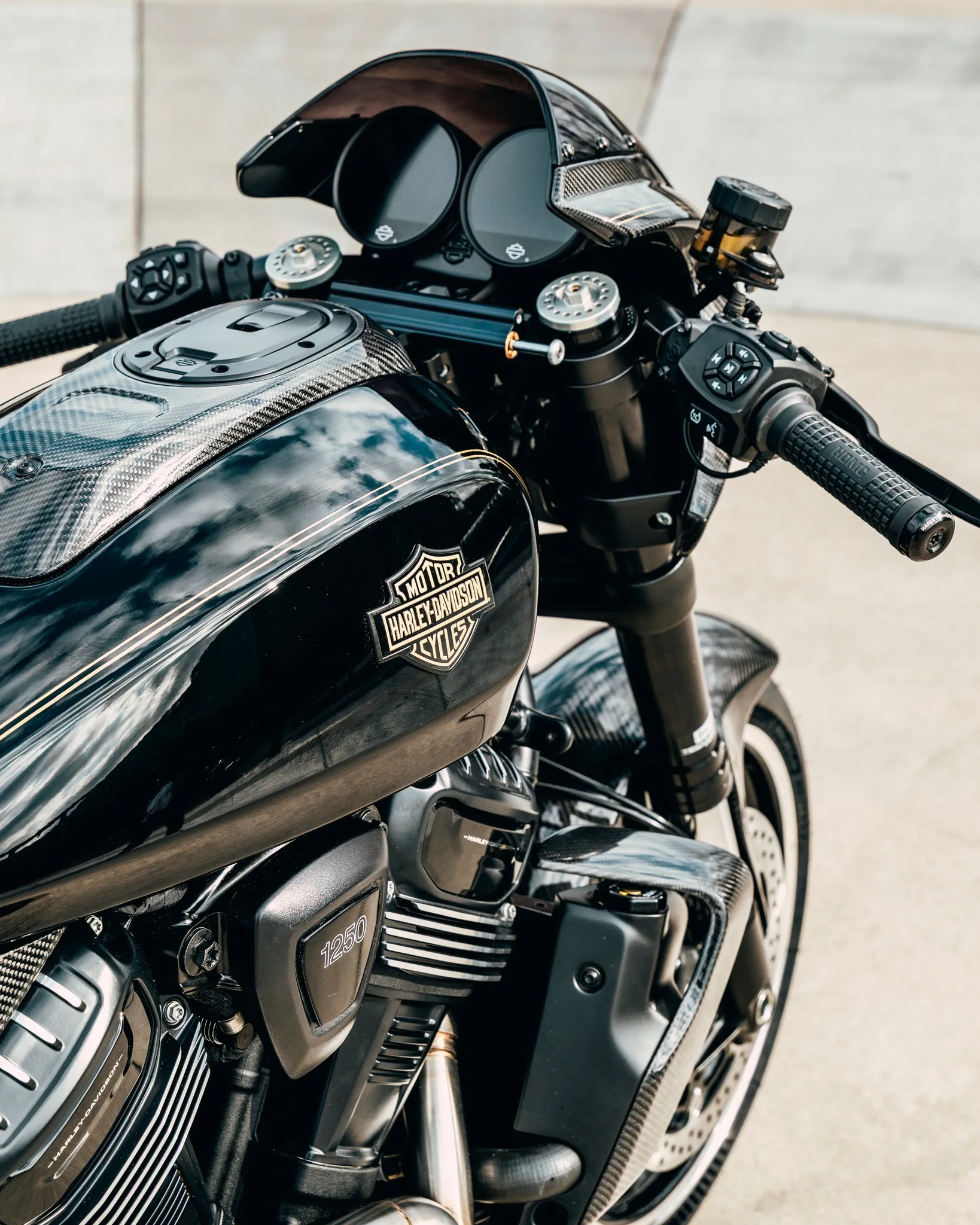
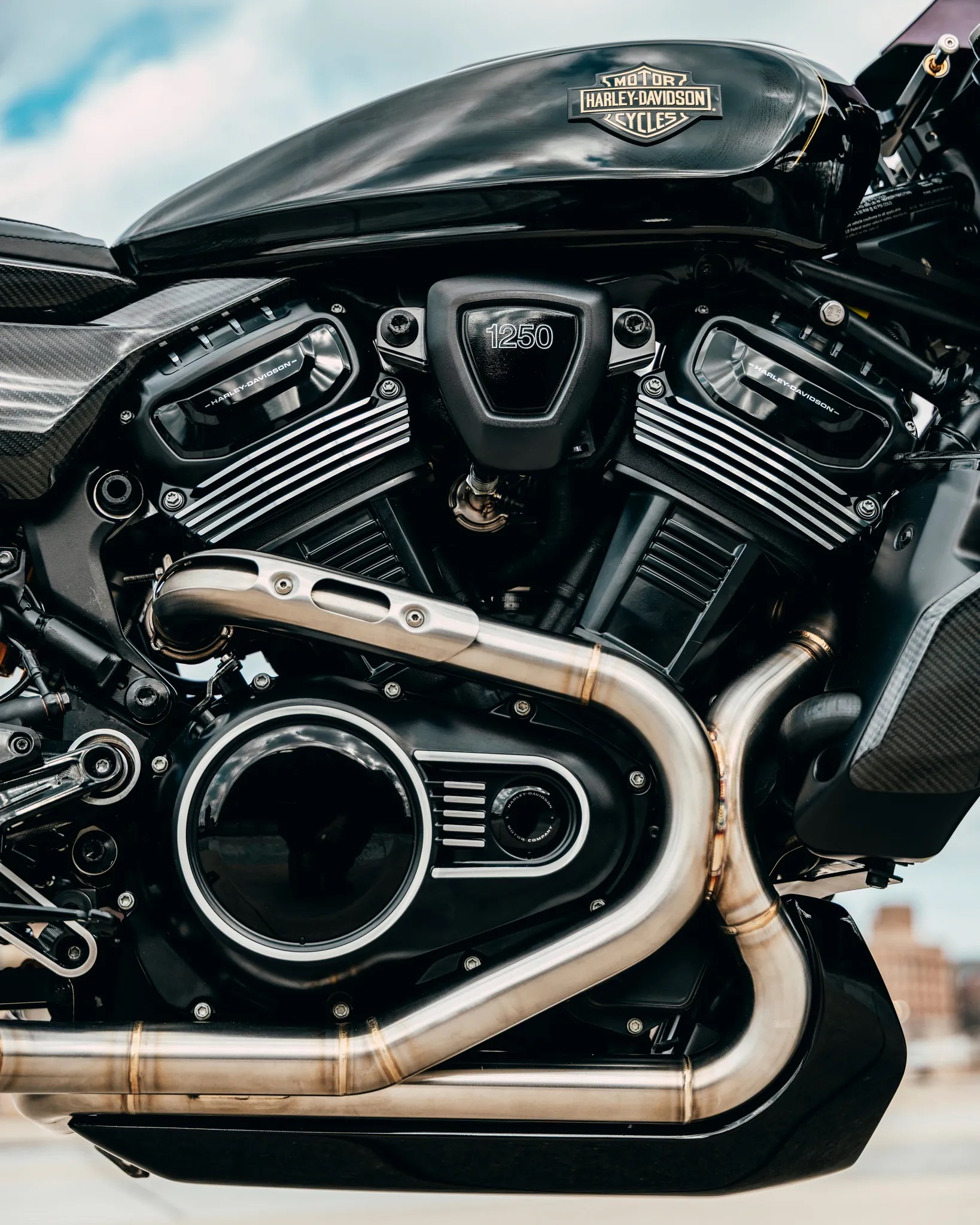
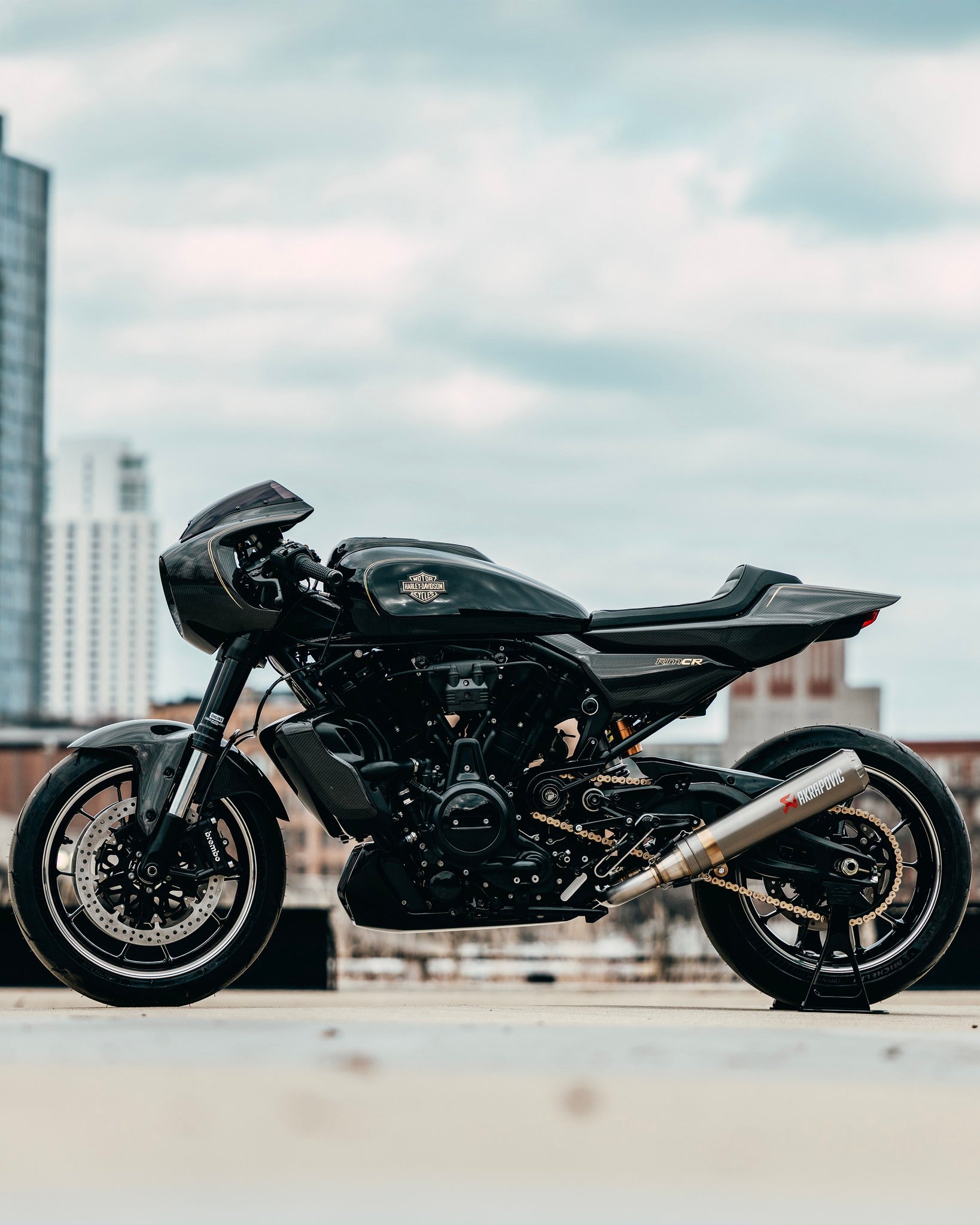
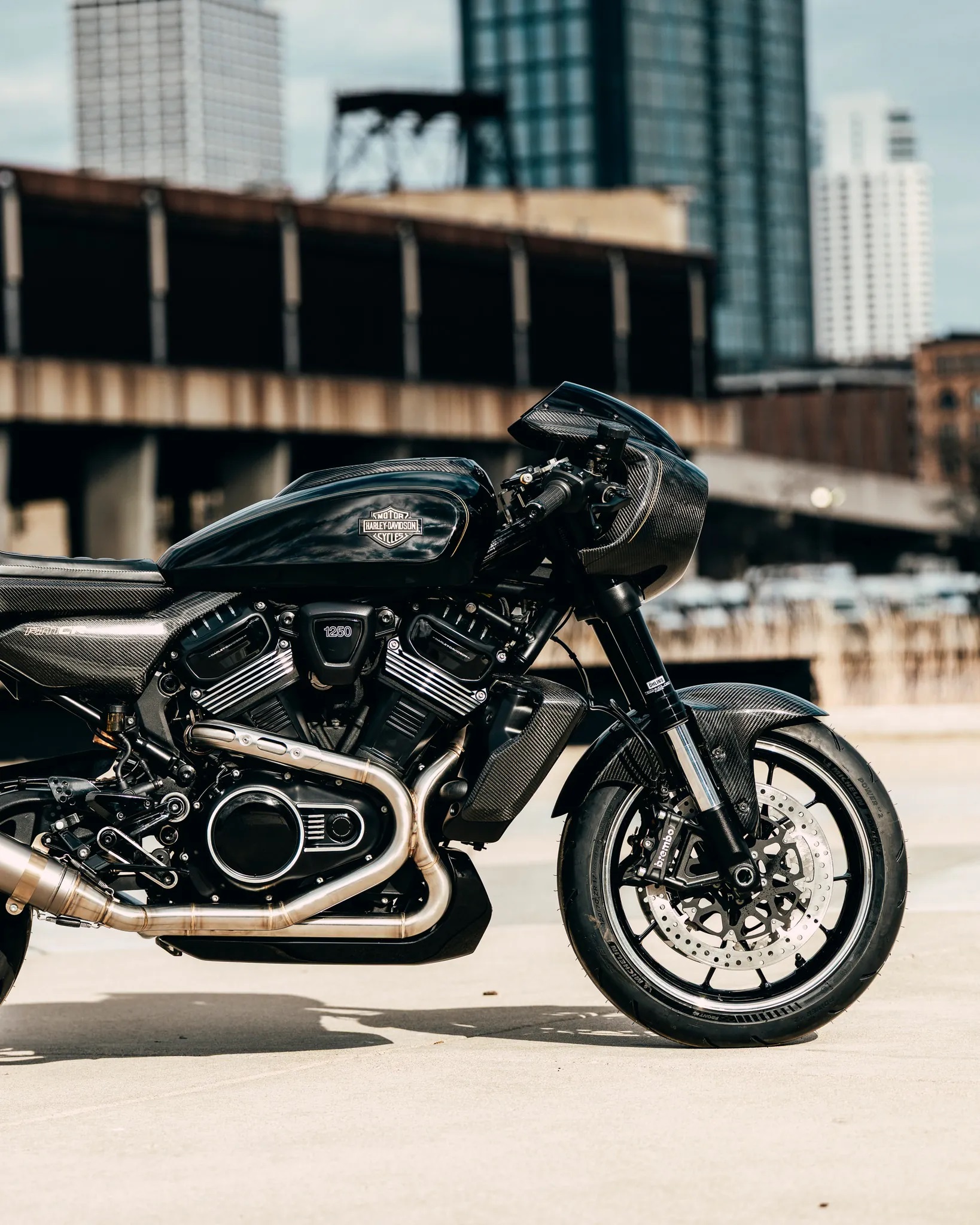
Alloy wheels with machined rims and slim black spokes are in the stye of the XLCR, as is the siamesed exhaust system, with this 2-1-2 set-up ending in a pair of Akrapovic silencers. The fuel tank is taken from the Sportster S, as are TFT gauges that have been doubled up on the concept to pay homage to the XLCR’s twin analogue clocks. Switchgear appears to have been taken from the Sportster, too, but in true café racer style, these are mounted on clip-on bars with retro-look waffle pattern grips. Unique rearset pegs are fitted, too, along with custom chain guards. A steering damper is visible in some images, suggesting this concept has been built for more than just static display.
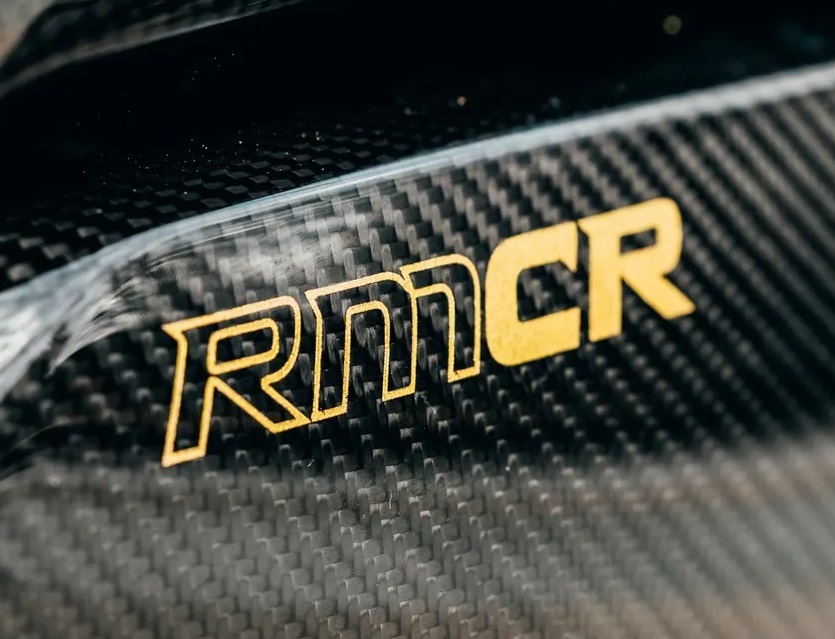
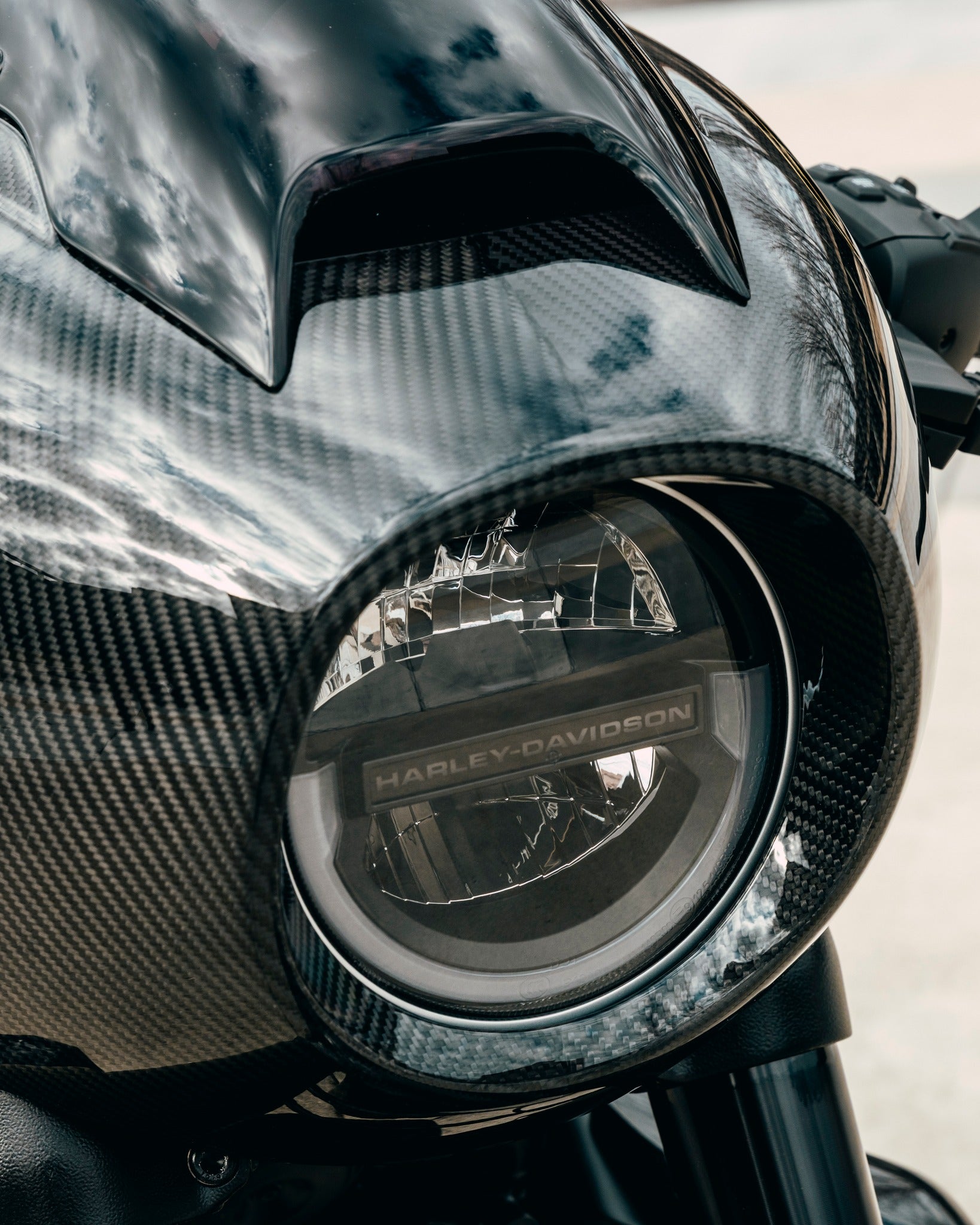
Excluding the tank, all the RMCR’s bodywork is in carbon fibre. This been left raw in most areas, with subtle gold pinstriping added. A smoked windscreen complements this and the blackout paint, with ‘RMCR’ identification added to the side covers.
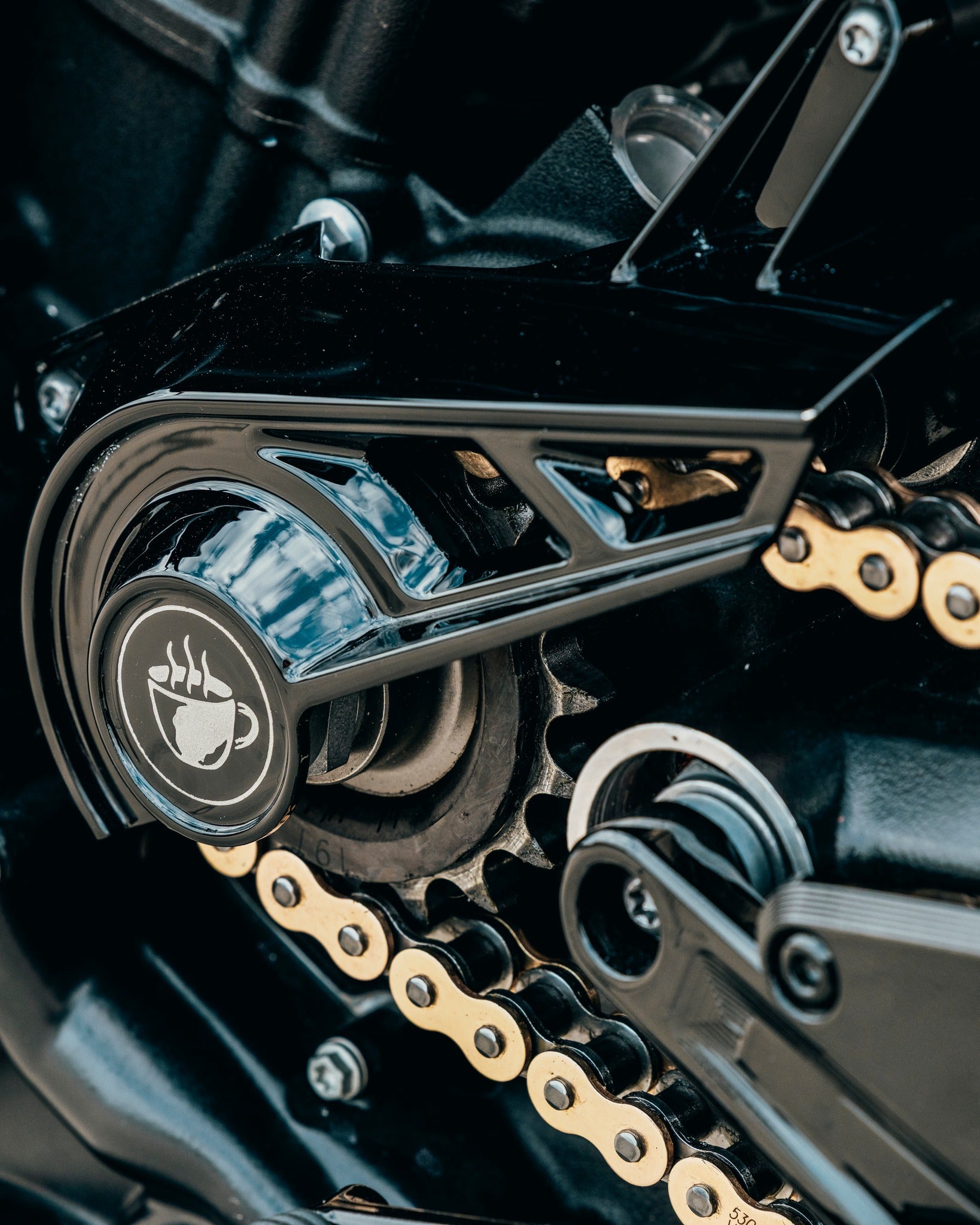
Further homages to Harley’s original café racer include the pleated seat with a kicked-up rear section, old school Bar and Shield tank badges, modified engine covers and a ‘1250’ decal on the air cleaner that’s in the same font as the ‘1000’ seen on the XLCR. The final quirky touch is a coffee cup decal on the front sprocket guard!
While XLCR inspiration in the RMCR’s styling is obvious, there are also elements of a VR1000-inspired sportsbike concept from back in 2018, along with a hint of the Livewire, particularly around the headlight fairing and how it flows through to the tail treatment. That electric bike has become a bit of a dirty word around The Motor Company, though, and was split off as a standalone brand earlier this year.
RevMax Base
Of the key mechanical componentry in the RMCR concept, the engine and frame have been taken directly from the Pan America 1250 ST, which is a variant of the adventure tourer not offered in Australia or New Zealand. Basically, the ST is a “street” version of the 1250 Special that our markets are familiar with. Key differences on the ST over the Special include a 17-inch (instead of 19-inch) front wheel, road tyres, manual compression/rebound adjustment, a lower seat height and less weight – a significant 14kg reduction. The 1252cc liquid-cooled Revolution Max v-twin is unchanged, producing 112kW (150hp) at 8,750rpm and 128Nm (95lb/ft) at 6,750rpm. As with the XLCR in 1977, the RevMax twin is the most powerful engine Harley offers in 2026.
In ST form, the Pan America 1250 has been the basis for Harley-Davidson’s entry in Super Hooligan competition – a mix of flat track and road racing - in the US. Up against the likes of Yamaha’s MT-09, Triumph Street Triple 765 RS and the KTM 890 Duke R, Harley-mounted riders not only won last year’s Super Hooligans title, they also filled the first five places in the championship.
In the case of the RMCR, output from the Revolution Max 1250 engine is unknown, but it may be a bit more than stock, as based on videos of the concept being revved, the Akrapovic silencers appeared to have no baffles!
Brembo brakes are as per what’s available on the Pan America 1250 ST, but the suspension has been updated with adjustable Öhlins components front and rear. The curiosity on the concept is the swingarm, which is neither from the Sportster nor the Pan America 1250. In fact, it looks like the unit fitted to the RevMax-powered Bronx streetfighter that was unveiled in 2019, but cancelled before coming to production when CEO Matt Levatich and his ‘More Roads to Harley-Davidson’ future strategy was ousted.
On the Road
Since making its debut at the Mama Tried Motorcycle Show in Harley’s home town of Milwaukee back in February, the RMCR has been displayed at Daytona for the season-opening AMA Superbike round, with more appearances at US racing events and motorcycle shows to come. It’s blown up on Harley-Davidson’s social media channels, too, with overwhelmingly positive feedback.
The RMCR was also shown at the opening round of the inaugural Bagger World Cup held at CotA in March. Its presentation there is likely to extend to European rounds of this Harley-supported international bagger racing championship that’s being run alongside selected MotoGP rounds in 2026.
Gauging global reaction via exposure like this may be key to whether the RMCR remains a one-off or not. The reality is, if this café racer is to be a success, it needs a worldwide client base - domestic sales alone won’t cut it.
While the future of the RMCR is a ‘watch this space’ proposition, it will be interesting to see if the support and enthusiasm for this concept becomes too big for Harley to ignore.