

Harley-Davidson has already released a series of special ‘Liberty Edition’ motorcycles in their Enthusiast Collection to celebrate 250 years of American independence this year. They're now adding to that with the revival of a classic model from the past – the Super Glide. To celebrate the USA’s sesquicentennial of independence, the all-new Super Glide will be limited to 2,500 individually numbered units, with release limited to the US and Canada.
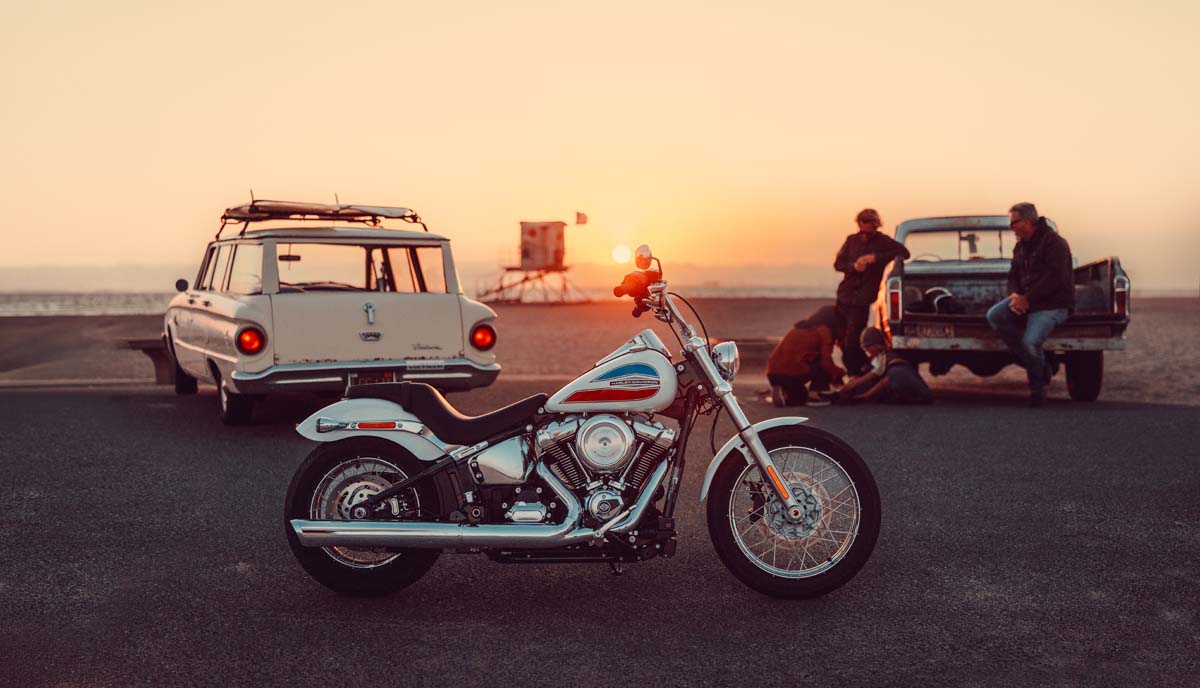
Star of 1971
The original Super Glide was released for the 1971 model year, combining the frame, Shovelhead engine, gearbox and back end of an FL Big Twin with the front suspension, wheels and brake from the XL Sportster. The resulting hybrid was given the ‘FX’ code.
The Sportster front end meant the FX was lighter than the FL but had the same power. Further weight saving was achieved by removing the electric starter – for its first few years on the market, the Super Glide was only available with a kick start. The Super Glide also featured a fibreglass seat pan and rear mudguard referred to as the ‘boat tail’.
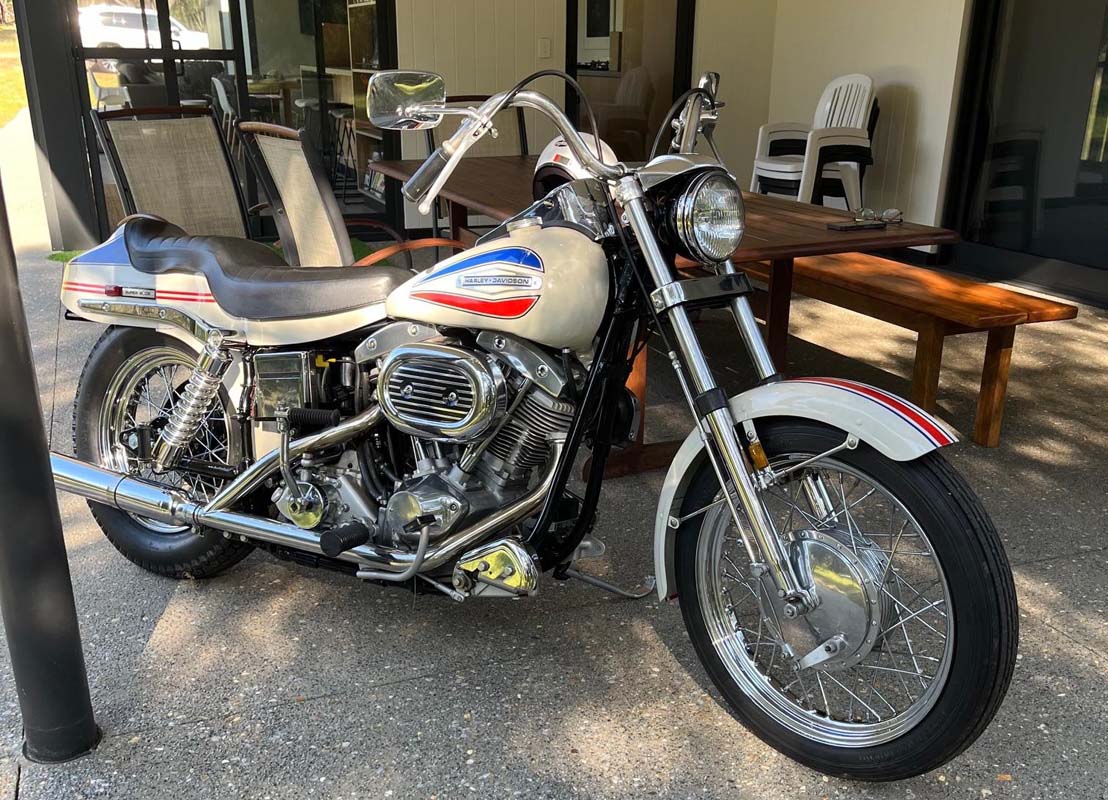
Regarded as the first “factory custom” motorcycle, the Super Glide was created by Willie G. Davidson in response to customising trends he’d observed in the US, particularly California. Other defining features on the Super Glide included buckhorn handlebars, a smaller version of the FL’s two-piece fuel tank, a 19-inch front wheel, 2-into-1 exhaust and ‘Sparkling America’ paint that added red and blue panels and pinstriping to a white base. The Super Glide was also one of Harley’s first production models to carry the famous ‘Number 1’ logo.
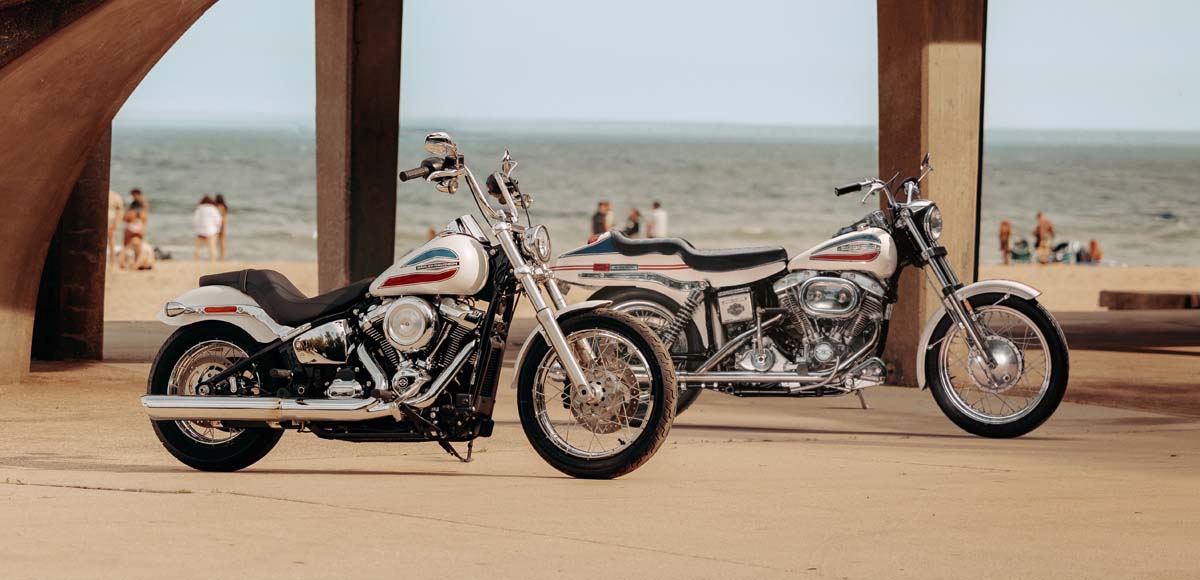
Initial sales for the Super Glide were solid but not spectacular, with both the FLs and Sportsters outselling it in 1971. The boat tail rear wasn’t popular with customers, so became optional to a more conventional Sportster back end with a mudguard-hugging banana seat for 1972.
Disc brakes were introduced in 1973, followed by an electric start option (FXE) in 1974. Sales improved, allowing the FX range to expand with the introduction of the FXS Low Rider midway through 1977. The FXEF Fat Bob, FXB Sturgis and FXWG Wide Glide were added in subsequent years. The FXR Super Glide II came in 1982, with this model and its variants replacing most of the original FX machines by 1986.
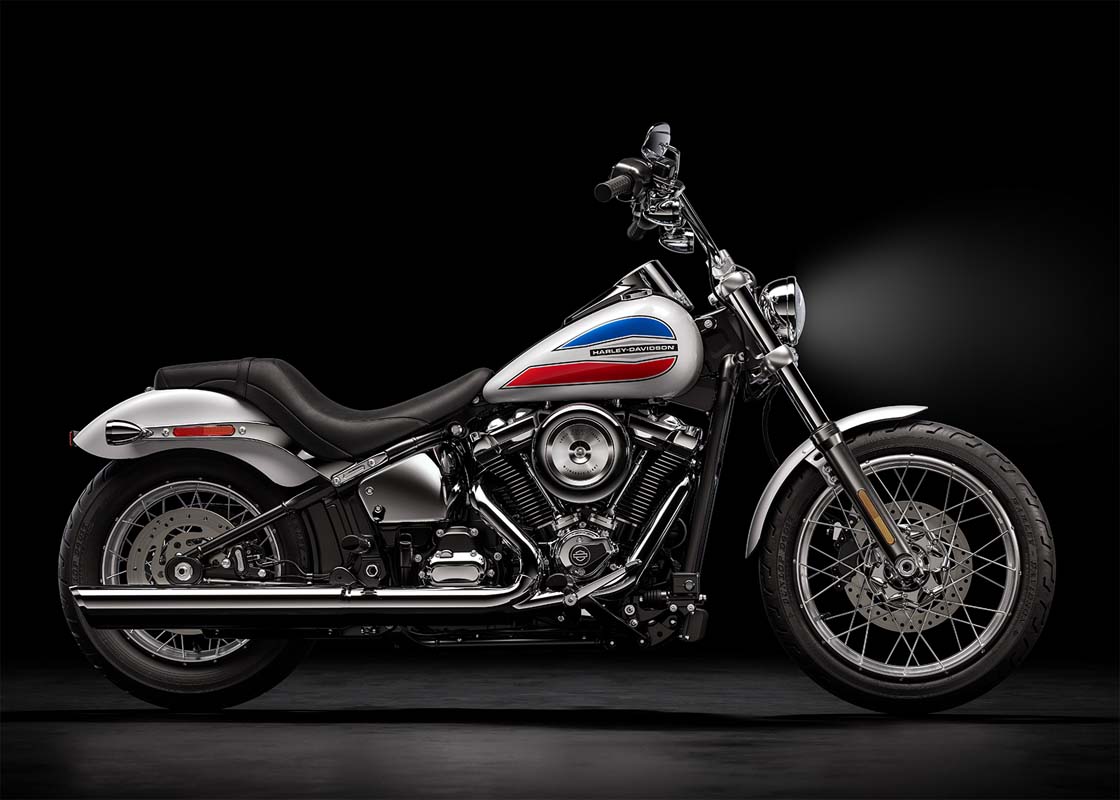
New Super Glide
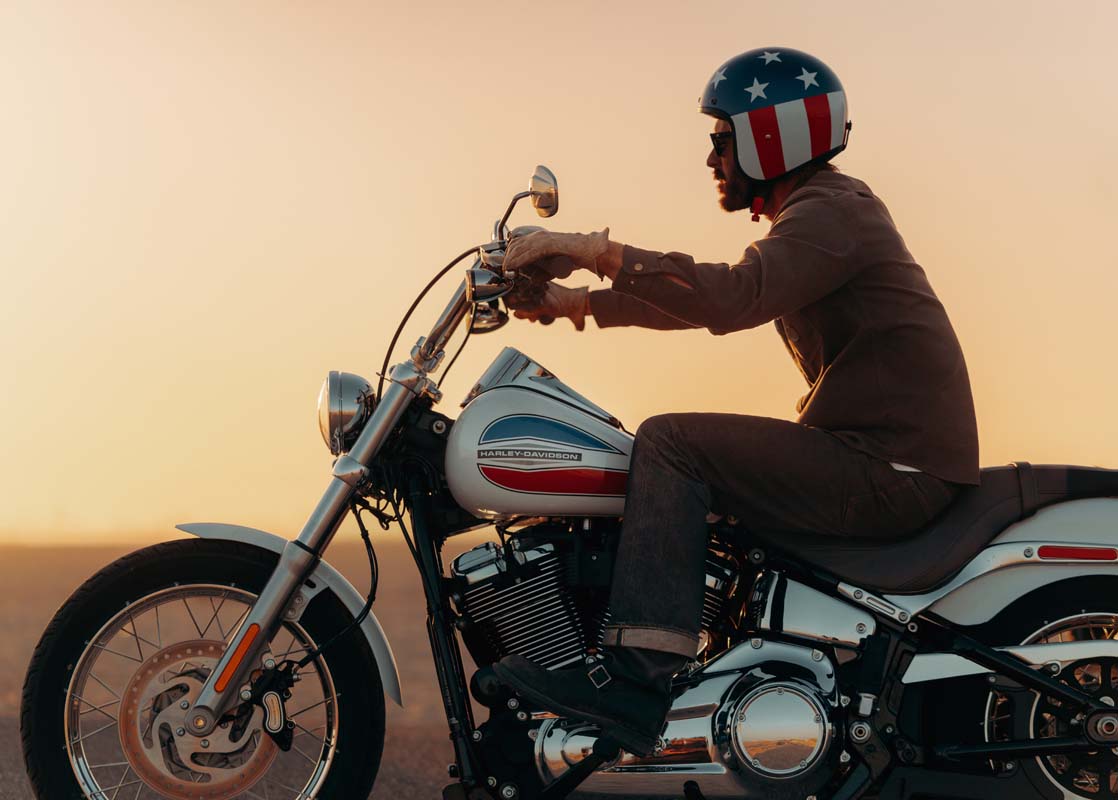
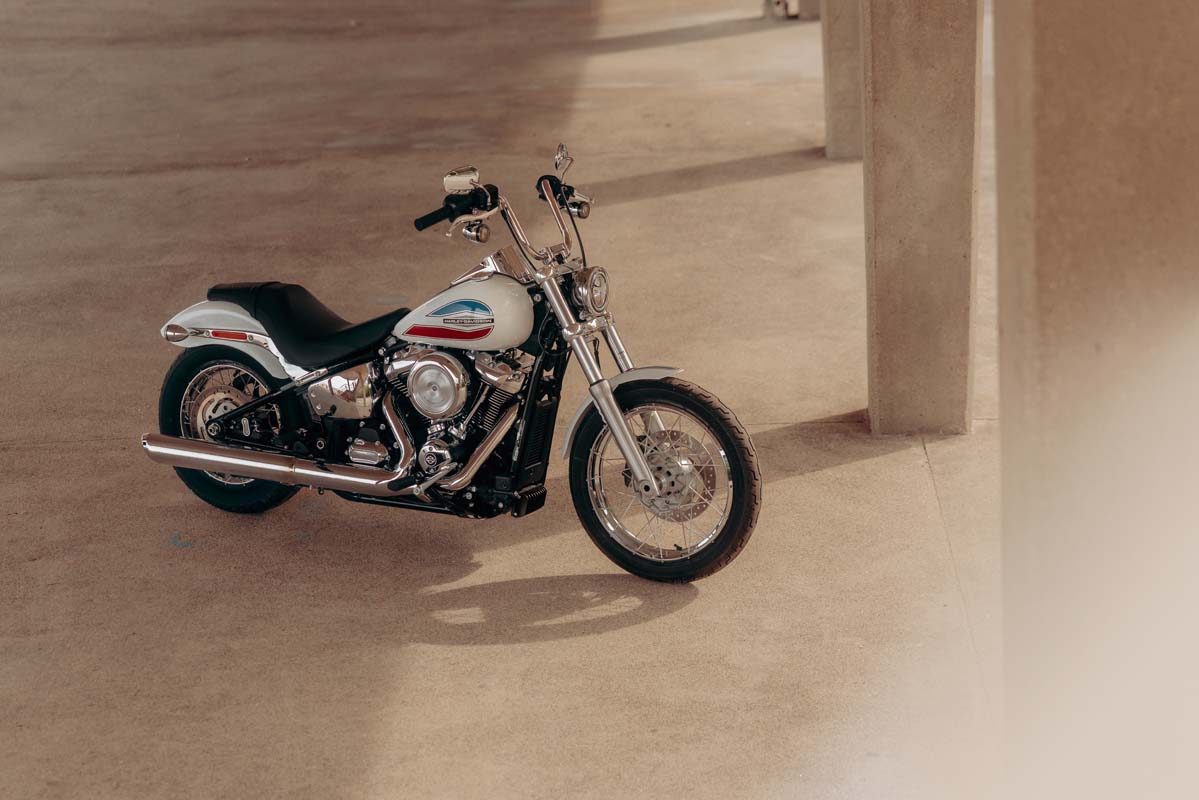
To create the all-new Super Glide, Harley-Davidson has mixed and matched parts from current Softail models to replicate the original. The mini ape handlebars, headlight and front mudguard are the same as the MY26 Street Bob, with the fuel tank and console taken from the current Fat Boy and Heritage Classic. Wire spoke wheels are in the style of the Heritage Classic, too, while the retro-look round air cleaner cover can be seen on this year’s Heritage Classic and Street Bob. The one-piece seat, however, is unique to the new Super Glide.
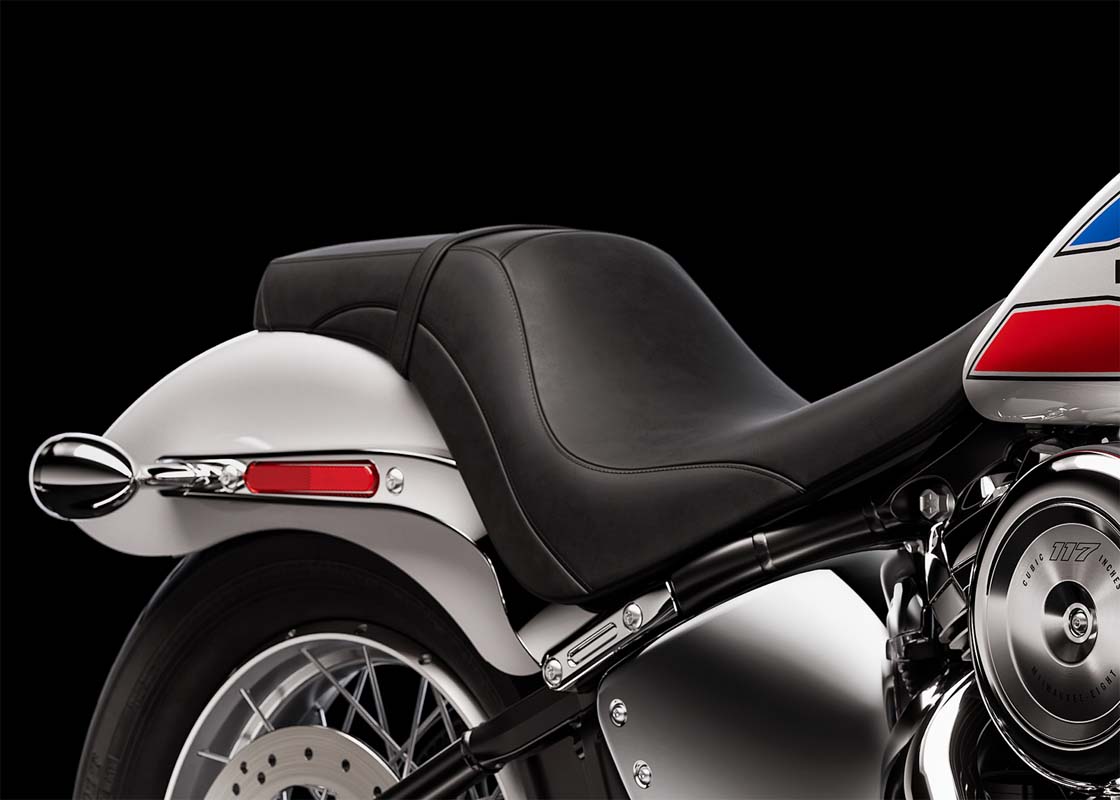
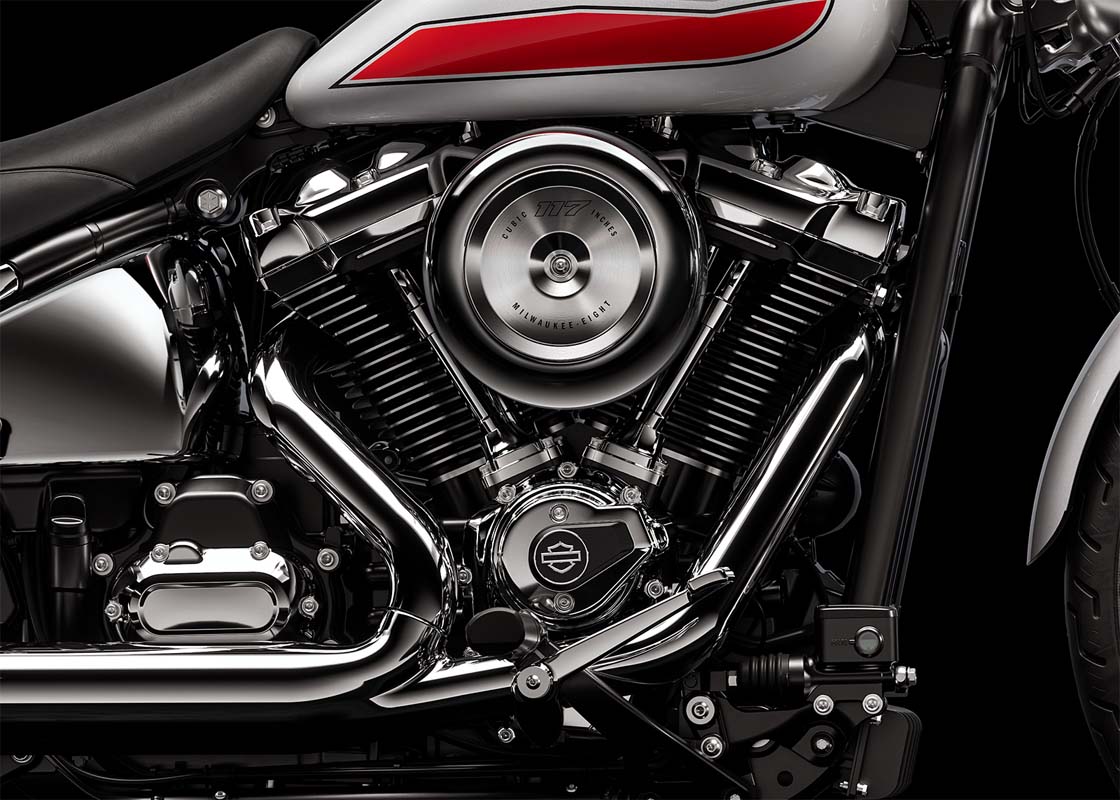
That retro aesthetic has also driven the abundant use of chrome – on the engine, exhaust, fuel tank console, side covers, rear mudguard brackets, fork legs, handlebars and wheel rims, with bright metal fastenings elsewhere. The tank decal is similar to that of the current Street Bob, which itself was inspired by badging on the original Super Glide.
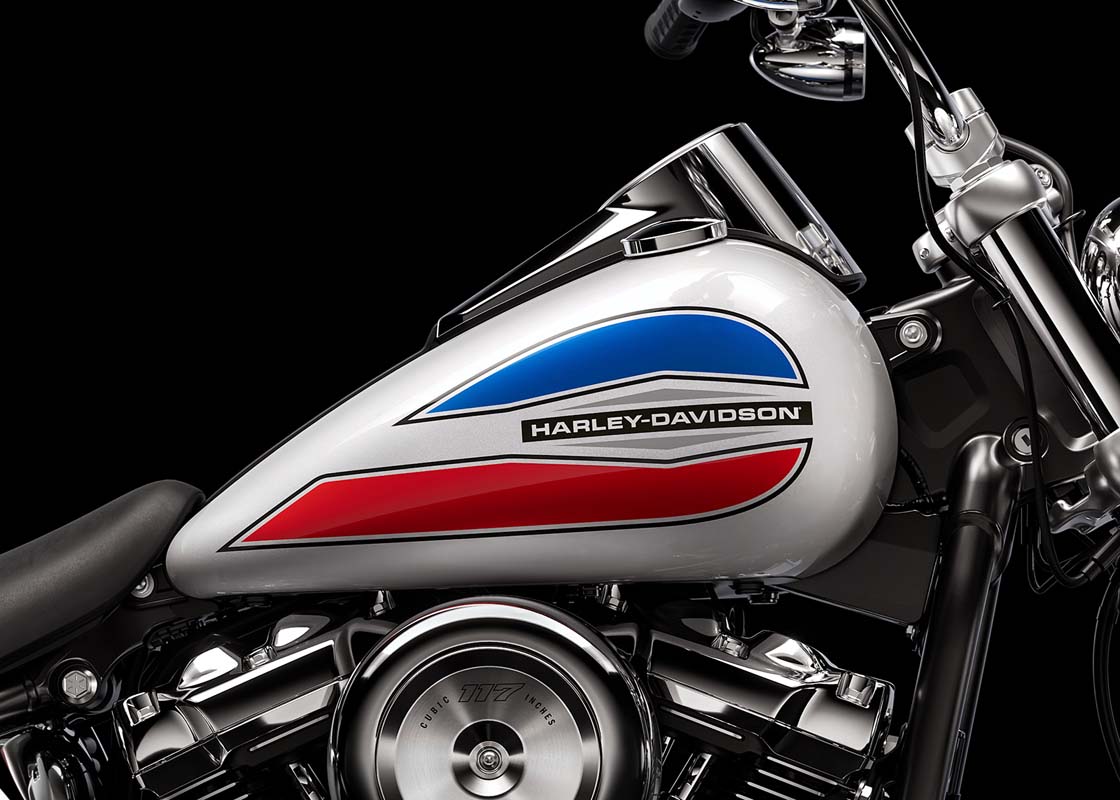
Paint treatment closely follows that of the original, too, with a White Onyx pearl base, red and blue tank panels, plus red/white/blue stripes on the front and rear mudguards, edged with black coachlines.
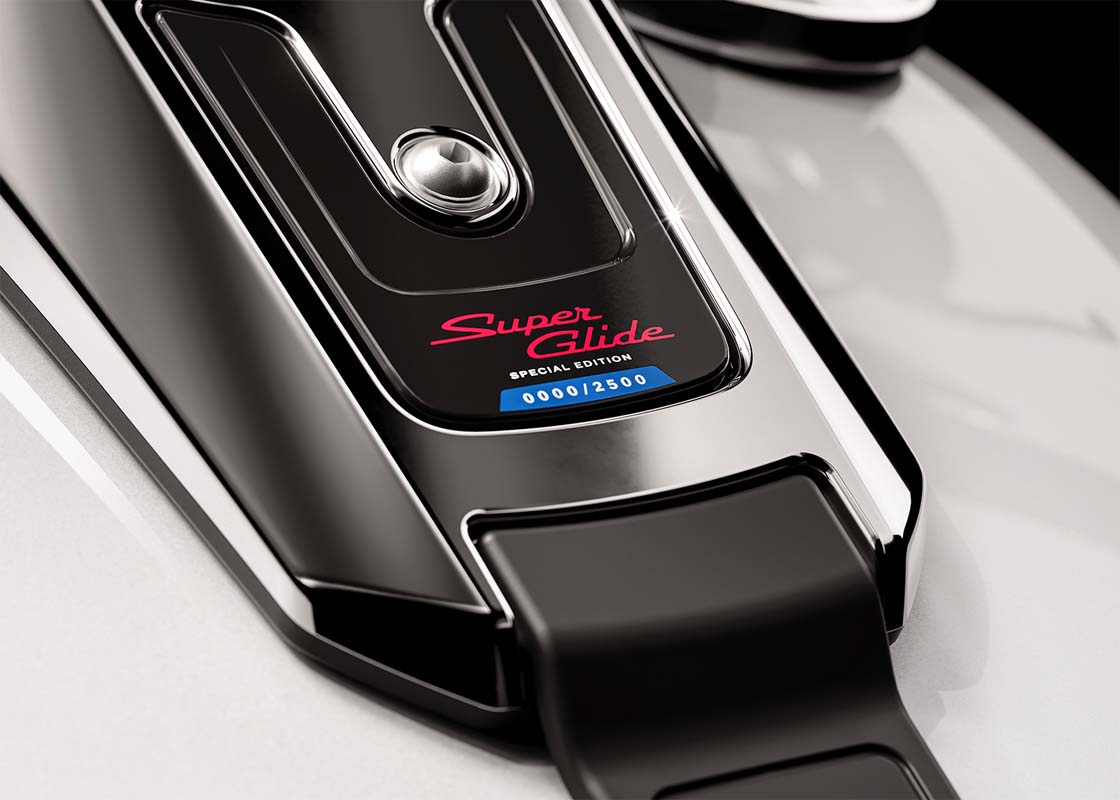
The tank console carries ‘Super Glide Special Edition’ identification, along with the individual build number (of 2,500), but as per the original, the Super Glide name doesn’t appear anywhere else.
Modern Power, Modern Tech
For all its retro looks, the Super Glide Limited Edition carries the latest Harley-Davidson tech and running gear. The engine is the same Milwaukee-Eight 117 found in the rest of the MY26 Softail lineup, but with a unique tune. Listed peaks of 73kW and 163Nm (98hp and 120lb/ft) sit between the ‘Classic’ (68kW/156Nm) and ‘Custom’ (77kW/168Nm) outputs applied to Milwaukee-Eight-powered Softails for the Australian market. Harley-Davidson says this tuning emphasises “ease in rideability, with a flat torque curve to deliver satisfying street performance”.
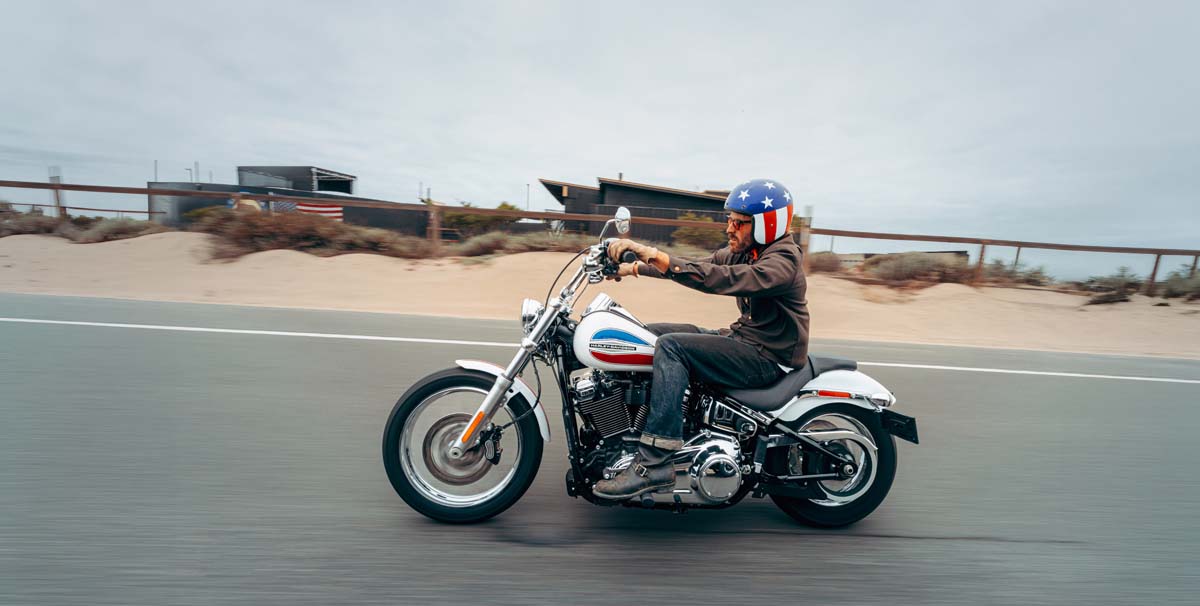
Transmission spec is unlisted, but presumably the same six-speed Cruise Drive as the rest of the MY26 Softail family. Suspension – 49mm forks and monoshock rear with adjustable preload – is of the same type as the Street Bob, as is the brake package, consisting of a single 300mm front disc with a two-piston caliper, and 292mm rear disc with a single-piston caliper.
Standard rider assistance tech includes ABS, Traction Control and Drag Torque Slip Control that’s all Cornering Optimised. Tyre pressure monitoring and selectable riding modes – Road, Sport and Rain – are as per what you’ll find on the latest Softails, with LED lighting, an LCD insert in the analogue tank gauge, and a USB charging port all part of the spec, too.
North America only
Despite a big production run of 2,500 units, the 2026 Super Glide Limited Edition will not be offered outside of the USA and Canada. Compare that to the MY26 Enthusiast Collection Liberty Edition, which were released globally, despite a total of 2,500 units across three models in that range.
US pricing for the Super Glide Limited Edition is listed at US$15,999, which would translate to around AU$23,000 direct conversion (at time of writing). It’s a moot point, though, as it won’t be released here.
If it were to be offered in Australia, the Super Glide would certainly carry a premium over the Softail range that starts at $24,995 with the Street Bob, then jumps up to AU$30+K for the rest of the range. The Enthusiast Collection Liberty Edition models that were announced earlier this year have Australian pricing starting at $39,995.
A ray of light for local enthusiasts regarding this model is that Harley-Davidson haven’t stated the new Super Glide is their Icons Collection retro model for 2026, so there’s a possibility that it may be released locally under that label.


