Words: Mike Ryan
Photos: RM Sothebys
For Britain’s motorcycle industry in the post-WWII years, sales in the American market were crucial. That meant many unusual, US-only models were produced over the years. One of those was the Bonneville T120 ‘TT Special’. Created to satisfy a very specific niche, the TT Special was produced in very small numbers.
Built from 1963 to 1967 inclusive, the ‘TT’ designation of this bike shouldn’t be confused with the historic road race event on the Isle of Man. In the US, ‘TT’ still referred to 'Tourist Trophy', but was applied to something very, very different.
Flat Track, with Extras
To understand the T120 TT Special, you need to understand the type of racing it was created for – flat track. Still a part of the US racing scene today, flat track (aka dirt track) was the country's premier motorcycle sport category from the 1930s until the 1980s, when road racing and motocross began to dominate.
As the name implies, flat track was held on flat oval or circular courses – usually dirt or packed clay, but sometimes sand for beachfront races, like Daytona. These replaced the steeply-angled board tracks that had boomed in the 1920s, but fell out favour for several reasons, not least of which the durability of these manufactured timber circuits. While some flat track courses would also be constructed, especially in more recent years, most of the early flat track events were held on horse racing circuits. If that seems odd, you need to understand that in the US, horse racing is held on dirt tracks, not turf, like in Australia.
At the time, the main industry body in the US, the American Motorcyclist Association (AMA), also oversaw motorcycle sporting events. The AMA introduced a formalised flat track championship in 1932, initially for prototype machinery (Class A), with a production bike category (Class C) added later. Class C fuelled the rivalry between Harley-Davidson and Indian either side of World War II, but after the demise of Indian in 1953, Harley would dominate the championship for the next decade.
In those early post-War years, the Class C champion was decided by a single race – the Springfield Mile – held on a clay-based oval track in Illinois that was one of the few back then to be purpose-built for motorsport.
In 1954, the 'Grand National Championship' was introduced, combining four dirt track disciplines with one on tarmac. The dirt disciplines include mile, half mile and short track events, plus what was called ‘TT Steeplechase’. Unlike the other events that were run anti-clockwise (thus all left-hand turns) on small and large oval courses, a TT steeplechase course needed to include at least one right-hand turn AND a jump. In some ways, this was a forerunner of motocross, with a touch of speedway, as bikes raced without brakes. The demands of TT steeplechase suited lighter, more nimble bikes, where the oval courses favoured big, heavy v-twins like the Indians and Harleys.
British Invasion
By the late 1950s, British motorcycles were proving to be as popular in off-road events as they were on the streets of America. Brands like Triumph, BSA, Matchless and Norton hadn’t tasted serious flat track success though; mainly because the rules of the time favoured Harley-Davidson. Of all the Grand National disciplines, TT presented the best opening, which American racer Dick Mann was the first to exploit.

In 1963, Mann won the Grand National Championship on a Matchless G50. The first Grand National title for a British motorcycle since Chet Dykgraaf won in 1946 on a Norton, Mann’s victory opened the floodgates, with British bikes taking four of the next eight championships. Coincidentally, Mann would achieve the last Grand National title for a British-built bike in 1971, this time on a BSA.
Even at this time, the road racing element, specifically the Daytona 200, was gaining more publicity than the other disciplines, but it wouldn’t be until 1986 that the Grand National became a dirt track only series.

Triumph Specials
Before they introduced the T120 TT Special in late 1962, Triumph already had a history of producing special models to suit competition use. The first of those was the Speed Twin-based TR5 Trophy, introduced to the USA in 1951.
America was hungry for these models, especially on the west coast, where desert racing was growing in popularity. Supporting and supplying this market was California-based Johnson Motors (known as JoMo), while Triumph Corporation (aka TriCor) in Maryland handled distribution for the east coast.
The 500cc TR5 Trophy and 650cc TR6 Trophy that followed in 1956 proved to be great earners for Triumph, with the US market having a seemingly voracious appetite for these stripped-down, spiced-up models. As such, when JoMo requested an off-road model based on the new twin-carb 650cc Bonneville that had launched for 1959, Triumph responded - eventually.
The US-only TR7B for 1960 was essentially a T120 with a high-mount exhaust and trials-type tyres. The T120C from 1961 was built to the same concept, although it did benefit from improvements made to the Bonneville for that year.
With the shift to unit construction for the 650 twins in the wings, there wasn’t much change for 1962, either, although the final year for the pre-unit Bonnevilles did see Bill Johnson set a new motorcycle land speed record of 224.57 mph (361.33km/h) with a modified, nitro-methane-fuelled example.
TT Arrives
The shift to unit construction for all of Triumph’s 650s also brought a new frame for the Bonneville, the adoption of coil ignition and other changes. While not perfect, the new Bonneville became a huge hit and would go on to sell significantly better than comparable roadgoing twins from BSA and Norton.
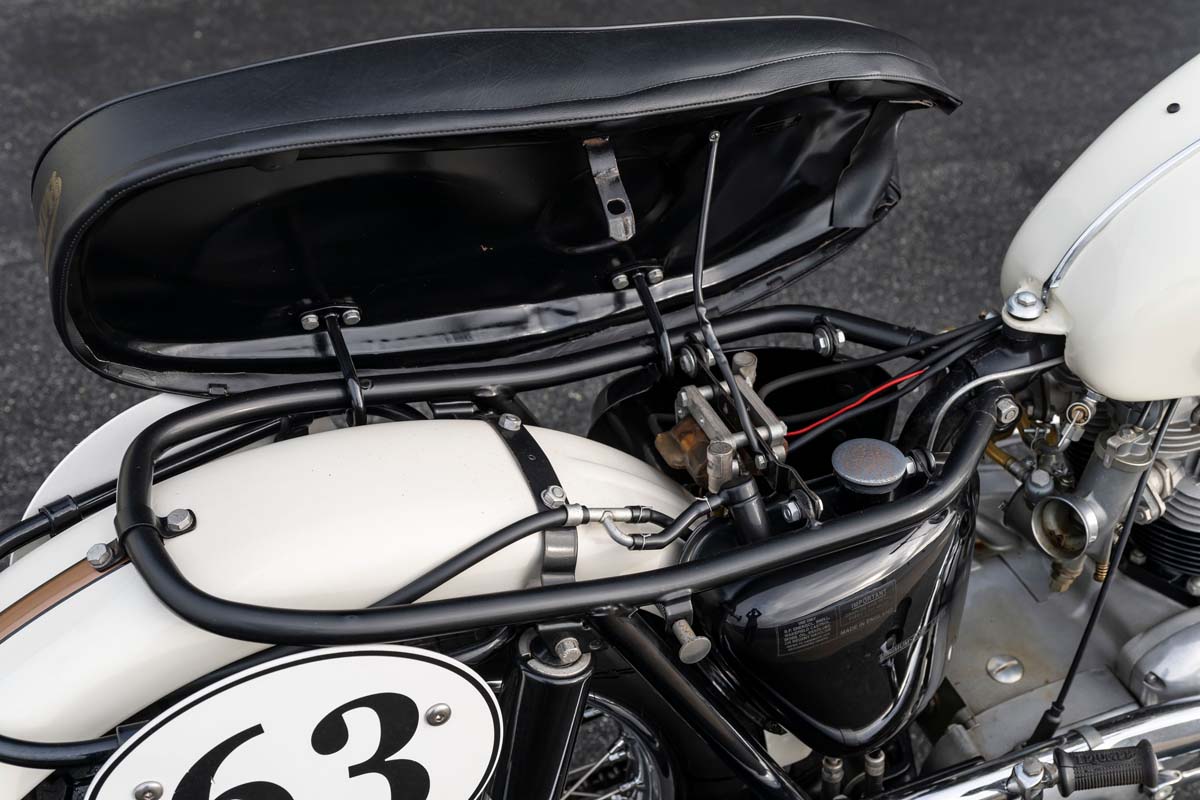
The assertion by some that Mann’s success in the 1963 Grand National fast tracked Triumph’s release of the T120 TT Special is unlikely, as the first units were built in late 1962 following discussions between JoMo and Triumph. Witnessing the growth of desert racing on the west coast JoMo requested a special variant of the Bonneville that combined elements of the T120C and T120R, along with their own suggested additions. As already mentioned, US sales were vital to Triumph at the time, compounded by a bad sales year in 1960, so the order was met. Unlike previous years, where individual bikes were built to order, the T120 TT Special would be built to a single spec, although this would change from year to year.
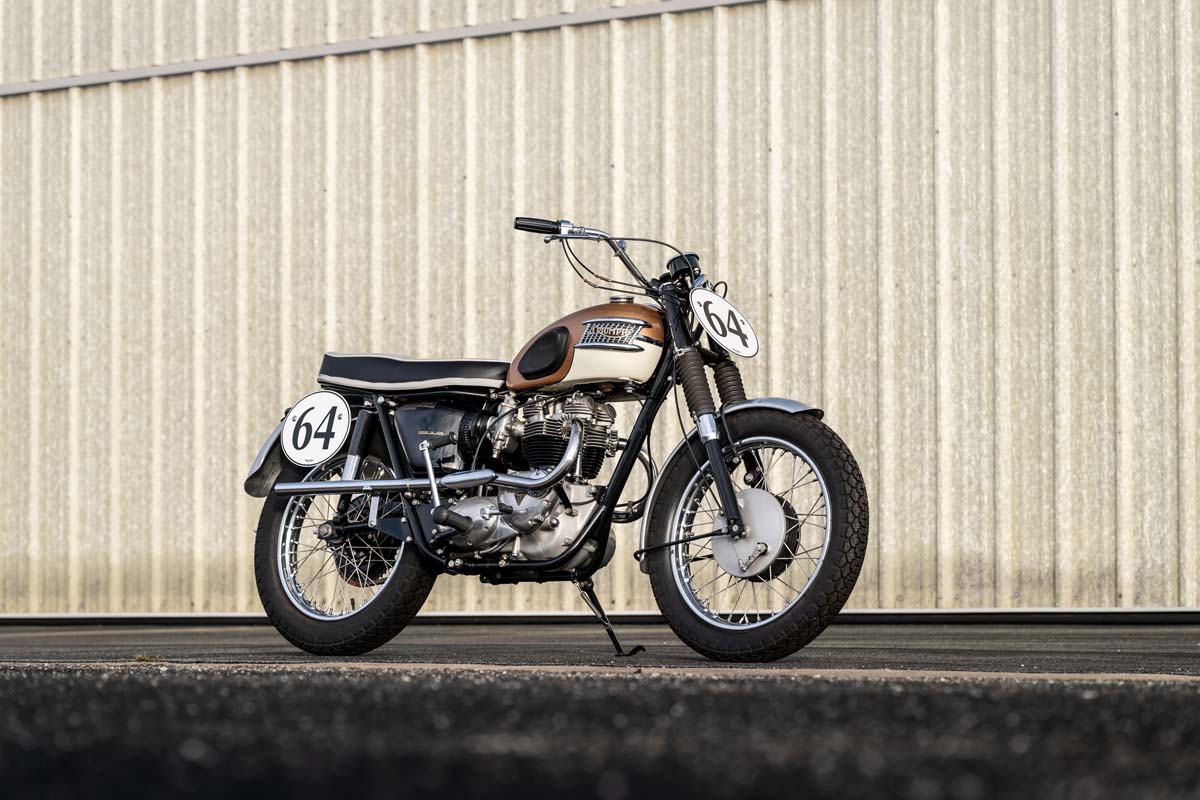
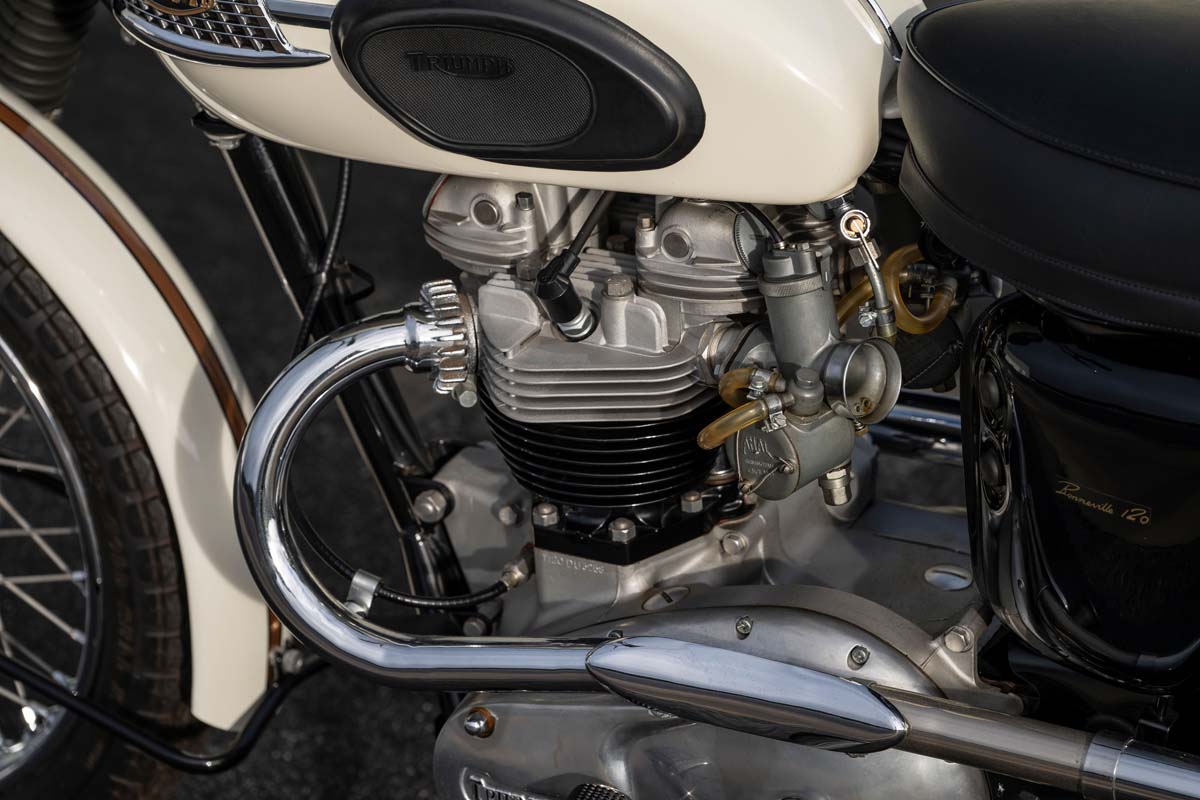
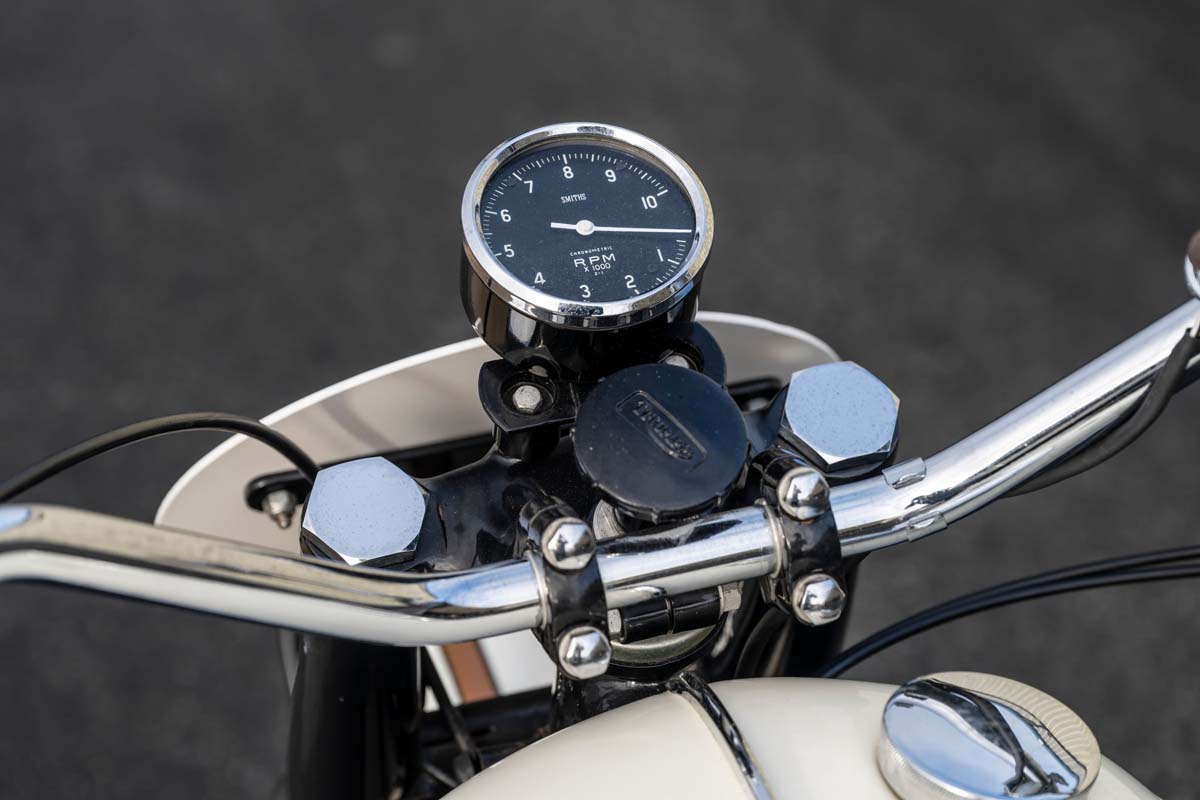
Applying some engine improvements learned from Johnson’s record setter, the initial TT Special ran the same 650 twin and four-speed gearbox as the standard Bonneville, but added higher (12:1) compression pistons, larger carbies and unrestricted high-mount exhausts. A revcounter and racing tyres were also added. As these bikes were built purely for off-road competition, lights were deleted, with Energy Transfer ignition allowing the battery to be deleted, too. Within this spec, it appears there was some variance in things like the pistons and front sprocket, most likely due to parts availability at the time.
Against a standard Bonneville’s 50hp (37.2kW), the 1963 TT Special produced a listed 52hp (38.7kW), although a period road test suggested the actual number was greater. That same test found the TT Special could hit 100mph (160km/h) in 13.3 seconds and a top speed consistently over 120mph (198km/h).
Following that first batch of TT Specials in December, 1962, three more batches would be built and shipped to the US by mid-1963. According to research by US Triumph enthusiast, Charles Rising, 315 units were built in 1962/63. Almost all of these were sold through JoMo, with perhaps 30 going to TriCor. Of note amongst the west coast deliveries was one purchased by Steve McQueen.
Changes, Changes, Changes
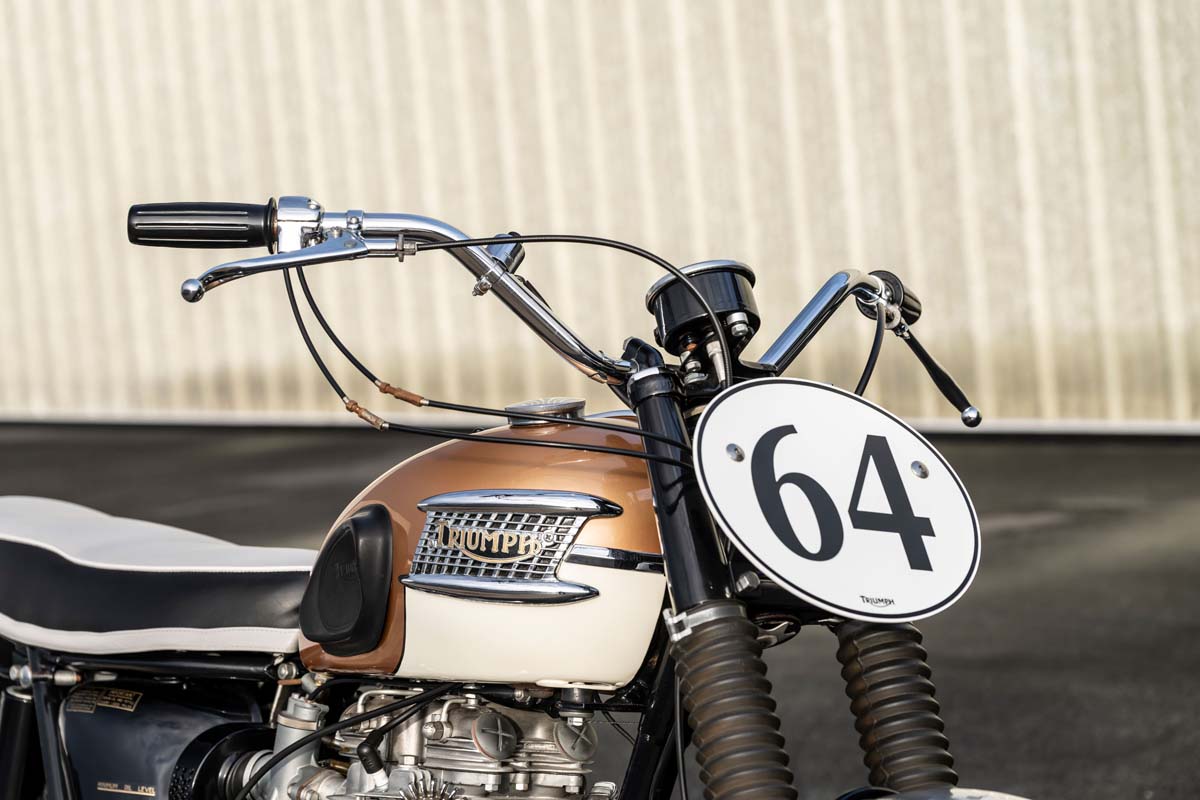
After its first year on the market, the TT Special returned for 1964, basically as before, but with improvements to the front suspension, a revised cylinder head, 11:1 pistons (some sources 11.2:1) and new crankcases. A magnetically-mounted revcounter was fitted, along with some aluminium tinware, but the mudguards were still steel. Again using Rising’s research as a guide, 415 units were built this year, with JoMo continuing to receive the lion’s share.
A more noticeable change came in 1965, when the unrestricted exhausts were increased in diameter and re-routed to go under the engine and terminate ahead of the rear tyre. New pistons were introduced, along with larger valves and racing camshafts. Some sources note a 2hp (1.5kW) increase in power on the 1965 TT Special, while others list the same peak output across the '64 and ’65 models.
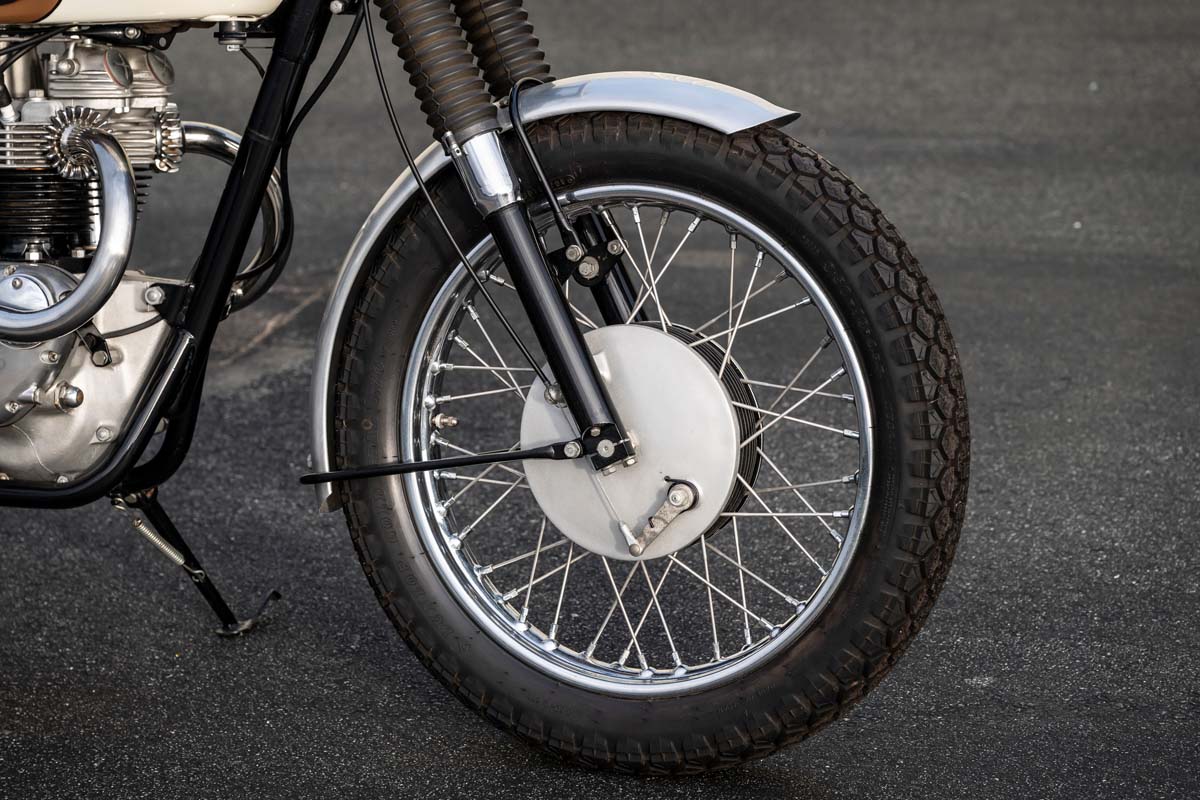
The introduction of folding footpegs and deletion of the centre stand were other competition-driven changes for 1965. It appears the word was now “out” about the TT Special, as production increased to 775 units for the year.
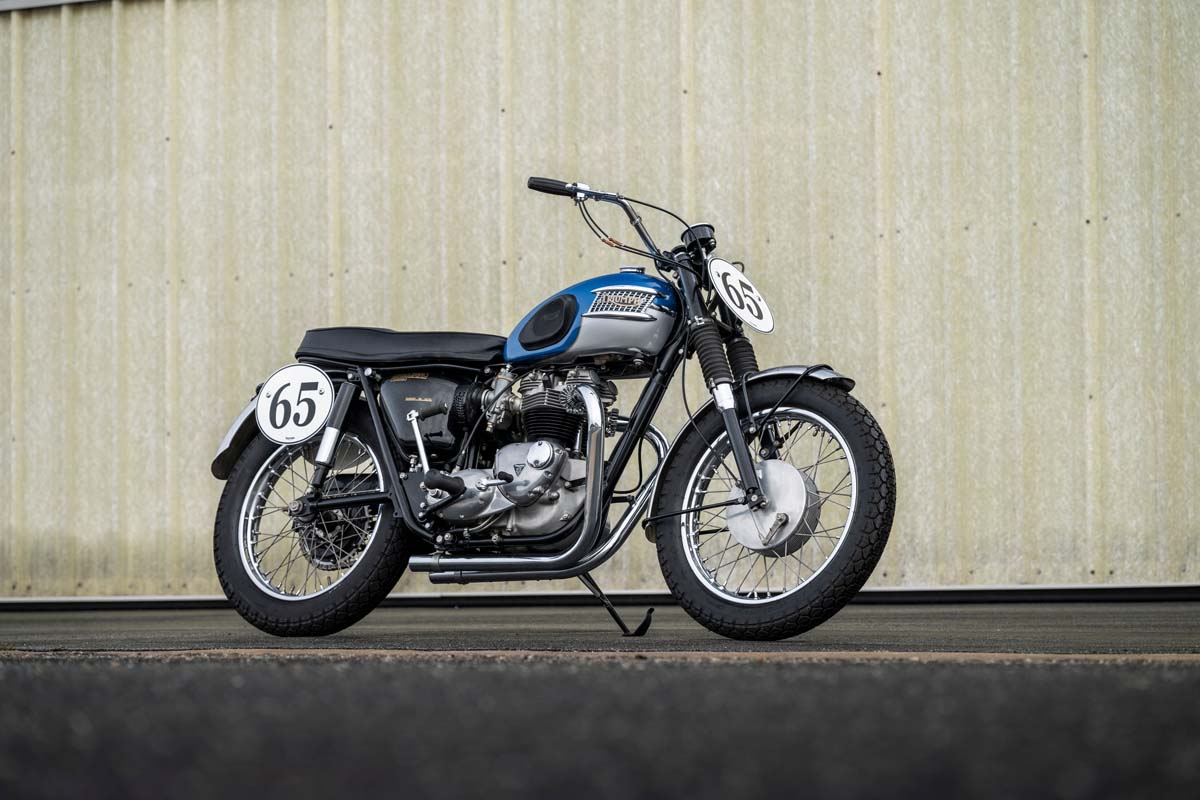
Production would increase again in 1966, almost doubling to 1,310 units, with TriCor now accounting for the majority of production – around 55 per cent. Changes for what would be the T120 TT Special’s penultimate year in the US market included a revised steering head angle, smaller front and rear sprockets, a smaller fuel tank and aluminium mudguards. Some sources say the engine gained a new crankshaft, bearings and valves, too.
Victory at Last – and a Failure
TT Specials had been successful in TT steeplechase races every year since their introduction in 1963, and by the early 1970s, had won more of these events than any other bike. In 1967, Triumph finally won the Grand National Championship outright, with Gary Nixon in the saddle. Nixon would go back-to-back in 1968, with Gene Romero delivering a third Grand National title for Triumph in 1970.

More memorable than Nixon’s breakthrough win in 1967 was Evel Knievel’s attempt to jump the fountains of Caesar’s Palace casino in Las Vegas that same year. Although he had been performing stunts for some time by that point, Knievel was still largely unknown, but that failed jump brought him worldwide attention. His bike for that stunt? A Triumph T120 TT Special.
In 1967, its final year as a factory model, the TT Special introduced Hepolite pistons and a reprofiled inlet camshaft, with Amal’s Concentric carburettors replacing the previous Monobloc type partway through production. Stainless steel tinware was introduced, and like the last units from 1966, these final bikes came with “TT” identification stamped on the crankcases. Rising’s research lists production at 1,108 units in this final year, for a total of 3,920 from 1963 to 1967.
To Auction
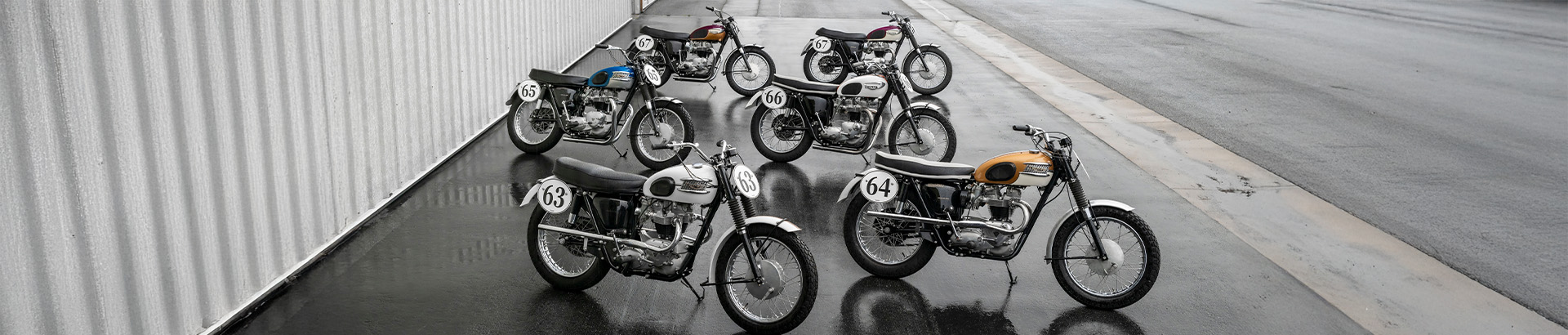
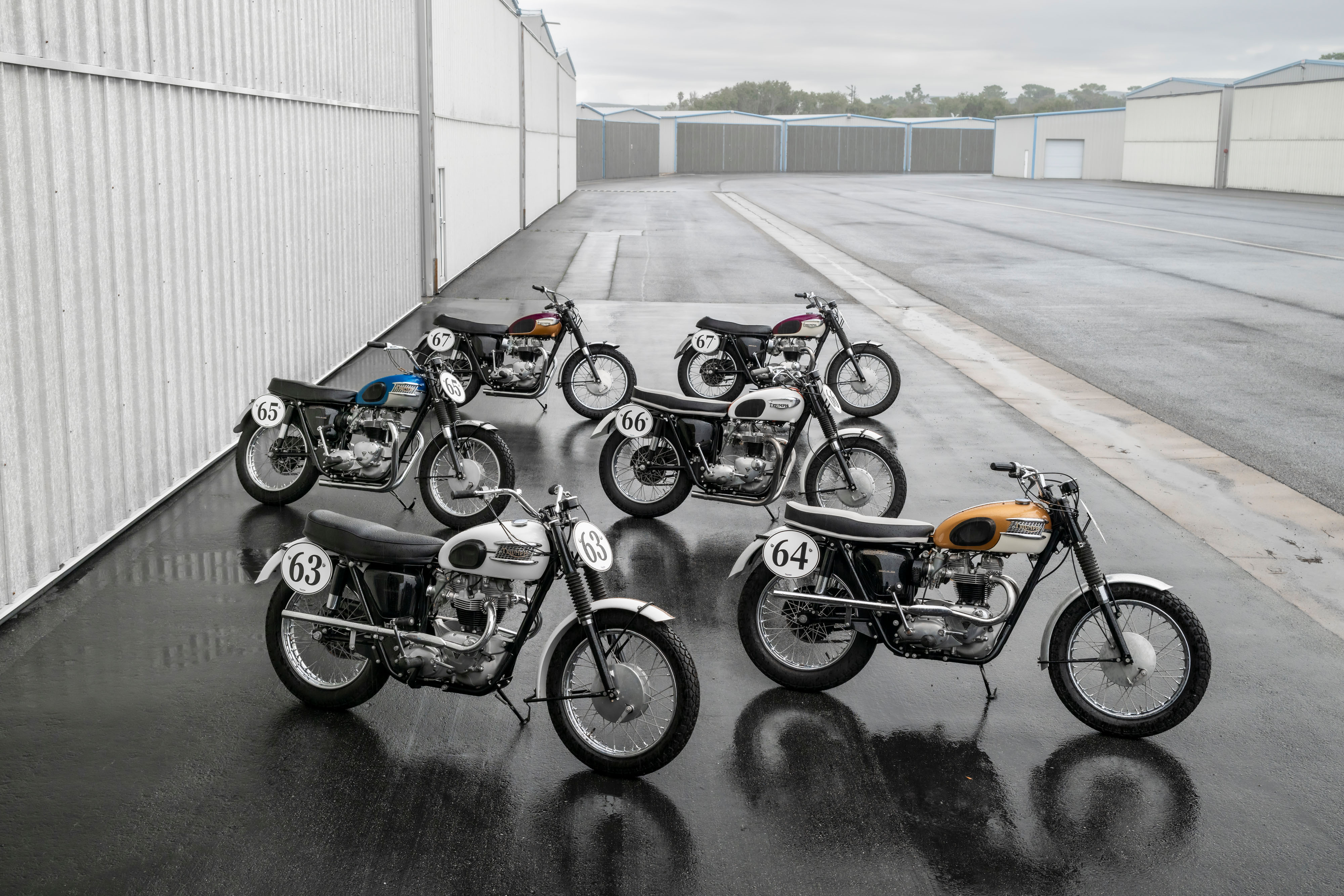
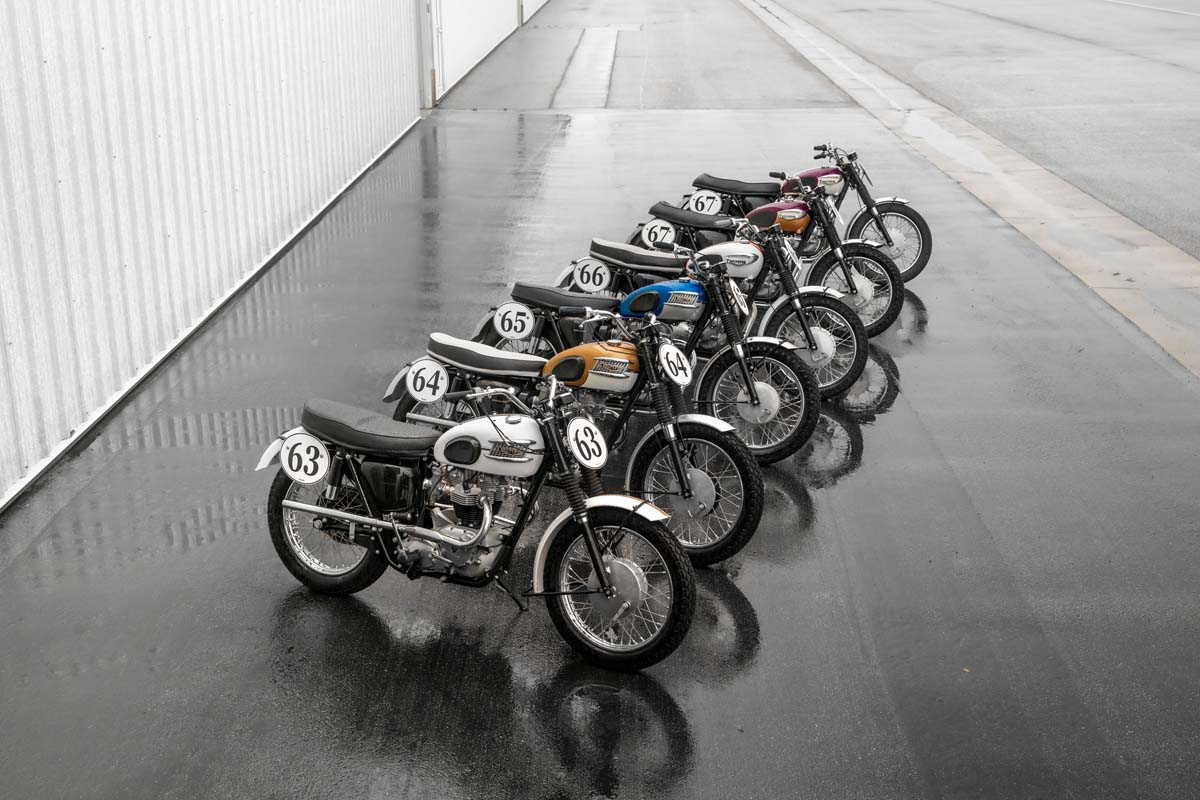
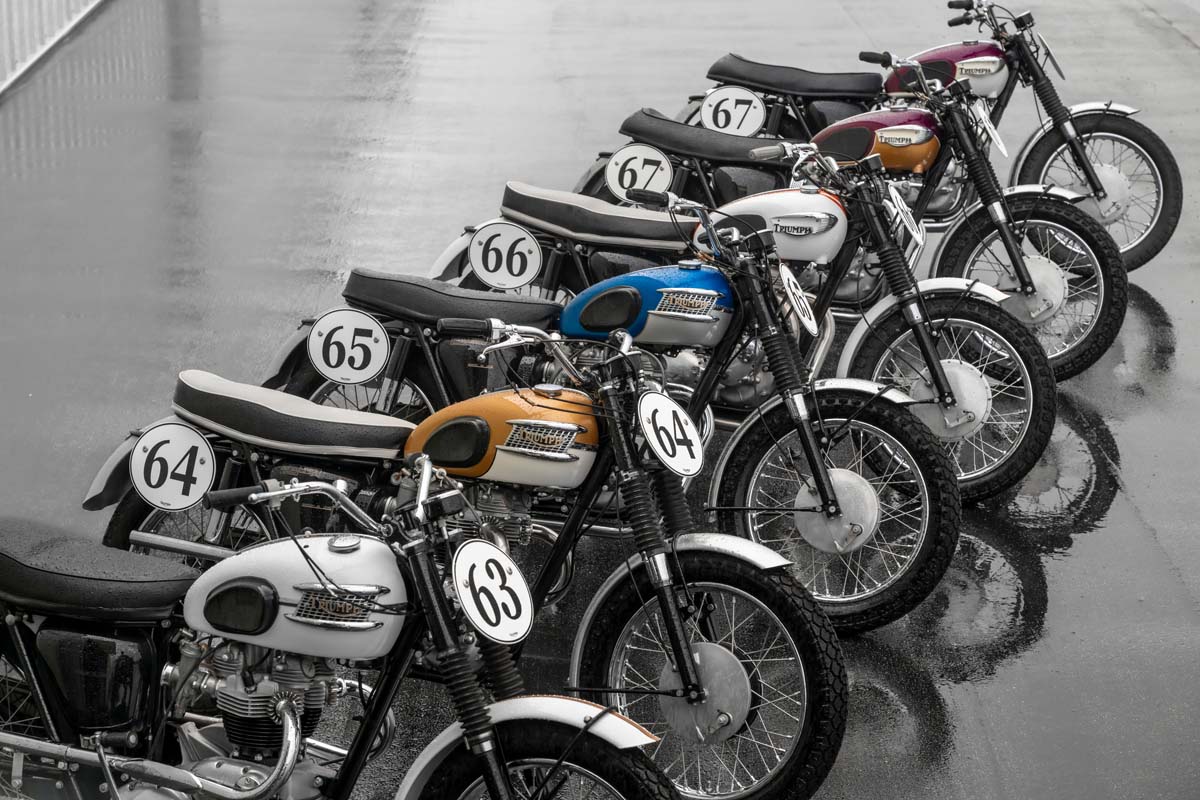
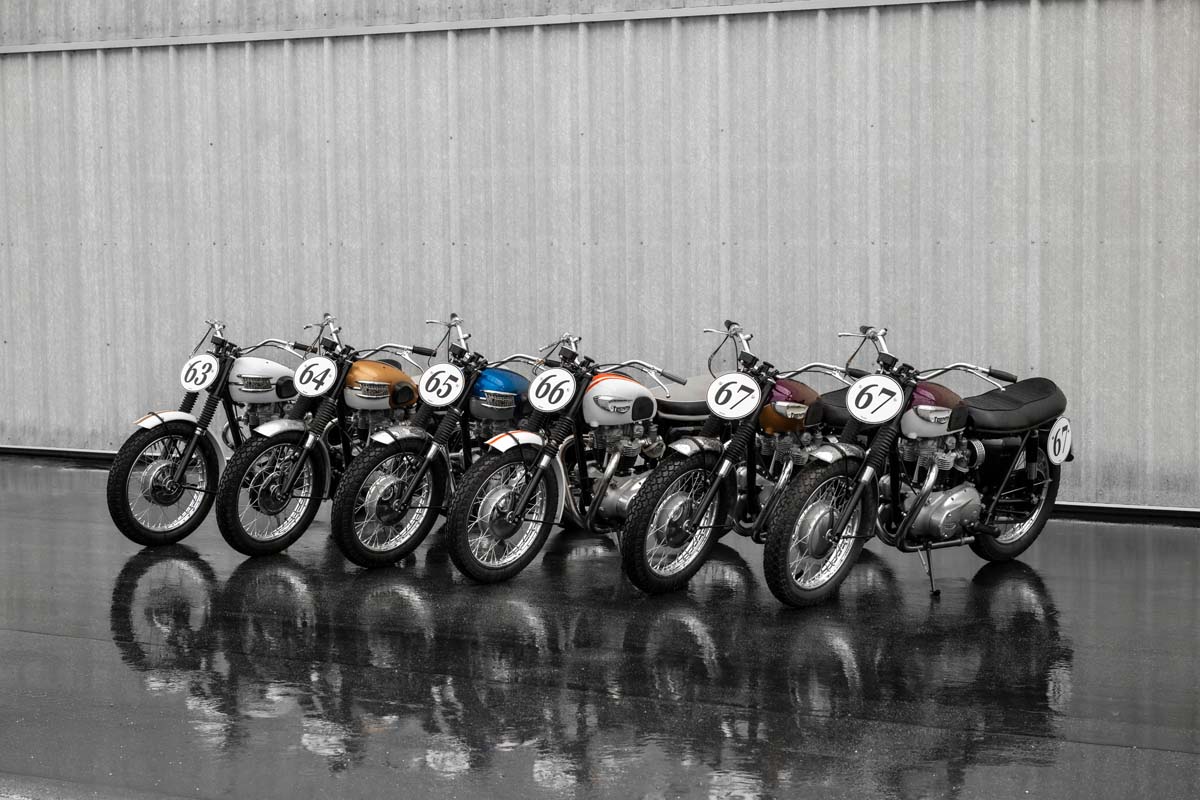
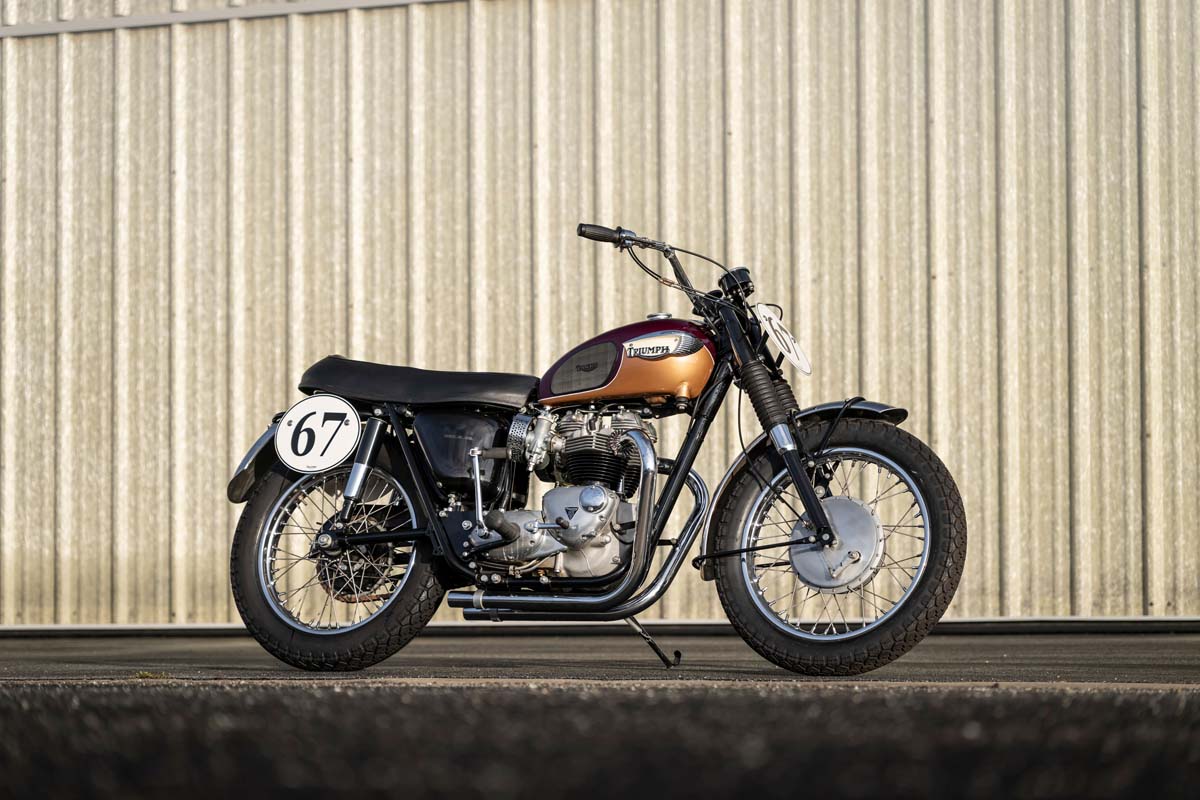
While TT Specials have come up for auction individually over the years, this past August saw the collection of six featured here go to market with RM Sothebys at their Monterey sale.
RM Sothebys also offered this California-based sextet in a sealed auction in March, but they presumably didn’t sell then, hence their reappearance at Monterey.
According to the auction listing, all six bikes had been restored some time back by Bill Hoard, a US-based authority on Triumphs. Well maintained since and offered in running condition, the history of these bikes beyond this information is unknown, although they do look similar to a collection that featured in US magazine, Motorcycle Classics, in 2017.
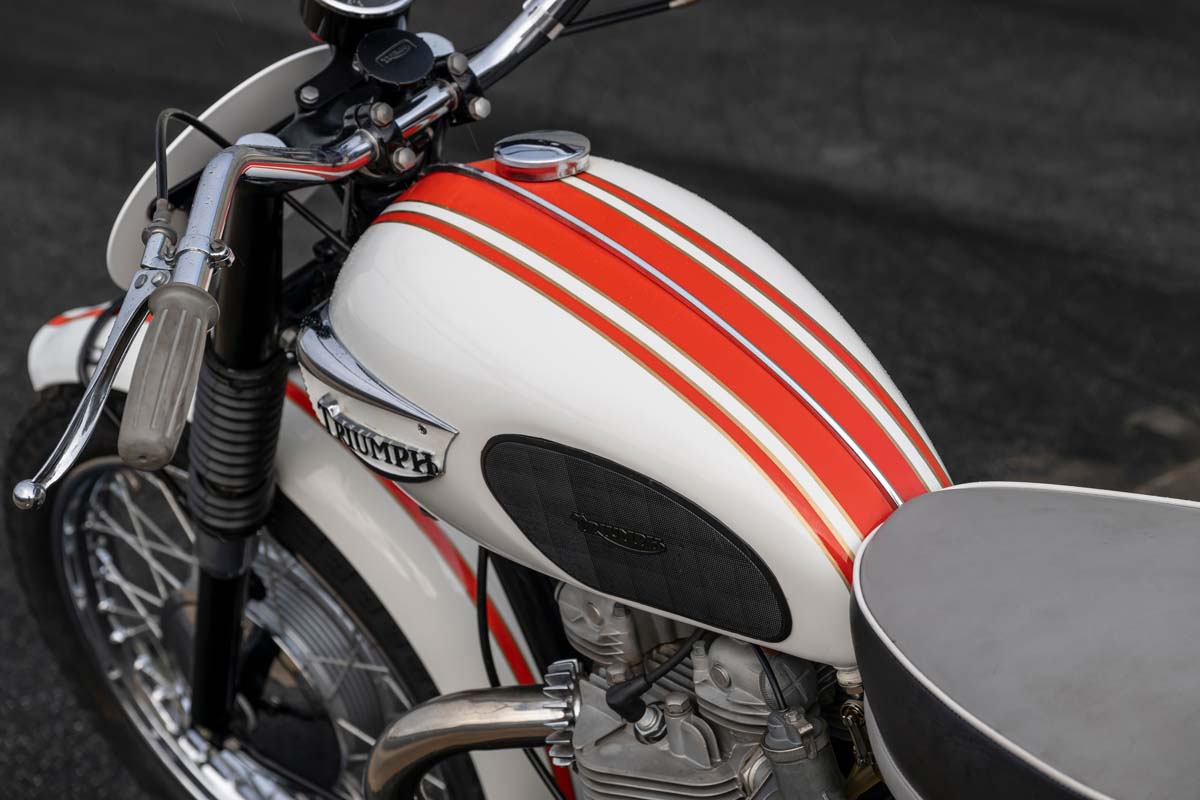
Offered as a single lot without reserve, this group hammered for US$84,000 (AU$128,500 approx.), which equates to an average of US$14,000 (AU$21,500 approx.) per bike. Based on auction results from the past two decades, this was roughly on par with what these models have achieved. However, the total was well below the pre-auction estimate of US$120,000-160,000 (AU$184,400-245,900 approx.).
For more details, go to: rmsothebys.com